My edits have now arrived, proving once and for all that this agent thing is really real and not something I made up in an overexcited moment.
I am preparing myself for the great task ahead of me: wantonly destroying all the characters and scenes in the book that are lovely but completely pointless to my plot. This will obviously take some time, and time is something that seems to be in short supply in my life already.
Therefore, I am proposing a change to this blog's reviewing rules. I just can't do a full blog post on every novel I read any more (and was anyone reading them anyway, my grandmother excepted?), so from now on I'm going to be doing lists of snap reviews.
Like this!
Before the Fact by Francis Iles
Alas, this was a good idea, lamely executed. Iles (pen name of Anthony Berkeley, a slightly less ingenious contemporary of Agatha Christie) was interested in making up new ways to write crime novels. This one is set before the crime actually happens. You'd think that this would be a promising concept. A woman wakes up one day convinced that her husband wants to murder her. But is she right?
Well... yes. As is painfully evident from the first page, her husband is going to murder her. We have to trail painfully through years of their life together, until we get to the day when he actually kills her. Believe me, by that point you will be begging him to go ahead and do it.
There's a very interesting question buried in Iles's premise, about whether we can ever really know what kind of person we're spending our life with, but he does absolutely nothing interesting with it. Frankly, this is one of the most boring thrillers I've ever read.
If you want a book that does run with that idea in an awesomely clever way, try Gone Girl by Gillian Flynn (which I just happened to read for The Bookbag the week after I read this). It's amazing. This isn't.
2 stars.
The American Boy by Andrew Taylor
Now this one was good. A creepy historical murder mystery (it's Taylor, what else would you expect?) that's based on events during the childhood of Edgar Allen Poe, it's well imagined and satisfyingly well executed. It's got a nice, big, engrossing plot, full of mistaken identities, big chilly houses and lots of gloomy weather.
Taylor's novels aren't just mysteries, they're stories, and often quite involved ones - novels that happen to have murders in them, rather than novels about murder. The star of the show is always the setting, the (very accurately rendered) historical moment, and I thought that the world of The American Boy (Regency England) was particularly well imagined.
This is a book that you can get your teeth into, a blockbuster production that's good down to its smallest details. It's delightfully dark and twisty with just the right level of nastiness - basically, this is vintage Taylor. The sequel (prequel?) is out next month. Let me tell you, internet, I am excited.
4 stars.
The Night Circus by Erin Morgenstern
Let me sell you this book in a single sentence: it's about a magical Victorian circus. A MAGICAL. VICTORIAN. CIRCUS. And not just any magical Victorian circus, either. It's pretty much the slickest, the most sideways and in all ways the best vision of the best possible circus you could ever imagine. Only it's better.
Morgenstern's cirque des reves assaults all your senses at once. Her writing makes you slaver over the burnt-caramel smell of popcorn, taste cinnamon pastries and light up your mind's eye with fire and fluttering ribbons. There's a circus tent that's a garden made entirely of ice, a tent where you climb up into a labyrinth in the clouds and one where you can smell stories.
The circus itself is the setting for an absolutely beautiful love story. The two main characters of The Night Circus are a boy and girl who have been brought up knowing that they have to fight a mysterious and fatal magical duel - except that when they actually meet, they realise that all they want to do is spend the rest of their lives together. Can they manage it? Or will the power of the circus, the setting for their great game, send events spinning out of their control? Morgenstern plays with time and place masterfully, messing with the lives of her wonderful characters in a way that's like watching an illusionist carry out a virtuoso magic trick.
When I finished this book, I physically missed it. I wandered tragically around my house hugging it to me and whispering, what do I do with my life? I loved The Night Circus heartbreakingly much. I can do nothing else but give it
5 stars.
Ketchup Clouds by Annabel Pitcher
I have been itching to get my hands on this one for a long time. A teenage girl writes a series letters to a convicted murderer on Death Row, confessing to a terrible crime that she's kept secret from everyone she knows.
I loved this idea from the moment I first heard about it (you know how I love terrible secret crimes), but, more importantly, on closer acquaintance the story stands up to its premise.
I think what Pitcher has done with her hook is exceptional. She doles out the suspense - what did Zoe do, and who did she do it to? - in perfectly pitched little sips. I was going completely mental trying to work out which of the two possible victims Zoe has actually killed, so much so that I read half of the book on the train to work, and the other half on the train on the way home. Was the actual moment of the crime a let-down? Slightly, but that's just because I was keyed up to such a pitch that I would have been disappointed with anything that wasn't as insane as what I had been picturing in my head.
Zoe is a wonderful narrator, though, so realistic and funny that the book's success doesn't rest on the reveal of her crime alone. She's a real presence, and her words bring her world to life. Cleverly on Pitcher's part, one of the book's most engaging and present characters never actually appears in the text or says a single word. Zoe's murderer, Stuart Harris, never replies to her letters (he can't, since Zoe writes from 'Fiction Drive' to keep her story secret), but nevertheless he becomes an incredibly important person in her life. Zoe has made up a totally romanticised concept of him, the magical persona she needs to listen to her and understand the awful things that she's done. Like the rest of Ketchup Clouds, it's a perfectly pitched little detail that will break your heart and make you feel absolutely complicit in even the worst of Zoe's actions.
4.5 stars.
Showing posts with label taylor. Show all posts
Thursday, 31 January 2013
Tuesday, 1 January 2013
New Year's Excitements and Writing Resolutions: 2013
Dear readers, welcome to 2013! In the words of my friend Alice, I've got a good feeling about this one.
Because it is January 1, I thought I'd ring in the new year by mentioning a few of the amazing new books that I'm looking forward to getting my hands on in the months ahead. Not mentioned, of course, are all the books I don't know that I'm going to fall in love with yet. I especially can't wait for those.
- In just TWO DAYS the whole world will finally have the chance to read Jack Wolf's debut The Tale of Raw Head and Bloody Bones. I reviewed it for The Bookbag last year and was absolutely blown away by it. Get out there and buy this book! Unless you don't like the Gothic. In which case, there is no hope for you.
- In February, there's a new Andrew Taylor novel, The Scent of Death. It's Andrew Taylor. It's historical murder. What else do I even need to say?
- In March there's a new Fred Vargas, The Ghost Riders of Ordebec. I am DANCING IN MY SEAT about this one. I am so excited. Her books are creepy and quirky and totally charming. And weird. Her last crime novel was about real vampires, for heavens' sake.
- In May the second in Stephen Gallagher's (that link is to his Q&A for Litro, he's great) series about Detective Sebastian Becker, The Bedlam Detective, comes out in the UK. I read the first one for The Bookbag (again) and loved it, so I can't wait for the next installment. I want it now.
- In June there's (finally!) a new Neil Gaiman novel, The Ocean at the End of the Lane. I saw Gaiman speak last year, and he signed my copy of Stardust and I said thanks and cried a little bit out of sheer love. Basically, whatever this is about, I will read it.
I must be missing loads. What else is coming up? Please chip in.
And now, for something a bit more personal: my own literary resolutions for the year ahead. This year, I will achieve! Probably. Unless I don't. We shall see. Anyway...
- I will finish the book I am writing, edit it, edit it again and begin to query it. I will be rejected, and emerge refreshed.
- I will continue querying my crime novel like grim death until I get an agent for it.
- I will get at least 25% of the 1001 Books list read before the year is out. (I am currently at 20.78%, so this has to be achievable. It has to be.)
- I will not be a snob about the literary merit of any book unless I have actually read at least a part of it.
- I will write, something, every day. I will try to write fiction every day, but reviews also count.
- I will actually plan my books before I write them.
- When a scene gets boring, I will listen to Raymond Chandler and send a person bursting through the door with a gun. Indeed, I will remember that when I am bored by a scene my readers will be too.
- I will remember that I am not under a contractual obligation to put a dog into everything I write.
- Along the same lines, I will at least try to write something that does not in any way feature a murder. That said, when I do feature death...
- I shall not murder any prostitutes in anything I write. Those poor ladies of the night! What easy victims they make. But enough already. I will only kill rich people, preferably men.
- I will write more short stories. They are good for me and good to do.
- Sort of continuing on from that, I will enter more (also known as: any) literary competitions. Because it is no good writing things if I don't let anyone else see them.
- I will get a pet lion. No, wait. That one was a joke. I hear those things are expensive.
So, onwards! To 2013 proper. We can do this.
Because it is January 1, I thought I'd ring in the new year by mentioning a few of the amazing new books that I'm looking forward to getting my hands on in the months ahead. Not mentioned, of course, are all the books I don't know that I'm going to fall in love with yet. I especially can't wait for those.
- In just TWO DAYS the whole world will finally have the chance to read Jack Wolf's debut The Tale of Raw Head and Bloody Bones. I reviewed it for The Bookbag last year and was absolutely blown away by it. Get out there and buy this book! Unless you don't like the Gothic. In which case, there is no hope for you.- In February, there's a new Andrew Taylor novel, The Scent of Death. It's Andrew Taylor. It's historical murder. What else do I even need to say?
- In March there's a new Fred Vargas, The Ghost Riders of Ordebec. I am DANCING IN MY SEAT about this one. I am so excited. Her books are creepy and quirky and totally charming. And weird. Her last crime novel was about real vampires, for heavens' sake.
- In May the second in Stephen Gallagher's (that link is to his Q&A for Litro, he's great) series about Detective Sebastian Becker, The Bedlam Detective, comes out in the UK. I read the first one for The Bookbag (again) and loved it, so I can't wait for the next installment. I want it now.
- In June there's (finally!) a new Neil Gaiman novel, The Ocean at the End of the Lane. I saw Gaiman speak last year, and he signed my copy of Stardust and I said thanks and cried a little bit out of sheer love. Basically, whatever this is about, I will read it.
I must be missing loads. What else is coming up? Please chip in.
And now, for something a bit more personal: my own literary resolutions for the year ahead. This year, I will achieve! Probably. Unless I don't. We shall see. Anyway...
- I will finish the book I am writing, edit it, edit it again and begin to query it. I will be rejected, and emerge refreshed.
- I will continue querying my crime novel like grim death until I get an agent for it.
- I will get at least 25% of the 1001 Books list read before the year is out. (I am currently at 20.78%, so this has to be achievable. It has to be.)
- I will not be a snob about the literary merit of any book unless I have actually read at least a part of it.
- I will write, something, every day. I will try to write fiction every day, but reviews also count.
- I will actually plan my books before I write them.
- When a scene gets boring, I will listen to Raymond Chandler and send a person bursting through the door with a gun. Indeed, I will remember that when I am bored by a scene my readers will be too.
- I will remember that I am not under a contractual obligation to put a dog into everything I write.
- Along the same lines, I will at least try to write something that does not in any way feature a murder. That said, when I do feature death...
- I shall not murder any prostitutes in anything I write. Those poor ladies of the night! What easy victims they make. But enough already. I will only kill rich people, preferably men.
- I will write more short stories. They are good for me and good to do.
- Sort of continuing on from that, I will enter more (also known as: any) literary competitions. Because it is no good writing things if I don't let anyone else see them.
- I will get a pet lion. No, wait. That one was a joke. I hear those things are expensive.
So, onwards! To 2013 proper. We can do this.
Saturday, 29 December 2012
Quick-fire reviews: my Christmas book list
I personally move to rename Christmas, Bookmas. I can hear the Christians wailing and gnashing their teeth from here, but it would be a more accurate description of my activities during the festive period. There is a bit of Christ, but there are a lot of books, and as you all know, I am all about the books.
Please note that the following reviews are not of the books I received for Christmas. Oh no. I have not even begin to make a dent in that towering pile. These are merely the books I read during my 'holiday' at home (ho ho), while the rest of my family revolved around me screaming and shouting and playing endless games of Battleship.
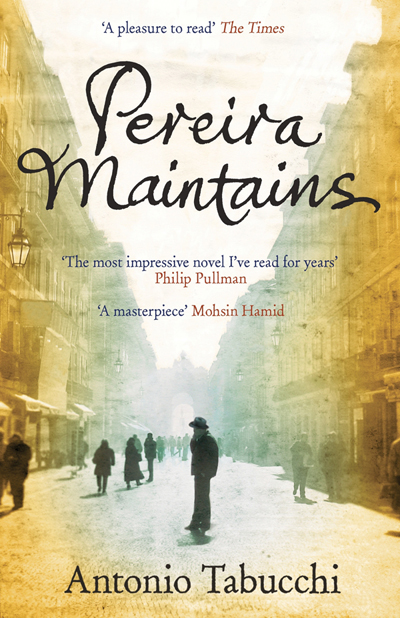
Pereira Maintains by Antonio Tabucci
I started things off with this jolly little tale of police suppression in 1930s Portugal. The Pereira of the title is a fat and aging crime reporter who's come down in the world to become the culture section of fledgeling 'non-political' paper the Lisboa. For slightly cosmic reasons, he gets into contact with a philosophy graduate named Monteiro Rossi. Rossi becomes Pereira's assistant at the paper, but he turns out to be pretty much the worst assistant ever - not only did he fake most of his dissertation, but all the articles he writes for Pereira are politically incendiary and therefore unpublishable. You see, this is Portugal under Salazar, a place where people pretend that everything is normal even though the secret police are beating stall-holders to death in the middle of the market. Culture has become dangerous, and the translations Pereira innocently makes of European stories suddenly have new and worrying political meanings.
Pereira begins the novel as pretty much the most clueless, passive person in existence - he's a journalist who has to ask his friends for the news - but he finds his friendship with Rossi changing how he sees the world. Rossi becomes the son he never had, and as Rossi gets deeper into the resistance movement, Pereira is dragged into it along with him. The whole novel is written as Pereira's testimony - of exactly what, we're not sure until the very end.
This is an apparently peaceful and dreamy little book, under which hides some serious subversive meaning. I think it's one of those novels that can be read and re-read, new themes emerging each time. It's clever without being showy, beautifully written (and with visually beautiful images, crystal seas and palm trees waving and so on) but with a really nasty undertaste to it. I think Pereira Maintains is a book that needs to be thought about. I didn't fall in love with it immediately, but it's been growing on me since I put it down, and I think it's going to stay in my brain for quite a while to come.
4.5 stars
Maggot Moon by Sally Gardner
I bought this for my niece for Christmas because I wanted to read it myself. It was that kind of present. Luckily, she read it in three hours flat, and then I wrenched it out of her hands and read it in two.
The number of people I recommend a book to after I've finished it is usually a good test of how much I liked it, and after I finished Maggot Moon I tweeted about it four times in quick succession and then sent three ecstatic emails to friends ordering them to JUST STOP EVERYTHING AND READ THIS BOOK.
It was that good. As I said at the time,
Set in an alternate-reality 1950s Soviet state, Maggot Moon is the story of Standish Treadwell. On the eve of a planned great moon landing by the Motherland, Standish dreams of flying away to his own perfect planet, Juniper, with his best friend Hector. On Planet Juniper the Cadillacs are the colour of ice cream, the Croca-Colas never run out and there are no secret police waiting to turn you and your family into maggot food if you disobey the Motherland.
Maggot Moon is a totally black dystopian fantasy told with incredibly effective simplicity. Standish is a wonderful, idiosyncratic narrator (he's dyslexic, so words come out of his head sounding brilliantly wrong), likeable and heartbreakingly honest. It'd have been easy to have made him one of those wide-eyed teen narrators living in a world he doesn't understand, but Gardner's smarter and more realistic than that. Standish absolutely does understand all the horrendous adult things that happen around him, even though he processes them in an utterly teenage way. He knows what happened to his parents and he knows what's likely to happen to him and his Gramps, but all the same he clings on to the wonderful world of Juniper that he's built in his head.
As the Moon Landing gets closer, it becomes clear that Standish is in possession of some pretty important information - the kind of stuff that could either destroy the Government or (more likely) himself and the people he loves. Then Hector goes missing, and Standish realises that he's got to be brave enough to use what he knows before the Government are able to make him disappear too.
This is a book about a kid making the kind of impossible decisions that most adults wouldn't be able to face. But like all the best fantasy, it feels real, totally believable and totally tragic. The ending, I warn you now, is awful, but it's one of those endings that destroys you in a hopeful sort of way, leaving you feeling slightly fire-damaged but lighter because of it.
Honestly, this snuck in from absolutely nowhere to become one of my books of 2012. I think it's one of the most perfect pieces of teen fiction I've read, maybe ever. I wish I had written it. Why didn't I write it?
5 stars.
Hand in Glove and Dead Water by Ngaio Marsh
The good thing about Agatha Christie is that, even when she's phoning it in, the result is still readable. The bad thing about Ngaio Marsh is that, when she's phoning it in, the result is... really not. Her entire back catalogue was recently re-published in fat omnibus editions, and as I work my way through them I am more and more reaching the conclusion that, although when Marsh is good she is very very good (see: A Surfeit of Lampreys, still one of my top favourite crime novels ever), when she is bad, she is horrid.
Hand in Glove and Dead Water are both thick with hackneyed stereotypes, gurning yokels and clangingly awful love-affairs, and the murders in them are both done for overwhelmingly stupid reasons, by methods that are needlessly complex and/or totally unbelievable. I mean, the whole of Hand in Glove revolves around the premise that a cigarette case is an object important enough to bother about. And then there are all the couples who conduct entire love affairs via sentences like Come here, silly darling, and let me clasp you to my bosom! And then there are the aforementioned yokels, who hawk and mumble away as though they have been endowed with the brains of rats instead of human beings. Seriously, Ngaio Marsh, going to Cambridge is not a test you have to pass to become a person.
God, these books. I just can't. I give up. It's a good thing that Marsh is dead, so she can't see me denounce her.
1.5 stars.
Broken Voices by Andrew Taylor
Broken Voices is a brand-new Kindle-only novella by Andrew Taylor - and since I have a brand-new Kindle it seemed a necessary purchase. Set one hundred years ago in a Fenland cathedral city, this a gloriously straight-up ghost story, one of those English classics of the genre in which nothing happens except a lot of chilling suspense.
The main character, a pupil at the city's King's School, has been stuck at the cathedral over the Christmas period while his parents stay in India. He's boarding at the house of a poor ex-teacher along with another pupil, an ex-choirboy who's suffering a terrible disgrace. Both boys are lonely and embittered, and when they hear a mysterious story about the Cathedral's history they decide that this is their opportunity to prove themselves.
Taylor's real strength - I've mentioned this before - is his extraordinary ability to evoke atmosphere, and that's something that's great for this tale. His historical settings feel both right and at the same time deliciously wrong. Something is always rotten in an Andrew Taylor novel, the skies are grey and the buildings lour. In Broken Voices there's a very nasty cat, an even nastier bit with some rats, chilly winter nights, cold Cathedral stones and a beautifully joyless Christmas day. Uncertainty is the name of the game - as the very first line asks,
I believe firmly that Christmas wouldn't be Christmas without a few really good scary stories (see also my own effort), and so this made my holiday season feel complete. Simple but effective, Broken Voices is an excellent marriage of author and subject which does exactly what it promises to do.
4 stars.
Please note that the following reviews are not of the books I received for Christmas. Oh no. I have not even begin to make a dent in that towering pile. These are merely the books I read during my 'holiday' at home (ho ho), while the rest of my family revolved around me screaming and shouting and playing endless games of Battleship.
Pereira Maintains by Antonio Tabucci
I started things off with this jolly little tale of police suppression in 1930s Portugal. The Pereira of the title is a fat and aging crime reporter who's come down in the world to become the culture section of fledgeling 'non-political' paper the Lisboa. For slightly cosmic reasons, he gets into contact with a philosophy graduate named Monteiro Rossi. Rossi becomes Pereira's assistant at the paper, but he turns out to be pretty much the worst assistant ever - not only did he fake most of his dissertation, but all the articles he writes for Pereira are politically incendiary and therefore unpublishable. You see, this is Portugal under Salazar, a place where people pretend that everything is normal even though the secret police are beating stall-holders to death in the middle of the market. Culture has become dangerous, and the translations Pereira innocently makes of European stories suddenly have new and worrying political meanings.
Pereira begins the novel as pretty much the most clueless, passive person in existence - he's a journalist who has to ask his friends for the news - but he finds his friendship with Rossi changing how he sees the world. Rossi becomes the son he never had, and as Rossi gets deeper into the resistance movement, Pereira is dragged into it along with him. The whole novel is written as Pereira's testimony - of exactly what, we're not sure until the very end.
This is an apparently peaceful and dreamy little book, under which hides some serious subversive meaning. I think it's one of those novels that can be read and re-read, new themes emerging each time. It's clever without being showy, beautifully written (and with visually beautiful images, crystal seas and palm trees waving and so on) but with a really nasty undertaste to it. I think Pereira Maintains is a book that needs to be thought about. I didn't fall in love with it immediately, but it's been growing on me since I put it down, and I think it's going to stay in my brain for quite a while to come.
4.5 stars
Maggot Moon by Sally Gardner
I bought this for my niece for Christmas because I wanted to read it myself. It was that kind of present. Luckily, she read it in three hours flat, and then I wrenched it out of her hands and read it in two.
The number of people I recommend a book to after I've finished it is usually a good test of how much I liked it, and after I finished Maggot Moon I tweeted about it four times in quick succession and then sent three ecstatic emails to friends ordering them to JUST STOP EVERYTHING AND READ THIS BOOK.
It was that good. As I said at the time,
@ahintofmystery you WILL NOT REGRET. It's one of those books that make you want to write books.
— Robin Stevens (@redbreastedbird) December 25, 2012
Set in an alternate-reality 1950s Soviet state, Maggot Moon is the story of Standish Treadwell. On the eve of a planned great moon landing by the Motherland, Standish dreams of flying away to his own perfect planet, Juniper, with his best friend Hector. On Planet Juniper the Cadillacs are the colour of ice cream, the Croca-Colas never run out and there are no secret police waiting to turn you and your family into maggot food if you disobey the Motherland.
Maggot Moon is a totally black dystopian fantasy told with incredibly effective simplicity. Standish is a wonderful, idiosyncratic narrator (he's dyslexic, so words come out of his head sounding brilliantly wrong), likeable and heartbreakingly honest. It'd have been easy to have made him one of those wide-eyed teen narrators living in a world he doesn't understand, but Gardner's smarter and more realistic than that. Standish absolutely does understand all the horrendous adult things that happen around him, even though he processes them in an utterly teenage way. He knows what happened to his parents and he knows what's likely to happen to him and his Gramps, but all the same he clings on to the wonderful world of Juniper that he's built in his head.
As the Moon Landing gets closer, it becomes clear that Standish is in possession of some pretty important information - the kind of stuff that could either destroy the Government or (more likely) himself and the people he loves. Then Hector goes missing, and Standish realises that he's got to be brave enough to use what he knows before the Government are able to make him disappear too.
This is a book about a kid making the kind of impossible decisions that most adults wouldn't be able to face. But like all the best fantasy, it feels real, totally believable and totally tragic. The ending, I warn you now, is awful, but it's one of those endings that destroys you in a hopeful sort of way, leaving you feeling slightly fire-damaged but lighter because of it.
Honestly, this snuck in from absolutely nowhere to become one of my books of 2012. I think it's one of the most perfect pieces of teen fiction I've read, maybe ever. I wish I had written it. Why didn't I write it?
5 stars.
Hand in Glove and Dead Water by Ngaio Marsh
The good thing about Agatha Christie is that, even when she's phoning it in, the result is still readable. The bad thing about Ngaio Marsh is that, when she's phoning it in, the result is... really not. Her entire back catalogue was recently re-published in fat omnibus editions, and as I work my way through them I am more and more reaching the conclusion that, although when Marsh is good she is very very good (see: A Surfeit of Lampreys, still one of my top favourite crime novels ever), when she is bad, she is horrid.Hand in Glove and Dead Water are both thick with hackneyed stereotypes, gurning yokels and clangingly awful love-affairs, and the murders in them are both done for overwhelmingly stupid reasons, by methods that are needlessly complex and/or totally unbelievable. I mean, the whole of Hand in Glove revolves around the premise that a cigarette case is an object important enough to bother about. And then there are all the couples who conduct entire love affairs via sentences like Come here, silly darling, and let me clasp you to my bosom! And then there are the aforementioned yokels, who hawk and mumble away as though they have been endowed with the brains of rats instead of human beings. Seriously, Ngaio Marsh, going to Cambridge is not a test you have to pass to become a person.
God, these books. I just can't. I give up. It's a good thing that Marsh is dead, so she can't see me denounce her.
1.5 stars.
Broken Voices by Andrew Taylor
Broken Voices is a brand-new Kindle-only novella by Andrew Taylor - and since I have a brand-new Kindle it seemed a necessary purchase. Set one hundred years ago in a Fenland cathedral city, this a gloriously straight-up ghost story, one of those English classics of the genre in which nothing happens except a lot of chilling suspense.The main character, a pupil at the city's King's School, has been stuck at the cathedral over the Christmas period while his parents stay in India. He's boarding at the house of a poor ex-teacher along with another pupil, an ex-choirboy who's suffering a terrible disgrace. Both boys are lonely and embittered, and when they hear a mysterious story about the Cathedral's history they decide that this is their opportunity to prove themselves.
Taylor's real strength - I've mentioned this before - is his extraordinary ability to evoke atmosphere, and that's something that's great for this tale. His historical settings feel both right and at the same time deliciously wrong. Something is always rotten in an Andrew Taylor novel, the skies are grey and the buildings lour. In Broken Voices there's a very nasty cat, an even nastier bit with some rats, chilly winter nights, cold Cathedral stones and a beautifully joyless Christmas day. Uncertainty is the name of the game - as the very first line asks,
'Was there a ghost? Was there, in a manner of speaking, a murder?'(Taylor, like me, doesn't seem to be able to get away from murder. I can understand that.) His main character is a typically sulky and selfish teenage boy - and, in fact, all of his characters are small and basically unsympathetic. This is a cold-hearted world where there's really no one to root for, and that's perfect for the maybe-ghost story Taylor's telling.
I believe firmly that Christmas wouldn't be Christmas without a few really good scary stories (see also my own effort), and so this made my holiday season feel complete. Simple but effective, Broken Voices is an excellent marriage of author and subject which does exactly what it promises to do.
4 stars.
Tuesday, 2 October 2012
Delicious Death: Andrew Taylor Again
First, announcements: I've got a new gig reviewing books for The Bookbag. Isn't that nice! My first review (if you know me at all, you should not be surprised that I chose this one out of many) is of The Autobiography of Jack the Ripper. Go, read!
And now for something completely the same: I read another crime novel. After really liking The Anatomy of Ghosts a few weeks ago I've been trying to have an Andrew Taylor binge. Sadly for me (I blame the government), my local library has exactly... one more novel by him. So it wasn't much of a binge. But at least I tried.
Call the Dying is (of course it would be) not even the first, but the seventh in a series Taylor has written about the fictional Anglo-Welsh town of Lydmouth. This means that by reading it I have probably spectacularly spoilt myself for all the plot twists in the previous six books.
Luckily, though, Taylor has done a fairly nifty job of making this book operate under its own logic. Call the Dying is quite obviously part of a series, but at the same time it stands alone. It's actually a pretty good lesson in how to reintroduce longstanding characters and situations in a way that clicks with repeat readers but makes sense to the random punter who's just wandered in off the (metaphorical) street. Call the Dying would quite obviously have meant more to me had I read the previous six Lydmouth novels, but at the same time I felt like I was allowed to get to know Lydmouth's inhabitants while being shown enough of their baggage to stop me spending the whole novel wondering Who are YOU? And who is HE? And what is SHE and WHERE ARE WE AND WHAT IS THIS OH MY GOD.
The Lydmouth novels are set in the 1950s, which inevitably makes reviewers (or at least the ones quoted on Call the Dying's cover) compare them to later Agatha Christie. Well, technically, yes, but this is a very different kind of thing. Christie never quite disengaged mentally from large houses in the 1930s, so her '50s' novels are really set in the 30s but with different hair. She also believed very firmly that anyone who was not a member of the professional or landed classes was fundamentally not worth bothering about. The lower classes are sometimes in evidence, but always as bit-parts, usually called Gladys and often with more than a hint of mental deficiency and/or adenoids. No matter what her apparent theme, there's always something a bit big about Agatha Christie novels. They aspire.
Call the Dying, on the other hand, is all about littleness. It depicts a mean and menial post-war world where everyone is tired and weak and struggling to get by. Fog, both metaphoric and actual, smothers the whole novel, enclosing Lydmouth in an atmosphere of claustrophobic small-time nastiness. Taylor is very good at creating emotion in his reader - to me, the whole book felt grey - but it doesn't give off that tiresome smugger-than-thou world-weariness of a P. D. James novel. Taylor's characters don't pretentiously bewail their fate, they just get on with living their lives in a vaguely dissatisfied way.
The plot is as follows: journalist Jill Francis returns to Lydmouth to help out a sick friend and re-encounters unhappily married DCI Richard Thornhill, with whom she obviously has a lot of hot illegal history. Then a TV salesman disappears and the local doctor is found dead, nibbled by rats, and - well, you know. They solve crime.
No, I wasn't kidding about the rats. Taylor's got a creatively nasty streak to his imagination. I noticed it in The Anatomy of Ghosts, but he really lets it out here. Apart from Doctor Bayswater, who likes to feed his garden rats bread and milk and watch them as they play, there's a mysterious man who keeps weeing in letterboxes at the dead of night and someone else who desecrates graves. It's all very nearly horror, creepy in a way that most murder mysteries aren't.
Actually, the murder part of it isn't Call the Dying's strongest point. I'm not sure the final reveal is particularly well-executed. So much attention is given to B-plots about the life of Lydmouth town that the central mystery doesn't have quite time to play out. I was confused rather than enlightened by most of the explanation, and there wasn't enough trailing of the solution for most readers to be able to follow along, let alone guess the twist. But, just like The Anatomy of Ghosts, I think Taylor's charm lies in his set-up rather than his plotting. In terms both of their humanity and their time period Lydmouth's inhabitants feel believable (if slightly distorted, like lifelike caricatures), and Lydmouth itself is eerily fascinating.
I'm coming to the conclusion that I really like Andrew Taylor's novels. They're not quite like any other crime I've read - or not quite like crime novels, full stop - but they're engrossing, weird and imaginative. When I read one, I want more, and that's surely a good sign. As of today, I am haunting my local second-hand bookshops on the look-out for my next fix.
3.5 stars.
And now for something completely the same: I read another crime novel. After really liking The Anatomy of Ghosts a few weeks ago I've been trying to have an Andrew Taylor binge. Sadly for me (I blame the government), my local library has exactly... one more novel by him. So it wasn't much of a binge. But at least I tried.Call the Dying is (of course it would be) not even the first, but the seventh in a series Taylor has written about the fictional Anglo-Welsh town of Lydmouth. This means that by reading it I have probably spectacularly spoilt myself for all the plot twists in the previous six books.
Luckily, though, Taylor has done a fairly nifty job of making this book operate under its own logic. Call the Dying is quite obviously part of a series, but at the same time it stands alone. It's actually a pretty good lesson in how to reintroduce longstanding characters and situations in a way that clicks with repeat readers but makes sense to the random punter who's just wandered in off the (metaphorical) street. Call the Dying would quite obviously have meant more to me had I read the previous six Lydmouth novels, but at the same time I felt like I was allowed to get to know Lydmouth's inhabitants while being shown enough of their baggage to stop me spending the whole novel wondering Who are YOU? And who is HE? And what is SHE and WHERE ARE WE AND WHAT IS THIS OH MY GOD.
The Lydmouth novels are set in the 1950s, which inevitably makes reviewers (or at least the ones quoted on Call the Dying's cover) compare them to later Agatha Christie. Well, technically, yes, but this is a very different kind of thing. Christie never quite disengaged mentally from large houses in the 1930s, so her '50s' novels are really set in the 30s but with different hair. She also believed very firmly that anyone who was not a member of the professional or landed classes was fundamentally not worth bothering about. The lower classes are sometimes in evidence, but always as bit-parts, usually called Gladys and often with more than a hint of mental deficiency and/or adenoids. No matter what her apparent theme, there's always something a bit big about Agatha Christie novels. They aspire.
Call the Dying, on the other hand, is all about littleness. It depicts a mean and menial post-war world where everyone is tired and weak and struggling to get by. Fog, both metaphoric and actual, smothers the whole novel, enclosing Lydmouth in an atmosphere of claustrophobic small-time nastiness. Taylor is very good at creating emotion in his reader - to me, the whole book felt grey - but it doesn't give off that tiresome smugger-than-thou world-weariness of a P. D. James novel. Taylor's characters don't pretentiously bewail their fate, they just get on with living their lives in a vaguely dissatisfied way.
The plot is as follows: journalist Jill Francis returns to Lydmouth to help out a sick friend and re-encounters unhappily married DCI Richard Thornhill, with whom she obviously has a lot of hot illegal history. Then a TV salesman disappears and the local doctor is found dead, nibbled by rats, and - well, you know. They solve crime.
No, I wasn't kidding about the rats. Taylor's got a creatively nasty streak to his imagination. I noticed it in The Anatomy of Ghosts, but he really lets it out here. Apart from Doctor Bayswater, who likes to feed his garden rats bread and milk and watch them as they play, there's a mysterious man who keeps weeing in letterboxes at the dead of night and someone else who desecrates graves. It's all very nearly horror, creepy in a way that most murder mysteries aren't.
Actually, the murder part of it isn't Call the Dying's strongest point. I'm not sure the final reveal is particularly well-executed. So much attention is given to B-plots about the life of Lydmouth town that the central mystery doesn't have quite time to play out. I was confused rather than enlightened by most of the explanation, and there wasn't enough trailing of the solution for most readers to be able to follow along, let alone guess the twist. But, just like The Anatomy of Ghosts, I think Taylor's charm lies in his set-up rather than his plotting. In terms both of their humanity and their time period Lydmouth's inhabitants feel believable (if slightly distorted, like lifelike caricatures), and Lydmouth itself is eerily fascinating.
I'm coming to the conclusion that I really like Andrew Taylor's novels. They're not quite like any other crime I've read - or not quite like crime novels, full stop - but they're engrossing, weird and imaginative. When I read one, I want more, and that's surely a good sign. As of today, I am haunting my local second-hand bookshops on the look-out for my next fix.
3.5 stars.
Wednesday, 12 September 2012
Delicious Death: The Anatomy of Ghosts
As you may know, my dissertation was all about CRIME and therefore (and I feel awkward about admitting to this, as though I had a root canal and didn't even need to ask for an anaesthetic) alarmingly fun to write.
My theory, really only a theory in the way that 'The Pope is probably a Catholic' is a theory, is that Golden Age detective novelists like Agatha Christie, Dorothy Sayers and Josephine Tey used real Victorian crimes as a basis for their plots. I mean, they did. It's true. Clouds of Witness is a rehash of the Road House Murder, about half of Agatha Christie's short stories use the Chocolate Cream poisoner and Brat Farrar is just the Tichborne Claimant case with a bit of window-dressing. QED, we can all go home. The difficult thing for me to work out was why almost no one else has ever written about this.
Anyway, so there was I in the British Library Reading Room, wading through piles of useless criticism and feeling more and more as though I could actually be wrong and on dissertation hand-in day I might be patted on the head and led away to a nice quiet locked room. Then I turned a page of an essay by Andrew Taylor on Tey and read the phrase 'Brat Farrar is Tey's version of the 19th century case of the Tichborne Claimant'.
I made a noise that can basically be described as a high-pitched animal howl with added sob of joy. I very nearly got up and did a victory lap.
It felt good to be agreed with, is what I am saying, especially when the person agreeing with you is a crime writer himself. I ended up emailing Taylor just to make sure he didn't know something I'd missed (like an essay where Josephine Tey talked about her great and abiding love for the Tichborne case) and he replied saying no, it just seemed obvious. Which made me approve of him as a person.
This all made me want to find out whether I approved of Andrew Taylor as a writer. So down I went to my local library and lo and behold, there was his latest novel, The Anatomy of Ghosts.
The last historical crime novel I read left me colder than the nipple of Satan. As a commenter pointed out, that might just have been me, but nevertheless, I hated it. The writing felt off, the period detail felt off and the characters felt so 'historical' they might as well have been aliens. Thank god, then, that Andrew Taylor has reminded me that historical crime fiction can sometimes be pretty great.
Set in Cambridge in 1786, The Anatomy of Ghosts starts with a meeting of a club in which students get catatonically wasted while pretending to be Jesus and his Apsotles. As you do. Of course, because this is That Kind Of Club, to become a full member you have to go through an extremely unpleasant ritual, and of course, because this is that kind of book, tonight that ritual has gone... very badly wrong.
Cue intrigue.
From that snappy and beautifully alarming beginning, though, things get a bit more diffuse. I was expecting a simple, linear murder mystery, but that wasn't what I got. Yes, there's murder in it, but the book and its characters are more interested in what happens after people are dead than in working out exactly how they came to be dead in the first place. The main character, Holdsworth, doesn't even know he's supposed to be an amateur detective - the author of a rational pamphlet on why ghosts don't exist, he's been drafted in to disprove the haunting of one of the University's students.
Said haunting, by the way, is one of the worst ever, and one of the book's weaker points. Yes, eighteen year old boys are stupid, and drunk eighteen year old boys are even more so, but surely even the drunkest, stupidest eighteen year old boy would wake up the next morning and realise that ghosts don't generally take corporeal form and hang out under trees? I wondered why Holdsworth was spending so much time trying to find a logical explanation when it would have been far more easy to give the kid a whack on the head and tell him to stop being so criminally silly.
Luckily, The Anatomy of Ghosts' other hauntings are much more effective. Holdsworth's got a sad, eerie backstory, and there's a creepily simple side-plot about a dead girl who talks and talks and won't leave the poor maid she shares a room with alone. As I said, the actual murder is a fairly slender part of the whole, and I was surprised to find that I didn't find the result structurally thin. Taylor's very strong on interesting, fun background detail, and because of that his 1786 is a place that I enjoyed visiting for as long as the book lasted.
A lot of this is because Taylor has given real thought to the way the people in his novel would reasonably be expected to behave. His characters aren't stock Historical Folk, gurning and capering and throwing slop buckets on each other, but they're not anachronistic transplants from 2010 either. Taylor's gone at least some way towards giving them the prejudices and belief systems actual people from 1786 would have had, even when those prejudices don't match up with our own.
I've written about the problem I have with this in C. J. Sansom's novels. His historical detail is great, but his detective Shardlake is liberal in a way that is pleasing to a twenty-first century audience but potentially unlikely in the late sixteenth century. In The Anatomy of Ghosts, though, we get a 1786 that's recognisably different from today. Freedom and democracy may be creeping in, but the upper class characters don't have to like it. Characters who are presented as basically good human beings are still shown reacting furiously when a lower-class person steps out of line, men behave awfully to women (not that that's changed at all) and pretty much everyone is a horrible snob.
Really, The Anatomy of Ghosts is a historical novel with a dash of murder on top. For me, it was the perfect combination of historical facts I knew and could relate to, and new information that I could use to flesh out my existing mental image of 1786. Taylor's made his time period come to life, and the result is a book that reads easily and well, a text that's smart without seeming clever-clever. I approved of it and, what's more important, I enjoyed reading it. It's not your conventional historical murder mystery, and you shouldn't quite expect it to be, but for what it is I liked it a lot. And now I shall be reading all of Andrew Taylor's other books.
3.5 stars.
My theory, really only a theory in the way that 'The Pope is probably a Catholic' is a theory, is that Golden Age detective novelists like Agatha Christie, Dorothy Sayers and Josephine Tey used real Victorian crimes as a basis for their plots. I mean, they did. It's true. Clouds of Witness is a rehash of the Road House Murder, about half of Agatha Christie's short stories use the Chocolate Cream poisoner and Brat Farrar is just the Tichborne Claimant case with a bit of window-dressing. QED, we can all go home. The difficult thing for me to work out was why almost no one else has ever written about this.
Anyway, so there was I in the British Library Reading Room, wading through piles of useless criticism and feeling more and more as though I could actually be wrong and on dissertation hand-in day I might be patted on the head and led away to a nice quiet locked room. Then I turned a page of an essay by Andrew Taylor on Tey and read the phrase 'Brat Farrar is Tey's version of the 19th century case of the Tichborne Claimant'.
I made a noise that can basically be described as a high-pitched animal howl with added sob of joy. I very nearly got up and did a victory lap.
It felt good to be agreed with, is what I am saying, especially when the person agreeing with you is a crime writer himself. I ended up emailing Taylor just to make sure he didn't know something I'd missed (like an essay where Josephine Tey talked about her great and abiding love for the Tichborne case) and he replied saying no, it just seemed obvious. Which made me approve of him as a person.
This all made me want to find out whether I approved of Andrew Taylor as a writer. So down I went to my local library and lo and behold, there was his latest novel, The Anatomy of Ghosts.
The last historical crime novel I read left me colder than the nipple of Satan. As a commenter pointed out, that might just have been me, but nevertheless, I hated it. The writing felt off, the period detail felt off and the characters felt so 'historical' they might as well have been aliens. Thank god, then, that Andrew Taylor has reminded me that historical crime fiction can sometimes be pretty great.
Set in Cambridge in 1786, The Anatomy of Ghosts starts with a meeting of a club in which students get catatonically wasted while pretending to be Jesus and his Apsotles. As you do. Of course, because this is That Kind Of Club, to become a full member you have to go through an extremely unpleasant ritual, and of course, because this is that kind of book, tonight that ritual has gone... very badly wrong.
Cue intrigue.
From that snappy and beautifully alarming beginning, though, things get a bit more diffuse. I was expecting a simple, linear murder mystery, but that wasn't what I got. Yes, there's murder in it, but the book and its characters are more interested in what happens after people are dead than in working out exactly how they came to be dead in the first place. The main character, Holdsworth, doesn't even know he's supposed to be an amateur detective - the author of a rational pamphlet on why ghosts don't exist, he's been drafted in to disprove the haunting of one of the University's students.
Said haunting, by the way, is one of the worst ever, and one of the book's weaker points. Yes, eighteen year old boys are stupid, and drunk eighteen year old boys are even more so, but surely even the drunkest, stupidest eighteen year old boy would wake up the next morning and realise that ghosts don't generally take corporeal form and hang out under trees? I wondered why Holdsworth was spending so much time trying to find a logical explanation when it would have been far more easy to give the kid a whack on the head and tell him to stop being so criminally silly.
Luckily, The Anatomy of Ghosts' other hauntings are much more effective. Holdsworth's got a sad, eerie backstory, and there's a creepily simple side-plot about a dead girl who talks and talks and won't leave the poor maid she shares a room with alone. As I said, the actual murder is a fairly slender part of the whole, and I was surprised to find that I didn't find the result structurally thin. Taylor's very strong on interesting, fun background detail, and because of that his 1786 is a place that I enjoyed visiting for as long as the book lasted.
A lot of this is because Taylor has given real thought to the way the people in his novel would reasonably be expected to behave. His characters aren't stock Historical Folk, gurning and capering and throwing slop buckets on each other, but they're not anachronistic transplants from 2010 either. Taylor's gone at least some way towards giving them the prejudices and belief systems actual people from 1786 would have had, even when those prejudices don't match up with our own.
I've written about the problem I have with this in C. J. Sansom's novels. His historical detail is great, but his detective Shardlake is liberal in a way that is pleasing to a twenty-first century audience but potentially unlikely in the late sixteenth century. In The Anatomy of Ghosts, though, we get a 1786 that's recognisably different from today. Freedom and democracy may be creeping in, but the upper class characters don't have to like it. Characters who are presented as basically good human beings are still shown reacting furiously when a lower-class person steps out of line, men behave awfully to women (not that that's changed at all) and pretty much everyone is a horrible snob.
Really, The Anatomy of Ghosts is a historical novel with a dash of murder on top. For me, it was the perfect combination of historical facts I knew and could relate to, and new information that I could use to flesh out my existing mental image of 1786. Taylor's made his time period come to life, and the result is a book that reads easily and well, a text that's smart without seeming clever-clever. I approved of it and, what's more important, I enjoyed reading it. It's not your conventional historical murder mystery, and you shouldn't quite expect it to be, but for what it is I liked it a lot. And now I shall be reading all of Andrew Taylor's other books.
3.5 stars.
Subscribe to:
Posts (Atom)