Showing posts with label bookbag. Show all posts

Saturday, 21 December 2013

2013: My year in 13 books

Greetings, festive friends! I've had a busy month. In fact, I have had the sort of month that made me want to crawl under a rock and put up a sign saying I NEED TO JUST LIE HERE FOR A WHILE AND BREATHE.

But now I am on holiday (yes! A holiday! For two whole weeks!) and I am rediscovering the concept of leisure, which is apparently a thing that some people get. I just got into the spirit of it by reading the whole of Holly Black's Curse Workers trilogy in 72 hours, and it turns out that leisure is great.

In case you want to keep up to date with my internet activities, I have:

- written a Dear Santa letter for Space on the Bookshelf about why I think there should be a Diana Wynne Jones book in every child's stocking this Christmas.

been hanging out at Author Allsorts again, most recently talking about my top tip for a big edit.

And now, to the main blog. It's the end of the year, which is traditionally the Time of Listmaking. And of course, because my entire life is about books (really, it is, if someone stopped me and asked me to sum up my life in one single word I would just shout "BOOKS!"), here is my year as expressed in 13 of them. I've linked to my reviews of them, where that applies - and I've also given myself a bit of leeway on exactly when I read them. If it was sort of kind of around that month, it counts.

JANUARY 


This was a Christmas present that I read at the very beginning of January, and it got my year's reading off to a start just as magical as my year itself. Dark, gorgeous and headily wonderful, this book was the perfect beginning to an amazing year.

FEBRUARY 


I was lucky enough to review this for The Bookbag when it first came out in paperback, and I've been yelling about it ever since. I like that this is February's book - February is the month of love, after all, and this book makes you fundamentally question everything about the reality of adult relationships. (Don't worry, this has nothing to do with my own life.)

MARCH 


Again, I was lucky enough to get an advance review copy of The Shining Girls from The Bookbag. I admit, I was upset by it - it's so brutal - but it's also utterly brilliant. Seriously not for the faint of heart, but if you can cope with its horrors you'll find it incredibly thought-provoking and well written.

APRIL


I read this in my first months at Orion, and it just blew my mind. It isn't just a wonderful story, it's a wonderful concept - a narrative linked to found photos, which inform the text and are printed alongside it. It makes you constantly wonder if what you're reading is real, and the pictures themselves give you chills. It's such a well-published book, and though I love this book as a reader, I love it even more with my editorial hat on.

MAY


Another book that takes expectations and jumps up and down all over them. It's a middle-grade novel. It's about someone dying of cancer. It's heavily illustrated. Its pictures are the scariest thing about it. And it's fantastic. A Monster Calls completely transcends genres and reading levels. It isn't for children, it's for humans. It's a sad fact that a lot of people stil insist on being very foolish about the quality and importance of children's fiction, and this year my three-word response has become A Monster Calls. I win.

JUNE

The Leviathan trilogy - Scott Westerfeld


When I read Leviathan in June, it had been a long time since I'd been really excited about a trilogy. Then I finished Leviathan, and ran to the nearest bookshop after work to buy Behemoth. Literally. I ran. It's a steampunk adventure set during an alternate universe World War One, and it made my summer.

JULY


I've read a lot of fairy tale adaptations, but this one has to be head and shoulders the best I've ever come across. It felt totally fresh and completely real, and it proved to me that there really are endless places to go with any one concept, no matter how overdone it might seem to be. The kind of book that just makes me excited about fiction.

AUGUST


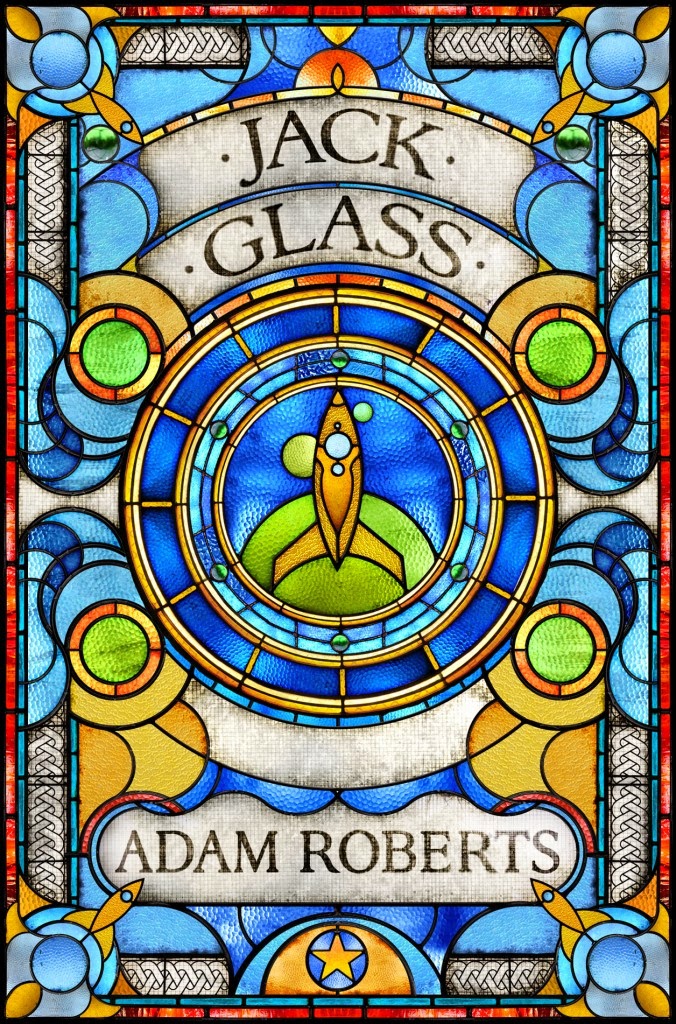
I went on holiday in August, so I've picked two of the best books from my holiday reading. If Tender Morsels made me excited about reading, We Have Always Lived in the Castle and Jack Glass made me excited about being a writer. They're both focused around a past murder - essentially, they're both crime novels - but they both do stunningly unique things with the genre. They're beautifully written, they're creepy and weird and smart and wonderful (and very, very different - Castle is a sort of domestic Gothic, while Jack Glass is Agatha Christie in Space), and if my books end up being even a tiny bit as interesting as these two, I will be very very pleased.

SEPTEMBER


This might just be my book of the year. It reminded me so strongly of my own teenage self, it's so engagingly written and it deals so lightly with such deep issues. And it's a bloody amazing love story. I can't sing Rainbow Rowell's praises highly enough.

OCTOBER


I was just gleeful about discovering this book, an Austen tribute that's not just a rehash. It's incredibly well written, it's extremely clever and it's a big, bold romance that's full of plot. I'd been reading a lot of children's and YA fiction when I picked Longbourn up, and this got me back into adult books again.

NOVEMBER


 This book just about broke my heart. I've read so very many books about World War Two, but this managed to jolt me right out of my general World War Two overexposure apathy. It's wonderful - and coincidentally, I got to meet Elizabeth Wein herself in November, which was pretty amazing.

DECEMBER


Another book that's as beautifully published as it is written and illustrated. We got a copy into the office, and we all crowded around it greedily, murmuring "silver foil! Purple edges! A TINY WEE BOOK IN THE BACK!" It's just touchable. It's also very very funny - and you all know how great Chris Riddell's illustrations are. What this book reminds me is that a) children's books are brilliant and b) children's publishing is brilliant. And I'm so very lucky to be a part of that.

So, those are my 13 picks. What are yours? What have you been raving about this year? What were your unmissable reads of 2013?

Sunday, 12 May 2013

April Reading Highlights

Reading! Reading! Reading! I think I may have overdosed on books.

Working in a publishing house is one of the greatest things that has ever happened to me, but it is also quite emotionally distressing. There are books everywhere, all around me, and I want to read them all but I can NEVER read them all. It torments me.

So what I'm realising is that I am never, realistically, going to be able to post reviews of every book I read here any more. In the last few weeks I have been reading about a book a day. So I'm reducing down again, to just the pick of the bunch. These are the books I've been evangelising about in the last month.

First, I have managed to do a review for The Bookbag: of Jenni Fagan's utterly, madly, stunningly brilliant The Panopticon. I five-starred it, and would five star again.

And the best of the rest:

Mr Fox by Helen Oyeyemi

I am ashamed to admit that it has taken me three years to read this book. I don't even know why. It's based on my favourite fairy tale, 'The Robber Bridegroom' (the English version is actually called 'Mr Fox', and it is my favourite because it contains animal people, grisly murders and a fierce girl detective who triumphs by using her brain). But somehow it never happened, until I went to the Granta Young British Novelists launch, heard Oyeyemi read and fell in instant and blazing literary love with her.

I pretty much ran to the till with Mr Fox and then fell on it like, er, Mr Fox on one of his victims - and oh my god, it's good. It's a mind-bogglingly smart collection of sharp, terrifying, stunningly well written short stories, all linking together to make up a battle of wits between a male writer and his female muse, an imaginary woman who has taken on a life of her own. Oyeyemi's writing is so bloody amazing, and what she's got to say about the way men control women is so true and (even more importantly) so effortlessly well expressed.

5 stars! 10 stars! How do I become friends with Helen Oyeyemi?


The Ghost Riders of Ordebec by Fred Vargas

I love Fred Vargas. I have nothing bad to say about her. Her mind works in such unique, charming, off-the-wall ways, and the universe she's created for her crime novels is both utterly delightful and full of animals. In The Ghost Riders of Ordebec, a pigeon is as important a character as a police officer, dogs need to be fed sugar at regular times of the day and there are a loving couple of rats who help to solve a murder.

Someone has been committing murders in the town of Ordebec, and the supersitious villagers believe that the culprit is Lord Hellequin, a ghostly rider who punishes the wicked by killing them and stealing their souls. Although the supernatural is never the real answer to one of Vargas's mysteries, there's an atmosphere of misty possibility that make you feel like you're in a slightly alternate universe. Vargas's protagonist Adamsberg is adorably vague, a cloud-shovelling policeman who has trouble remembering people's names and who didn't realise he had an extra illegitimate son because he failed to read a letter properly. This book, like all the others, is softly written but with a beautiful attention to detail and a quirky sense of humour. Vargas has a knack for creating characters (both human and animal, there really is no difference) that you instantly fall in love with, and her good guys radiate real honest goodness.

I think Vargas is the best thing in crime fiction right now. This latest novel is as good as all the others - and now that I've read it I really want a dog called Fleg.

4.5 stars.


The Fault in Our Stars by John Green

Well, we can all pack up and go home. John Green's written the perfect YA novel and there just isn't any point trying to follow his act. As I tweeted at the time:
Seriously, I am only exaggerating a little. This is just a virtuoso work of fiction, something that's beautiful and touching but also completely real in a way that most tearjerkers don't manage to be. The characters seriously read like people (real people, ones who are a bit mean and a bit small and a bit selfish, but still good), and so you can go from crying to laughing outrageously in about half a page. It's the most fearless presentation of the realities of suffering from cancer that I've ever read, as well as one of the best teenage love stories, and it has extremely light and intelligent things to say about everything from Great Literature to computer games.

One in the eye for anyone who thinks that YA is written by people who aren't good enough to write proper books.

5 stars. 


Golden Boy by Abigail Tarttelin

I went to the launch of this (launches, by the way, are the best things about publishing apart from everything to do with the books), and can confirm that Abigail is nice, fun and the same age as me (this is her second book. Yes, really). She is also an extremely thoughtful and imaginative author who has written a novel so compelling that I started it on Friday evening, had to be dragged away from it to go to a dinner party and then leaped out of bed at 7 on Saturday morning because I had to finish it now now now.

I really don't want to give away any of the plot, because so much of the book is about peeling away layers of secrets to reveal the even crazier secret underneath (it's a testament to how perfectly balanced and well-imagined Golden Boy is that when I tried to explain the plot to my boyfriend it sounded like something from Take a Break, like MY STALKER EX-BOYFRIEND ATE MY SISTER'S BABY WHILE HIGH ON DRUGS, but while I was actually reading it it didn't feel sensational at all). Suffice it to say, though, that Max Walker, the apparently perfect golden boy of the title... isn't. At all.

I'm seeing Golden Boy trailed in America as for fans of The Perks of Being a Wallflower, which... I'm not sure I buy into. Sure, it's about a teenager coming of age, and there are some very nicely-observed moments of emotional resolution, but it's also incredibly dark and shocking - and it's got one of the most horrifying openings I've ever come across. I read the first three chapters, put the book down and said, "I can't believe she just did that".

Seriously, though, I loved it, and I think that Golden Boy's going to be huge. Quick, everyone, read it now!

4.5 stars

Sunday, 7 April 2013

March reading round-up

Good weekend, Internet! I have several things to share with you today.

First, the two reviews I wrote for The Bookbag last month.

- The Shining Girls by Lauren Beukes. It's not out until later this month, but I got my hands on it early, and I can tell you now that is is terrifying, weird, gross and totally brilliant. I loved it.

- Blessed Are Those Who Thirst by Anne Holt. Many, many reviews ago, I wrote about Holt's novel 1222 on this very blog, and now I have reviewed her earlier (but more recently translated) effort. Unsurprisingly, it wasn't a patch on 1222, but it was an intriguing and far more than competent novel. Still definitely worth a read.

I also read a few books in my own time. Now, before you think that I'm falling down on the job, please know that not pictured are the thirty or so Orion Children's and Indigo titles that I've powered through with vast enjoyment. It feels a bit too odd to review work books on this very much non-work blog, so I'll just say that they were all extremely wonderful. I love our list.

Not on our list, though, were these - and they too were all fantastic, in very different ways. I think I've been lucky with my recent reading.


The Coronation by Boris Akunin

I have really worshipful feelings towards Boris Akunin. Recently, I went to a lecture he gave and came away dazzled by his literary genius. He looks like a twinkly silver-haired criminal mastermind, and he thinks so beautifully about what he writes and how he writes it.

In Akunin's lecture, he talked about the snobbery he encounters from people who think he's wasting his talents (he used to translate literary fiction) on silly, populist crime novels. You probably know what I think about that. To me, the Fandorin books are pretty much the epitome of what a really good reading experience should be - a book that's very well-written but also exciting and fun. They aren't afraid to enjoy themselves, and as a result they're a joy to read.

In Russia, Akunin's novels sell more than J K Rowling, and in my opinion they absolutely deserve to. Although each one features sexy aristocratic detective Erast Fandorin, they are all about very different types of crime, told in very different ways, and so they never stop feeling fresh and smart.

The Coronation is a racy tale of kidnap and jewel theft. It's narrated by stuffed-shirt butler Ziukin, who becomes Fandorin's unwilling stooge as they race to save both a child's life and the reputation of the Romanov family. As always, it was hugely entertaining and very clever, and as always, I loved it.

4 stars.


The Dispossessed by Ursula le Guin

I have very high standards when it comes to science fiction. Yes, I want to feel transported to somewhere entirely different, but at the same time I want to feel absolutely connected to the characters who are seeing those strange sights. Because they're having such alien experiences, their essential humanity (even if they're aliens themselves) needs to be in no doubt. They have to be more human than human.

That's why I love Ursula le Guin so much. She's meticulous about creating her alien worlds - everything from geography to politics is beautifully thought through - but she's also fantastic at creating places and characters that feel real. The main character, Shevek, is both clearly from an alien culture and someone who you might meet on the street any day, and although she's obviously using our own world to inform Urras and Anarres, they're more than just allegorical Earths. They're places with distinctive characteristics of their own.

Be warned, though: if you're looking for a pacy sci fi read, you won't find it here. In fact, in terms of its actual contents, The Dispossessed is slightly boring. The story of mathematician Shevek and his quest to discover the principle of simultaneity, there are a lot of scientific concepts and very little action. But somehow, in the hands of Ursula le Guin, this dull material is made to sing. Shevek is such a believable main character that I passionately wanted him to succeed, and when he does - in a scene where he finally writes out the equation he's been searching for his entire life - it was such an emotionally recognisable moment that (I am not exaggerating) I had tears in my eyes. Yes. Ursula le Guin made me cry over some maths.

I'm pretty sure that, in terms of sci fi, no one does it better than le Guin. I loved this, and the only reason why I'm not marking it higher is because, when I read it many years ago, I remember loving its companion novel The Left Hand of Darkness even more.

4.5 stars.


Miss Peregrine's Home for Peculiar Children by Ransom Riggs

One of the best things about writing fiction is that you're allowed to decide what's true. In the world you create, you make up the rules - and as soon as you've made them up, they become the peculiar reality of that part of fantasyland. Philip Pullman, for example, made up a world with daemons partly because he saw paintings of people with their pets and thought but what if they weren't just pets? What if they were really part of those people?

Much along the same lines, Ransom Riggs looked at a series of weird old staged photographs that he and his friends found in charity shops, of sepia people dressed up in faceless clown costumes, or hovering five inches above the ground, or with an extra reflection, and thought, but what if these weren't staged? What if they were real?

So he wrote a book in which they were. As I tweeted at the time:
 If Miss Peregrine's was just a great story I would still have loved it. I mean, a group of superpowered children living a secret existence on a hidden island of time? I'm sold. But Miss Peregrine's is a great story intertwined with an amazing (and totally terrifying) series of images that lifts it into being something even more special. It feels and looks precious, and it's very, very clever.

I'm all for ebooks in general, but this is one book that needs to be touched as you read it. It's very different from anything else I've read for a very long time, and - as I said in my tweet - I adored it.

4.5 stars.


Amity and Sorrow by Peggy Riley

There's been a lot of talk about this book lately. This always makes me a bit trepidatious, in case it turns out to be a case of mass hysteria. Having now read Amity and Sorrow, though, I think that in this instance the crowd has wisdom. It's an extremely well-written and weird take on sex and God in the American midwest, a novel that evokes its setting so vividly that, even though the weather is struggling to get into double figures in England at the moment, I was transported straight to the dust-dry heart of the Oklahoma summer.

The novel follows ex-cult member and first wife of fifty Amaranth, on the run from her abusive husband with her daughters Amity and Sorrow in tow. When Amaranth crashes her car at a remote gas station, the three are stranded, forced to assimilate into what is, for them, an alien world. But while Amity is happy to learn that it's OK to do things like read and go inside houses, Sorrow (who was the cult's oracular wunderkind) reacts to her freedom in a way that, to most readers, is going to seem completely insane. She spends half of her time crouched over a pot of water trying to have a vision of God (also known as her father), and the other half setting fire to things to bring about the Apocalypse. But although this may seem crazy, I think Riley has a point. Her story gives a balanced and intelligent look at the effects of brainwashing that doesn't (as many such books do) just show its ex-cult member characters shouting "Hooray!" and embracing the wonders of A&W's and network cable with open arms.

Plural marriage really fascinates me, partly because I just can't wrap my head around the emotional weirdness of it, and also because I have had to trot out the same no-actually-the-Church-of-Latterday-Saints-has-not-condoned-polygamy-since-1890-so-my-mother's-family-in-no-way-resembles-the-one-on-Big-Love explanation approximately one thousand times, whenever someone finds out that most of my relatives are Mormon. I think this is a sensitive and believable exploration of the issue that understands why someone would get into that kind of situation while it still concludes that it's a pretty terrible idea. I'm impressed.

4 stars.

Sunday, 10 March 2013

February Links Round-Up

Hello my freaky darlings.

Yes, I know, it's the middle of March. I have been neglecting this blog. I plead manuscript revisions and also a new job. I am currently trying to read through my new employer's entire frontlist, a terrible and arduous task that is causing me much pain.

I'm kidding. It's wonderful.

Anyway, here is the (short) list of the things I wrote in February.

For The Bookbag, I reviewed:

- The Scent of Death by Andrew Taylor. An excellent, very creepy and very different take on the American Revolution. If you like Taylor, you'll love this.

For Litro, I reviewed:

- Rubbernecker by Belinda Bauer. Really truly awesome crime novel. One of the best things I've read all year.

- Fanny and Stella by Neil MacKenna. I've seen a lot of reviewers who've loved this, but it left me lukewarm and a bit annoyed. A wonderful true story that could be told a lot better.

So, there you have it! That was the month that was. Onwards!

Sunday, 10 February 2013

January Links Round-Up

As you may have noticed, we are now deep into February. My last few weeks have been panic busy, like the world's most boring and work-related horror movie. Now, though, I am at rest, and catching up on all the things I should have done... last week, or possibly earlier.

So, here's my January in review.

For The Bookbag, I reviewed:

- Into That Forest by Louis Nowra. Astonishingly beautiful. Honestly, I think this is an instant children's classic.
- Shadows of the Silver Screen by Christopher Edge. Smart and fun historical silliness for the 10-12s.
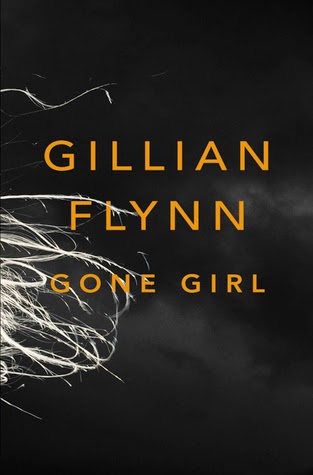
- Gone Girl by Gillian Flynn. Utterly mindblowing domestic thriller about the secrets in every marriage.

For Litro:

- I discussed my conversion to the Kindle.
- I interviewed Hanna Jameson, distressingly young and brilliant author of Something You Are.
- I reviewed the fantastic historical mystery A Treacherous Likeness by Lynn Shepherd (I know, this was published in February, but I did write it in January).

For this blog:

- I made my 2013 writing resolutions,
- I turned twenty-five, and
- I got an agent (yes! A real one!).

Not bad, all things considered.

Thursday, 31 January 2013

Something's Gotta Give: Slimline Reviews

My edits have now arrived, proving once and for all that this agent thing is really real and not something I made up in an overexcited moment.

I am preparing myself for the great task ahead of me: wantonly destroying all the characters and scenes in the book that are lovely but completely pointless to my plot. This will obviously take some time, and time is something that seems to be in short supply in my life already.

Therefore, I am proposing a change to this blog's reviewing rules. I just can't do a full blog post on every novel I read any more (and was anyone reading them anyway, my grandmother excepted?), so from now on I'm going to be doing lists of snap reviews.

Like this!

Before the Fact by Francis Iles

Alas, this was a good idea, lamely executed. Iles (pen name of Anthony Berkeley, a slightly less ingenious contemporary of Agatha Christie) was interested in making up new ways to write crime novels. This one is set before the crime actually happens. You'd think that this would be a promising concept. A woman wakes up one day convinced that her husband wants to murder her. But is she right?

Well... yes. As is painfully evident from the first page, her husband is going to murder her. We have to trail painfully through years of their life together, until we get to the day when he actually kills her. Believe me, by that point you will be begging him to go ahead and do it.

There's a very interesting question buried in Iles's premise, about whether we can ever really know what kind of person we're spending our life with, but he does absolutely nothing interesting with it. Frankly, this is one of the most boring thrillers I've ever read.

 If you want a book that does run with that idea in an awesomely clever way, try Gone Girl by Gillian Flynn (which I just happened to read for The Bookbag the week after I read this). It's amazing. This isn't.

2 stars.


The American Boy by Andrew Taylor

Now this one was good. A creepy historical murder mystery (it's Taylor, what else would you expect?) that's based on events during the childhood of Edgar Allen Poe, it's well imagined and satisfyingly well executed. It's got a nice, big, engrossing plot, full of mistaken identities, big chilly houses and lots of gloomy weather.

Taylor's novels aren't just mysteries, they're stories, and often quite involved ones - novels that happen to have murders in them, rather than novels about murder. The star of the show is always the setting, the (very accurately rendered) historical moment, and I thought that the world of The American Boy (Regency England) was particularly well imagined.

This is a book that you can get your teeth into, a blockbuster production that's good down to its smallest details. It's delightfully dark and twisty with just the right level of nastiness - basically, this is vintage Taylor. The sequel (prequel?) is out next month. Let me tell you, internet, I am excited.

4 stars.


The Night Circus by Erin Morgenstern

Let me sell you this book in a single sentence: it's about a magical Victorian circus. A MAGICAL. VICTORIAN. CIRCUS. And not just any magical Victorian circus, either. It's pretty much the slickest, the most sideways and in all ways the best vision of the best possible circus you could ever imagine. Only it's better.

Morgenstern's cirque des reves assaults all your senses at once. Her writing makes you slaver over the burnt-caramel smell of popcorn, taste cinnamon pastries and light up your mind's eye with fire and fluttering ribbons. There's a circus tent that's a garden made entirely of ice, a tent where you climb up into a labyrinth in the clouds and one where you can smell stories.

The circus itself is the setting for an absolutely beautiful love story. The two main characters of The Night Circus are a boy and girl who have been brought up knowing that they have to fight a mysterious and fatal magical duel - except that when they actually meet, they realise that all they want to do is spend the rest of their lives together. Can they manage it? Or will the power of the circus, the setting for their great game, send events spinning out of their control? Morgenstern plays with time and place masterfully, messing with the lives of her wonderful characters in a way that's like watching an illusionist carry out a virtuoso magic trick.

When I finished this book, I physically missed it. I wandered tragically around my house hugging it to me and whispering, what do I do with my life? I loved The Night Circus heartbreakingly much. I can do nothing else but give it

5 stars.


Ketchup Clouds by Annabel Pitcher

I have been itching to get my hands on this one for a long time. A teenage girl writes a series letters to a convicted murderer on Death Row, confessing to a terrible crime that she's kept secret from everyone she knows.

I loved this idea from the moment I first heard about it (you know how I love terrible secret crimes), but, more importantly, on closer acquaintance the story stands up to its premise.

I think what Pitcher has done with her hook is exceptional. She doles out the suspense - what did Zoe do, and who did she do it to? - in perfectly pitched little sips. I was going completely mental trying to work out which of the two possible victims Zoe has actually killed, so much so that I read half of the book on the train to work, and the other half on the train on the way home. Was the actual moment of the crime a let-down? Slightly, but that's just because I was keyed up to such a pitch that I would have been disappointed with anything that wasn't as insane as what I had been picturing in my head.

Zoe is a wonderful narrator, though, so realistic and funny that the book's success doesn't rest on the reveal of her crime alone. She's a real presence, and her words bring her world to life. Cleverly on Pitcher's part, one of the book's most engaging and present characters never actually appears in the text or says a single word. Zoe's murderer, Stuart Harris, never replies to her letters (he can't, since Zoe writes from 'Fiction Drive' to keep her story secret), but nevertheless he becomes an incredibly important person in her life. Zoe has made up a totally romanticised concept of him, the magical persona she needs to listen to her and understand the awful things that she's done. Like the rest of Ketchup Clouds, it's a perfectly pitched little detail that will break your heart and make you feel absolutely complicit in even the worst of Zoe's actions.

4.5 stars.

Tuesday, 1 January 2013

New Year's Excitements and Writing Resolutions: 2013

Dear readers, welcome to 2013! In the words of my friend Alice, I've got a good feeling about this one.

Because it is January 1, I thought I'd ring in the new year by mentioning a few of the amazing new books that I'm looking forward to getting my hands on in the months ahead. Not mentioned, of course, are all the books I don't know that I'm going to fall in love with yet. I especially can't wait for those.

- In just TWO DAYS the whole world will finally have the chance to read Jack Wolf's debut The Tale of Raw Head and Bloody Bones. I reviewed it for The Bookbag last year and was absolutely blown away by it. Get out there and buy this book! Unless you don't like the Gothic. In which case, there is no hope for you.

- In February, there's a new Andrew Taylor novel, The Scent of Death. It's Andrew Taylor. It's historical murder. What else do I even need to say?

- In March there's a new Fred Vargas, The Ghost Riders of Ordebec. I am DANCING IN MY SEAT about this one. I am so excited. Her books are creepy and quirky and totally charming. And weird. Her last crime novel was about real vampires, for heavens' sake.

- In May the second in Stephen Gallagher's (that link is to his Q&A for Litro, he's great) series about Detective Sebastian Becker, The Bedlam Detective, comes out in the UK. I read the first one for The Bookbag (again) and loved it, so I can't wait for the next installment. I want it now.

- In June there's (finally!) a new Neil Gaiman novel, The Ocean at the End of the Lane. I saw Gaiman speak last year, and he signed my copy of Stardust and I said thanks and cried a little bit out of sheer love. Basically, whatever this is about, I will read it.

I must be missing loads. What else is coming up? Please chip in.


And now, for something a bit more personal: my own literary resolutions for the year ahead. This year, I will achieve! Probably. Unless I don't. We shall see. Anyway...

- I will finish the book I am writing, edit it, edit it again and begin to query it. I will be rejected, and emerge refreshed.

- I will continue querying my crime novel like grim death until I get an agent for it.

- I will get at least 25% of the 1001 Books list read before the year is out. (I am currently at 20.78%, so this has to be achievable. It has to be.)

- I will not be a snob about the literary merit of any book unless I have actually read at least a part of it.

- I will write, something, every day. I will try to write fiction every day, but reviews also count.

- I will actually plan my books before I write them.

- When a scene gets boring, I will listen to Raymond Chandler and send a person bursting through the door with a gun. Indeed, I will remember that when I am bored by a scene my readers will be too.

- I will remember that I am not under a contractual obligation to put a dog into everything I write.

- Along the same lines, I will at least try to write something that does not in any way feature a murder. That said, when I do feature death...

- I shall not murder any prostitutes in anything I write. Those poor ladies of the night! What easy victims they make. But enough already. I will only kill rich people, preferably men.

- I will write more short stories. They are good for me and good to do.

- Sort of continuing on from that, I will enter more (also known as: any) literary competitions. Because it is no good writing things if I don't let anyone else see them.

- I will get a pet lion. No, wait. That one was a joke. I hear those things are expensive.


So, onwards! To 2013 proper. We can do this.

Sunday, 30 December 2012

December links round-up

Dear readers, December has been a month to erase from the records. Let us acknowledge that it happened and move on to better things.


Reviews for The Bookbag:

Something You Are by Hanna Jameson. A really stunning crime debut by a writer who is only 22 (she's amazing, I hate her a bit). This is a great book, if firmly in my boyfriend's mother's 'stabby' category.

The Flowers of War by Geling Yan (trans. Nicky Harman). Heard of the Rape of Nanking? Yeah. This is about that. This book will significantly depress you, but you should read it anyway. Extremely subtle and elegant take on an unimaginably horrible event.


Articles for Litro:

I collated Litro's 2012 Books of the Year list. My pick, of course, was Eowyn Ivey's The Snow Child.

Other than that, I have mainly been choosing other people's stories for our #StorySunday feature. Therefore I feel uniquely qualified to say that there are some really cracking ones and I absolutely recommend that you read through the whole backlist of them.


Possibly because of this influence, and also because it is Christmas, I also wrote my very own short(ish) story, 'The Worser Part', a creepy ghosty thing set in Edwardian Oxford. Yes, it is on this blog already, but here is another link to it anyway.


So, onwards! To 2013. I am hoping for great things from it. See you all then.

Friday, 30 November 2012

November links round-up

Good evening, dear readers! Against all the odds, November has turned out to be a most excellent and most busy month. I have been unfaithful to this blog numerous times, and I feel I should probably do a big links roundup of my recent activities.

So here one is.

First, for Litro Magazine, I've written:

- about the present (and past) of British crime writing,

- about Russell Tovey, the Penny Dreadfuls and how writers are secretly mad scientists,

- and about Pat the Bunny, and why children's apps can be a very good thing.


And for The Bookbag, I've reviewed:

- Stranger Magic by Marina Warner (read this if you are an academic and also a geek).

- Wits and Wives by Kate Chisholm (read this if you are an academic and also a feminist).

- The Kingdom of Bones by Stephen Gallagher (read this if you like Victorian penny dreadfuls and also DEATH).

- The Tale of Raw Head and Bloody Bones by Jack Wolf (read this if you like the eighteenth century, the Gothic and people cutting other people up).

Phew.

See you in December.

Friday, 16 November 2012

Bundles of Joy

Sarah Massini for Nosy Crow
First of all, I am so excited to finally be able to talk about the fact that Nosy Crow, a children's publisher I was lucky enough to do some work for a few weeks ago, is launching Stories Aloud, a new initiative that bundles digital audio content with their physical picture books.

Here is their blog post about it.

Basically, you open the book, you use your smartphone to scan the QR code and up pops an audio file that can be played alongside the book or listened to on its own. Isn't that brilliant? Isn't that simple? And doesn't it make you wonder why they're one of the only publishers actually willing to do something like this?

I know it does for me.

Bundling's actually something I've been thinking about for quite a while. There's such a disconnect between physical and digital publishing at the moment, and I can't understand why this is the case. Why don't more publishers connect the dots? Why, in short, isn't bundling standard?

As you may know, I review for The Bookbag, an excellent arrangement which means that I get a new book present in the post almost every week. Recently, I picked Marina Warner's Stranger Magic, and in due course it arrived at Bird HQ.

Now, as I said in my review, Stranger Magic is a beautiful book. Its cover is gorgeous, its illustrations are many and (most importantly of all) almost every word in it is lovely to experience. It's a reference book that I want to keep on my physical shelf, to flick through and pick from at will, free from licensing issues or battery failure or sudden cracked screen disasters. I don't just love the text, I love this physical book.

But Stranger Magic isn't just good. It's also great. How great, you may ask? See for yourself.

What you see
What you get.


It is 774g of purest processed tree. It is back-breakingly, purse-rippingly large. And with that piece of information, you may begin to perceive the problem. I love this book, I love reading this book, but I do not love carrying this book all the way up to Manchester and back in 24 hours (note: this happened).

Stop being stupid, Robin. Buy a Kindle!

Ah yes, but here's the thing. I have the physical book. Buying an entirely separate ebook edition, although it exists, seems a bit redundant now. But what if (and this is a question that will not stop plaguing me) the physical book and the ebook had arrived at my house in a single package?

Now, you can sort of do this already. Go onto Amazon and you'll see Stranger Magic: the real thing and Stranger Magic: the digital file nestling up against each other on the search page.

But what there isn't is any notion that you might want to buy both versions together, or that you might be offered a discount for doing so. And if you go into a bookstore, although some may have stands where you can buy ebook readers, there is likewise no way to buy, for a small additional fee, the companion ebook version of the new hardback you just purchased. And I CANNOT work out why not. I mean, it is driving me crazy.

An ebook and a physical book are, after all, built for different situations. Real books are for curling up with on a sofa or in bed, for looking at with the joy of successful acquisition, for storing and keeping and coming back to twenty years later. Ebooks are pared-down bits of pure function, the same words in portable form. They don't really overlap, and they're not really the same product. So why can't they be seen as complimentary rather than in conflict? One won't win. There is no winning. There is just (and I say this with my aspiring publisher's hat on) revenue that you make, and revenue that you don't.

We all know that the music industry has screwed up. At this stage, the internet is simply kicking away at what is left of its shrivelled husk. But publishing doesn't have to go that way. It still has time to jump on that digital bandwagon and ride it like the new money-making opportunity it is. More people are reading than ever before. Book crazes are bigger pheonomena than they ever were before. Yes, the 99p ebook model is pretty awful. But what if you try to establish the notion that all readers should buy ebooks in addition to their physical copies?

What I am saying is, why aren't we bundling physical and digital content as standard?

Now, there is nothing about this idea that means that it couldn't be rolled out, say, tomorrow. We have all the technology involved. We have ebooks, we have physical books, we have printers to create QR codes or individual ebook codes. I have a dream in which every physical book comes with some sort of scratch-away-to-reveal-the-code box or the equivalent (bearing in mind that putting the code in an easily readable place would probably create a whole new breed of bookshop theft), but I don't see why booksellers couldn't just ask customers at the till point if they'd like to pay £1 or £2 more to get the ebook version of their purchase as well, and then hand them a code from a box of them behind the desk. Or the code could be printed on the receipt... none of this is quite right, yet, but my point is that these are the kind of details that could be worked out as you go.

The idea is to level the playing field between traditional booksellers and Amazon and the other internet giants in terms of the content they offer, and to reach a large new bookloving demographic who don't currently use ebooks because they're being sold as an alternative to their beloved real-world copies.

If any publisher out there likes this idea, or any part of it, I hope you'll steal it. I want you to steal it. (Though of course I'd like you to steal me with it.) Because, you guys, I want a job. I want the industry I love to have a job for me, and other people like me. And I think that this'll only happen if publishers are proactive, and creative, and embrace change instead of behaving as though change has fangs and is here to kill your children.

So I say to you all: bundle up!

Tuesday, 23 October 2012

Delicious Death: Some Quickfire Crime Reviews

First, some links to my latest reviews for The Bookbag:

Desolation Island by Adolfo Garcia Ortega (short answer: very very good)

The Story of English by Joseph Piercy (short answer: very very mixed)

Now I don't know if you've heard, but I like crime. Theoretically, of course. This blog does not endorse wrongdoing in any way, shape or form, and in fact would encourage you all to be nice to other people and not kill them.

Nonetheless, in the abstract, crime soothes me. Here is a round-up of my latest toothsome murder selections.


Sovereign by C. J. Sansom.

I've said before that I like Sansom's books a lot. Not only does he have a very good, very full-blooded line in historical recreation, he's becoming a technically better writer as he goes along. Sovereign is the third in his series of novels about a crime-solving hunchbacked lawyer struggling to stay alive among the political intrigue of Henry VIII's court. It's set in 1541 and concerns two of the aging Henry's more disastrous decisions: his marriage to hot young thing Catherine Howard (the second beheaded, according to the rhyme) and his royal Progress around a very tetchy and still rebellious North of England.

Matthew Shardlake and his sexy assistant Jack Barak are sent to York on a mission to look after the safety of a political prisoner. Of course, Shardlake gets royally mixed up in Henry's progress and ends up uncovering a plot to destabilise the entire Tudor succession. As you do. It's all a bit ridiculous (although based on real events and real intrigue, like all the best fiction) but thoroughly fun, and the story carrys you along at a breathless pace all the way to the end. It's a 650 page book that reads like a 250 page novella.

Poor old Shardlake is a good man in a bad world. He doesn't know when to leave well enough alone and who has a lot of trouble remembering that most people are a lot nastier than he is. Each book sees him sinking further into his pit of emotional despair, and each culminates with the inevitable announcement that this will be ABSOLUTELY HIS VERY LAST CASE. Since I know that Sansom has written at least two more Shardlake novels I can smell the lie and be very grateful for it. This series ticks both my crime nerd and  history nerd boxes, and long may it last.

I see I originally gave the Shardlake books 3 stars. I must have been feeling mean that day. For this outing, I'm revising upwards to

4 stars.


The Affair of the Mutilated Mink by James Anderson

Before I actually read it, I had suspicions that The Affair of the Mutilated Mink might be a silly book. Imagine my joy when I realised that it is precisely that. Its pages give off gusts of the purest, most exquisite Golden Age foolery (in case you are wondering, this rare substance smells like leather-bound books, pearls, rolling acres and gunshot wounds, and Agatha Christie used to spray herself all over with it every morning).

The second in Anderson's series of pastiche Golden Age detective novels (my library didn't have the first), its English upper class characters bray and blether delightfully, its American characters say HOWDY and chew cigars and everyone has utterly creative secret backgrounds involving JEWELS and MISTAKEN IDENTITIES and TRAGIC DEATHS. The dippy set-up (American producer wants to shoot movie on location at the film-mad Earl of Burford's scenic pile) is an excuse to drag a motley cast of movie star types, aristocracy, long-lost relatives and the obligatory troubled artist together for a country-house weekend party that ends (surprise surprise) with MURDER MOST FOUL.

The Affair of the Mutilated Mink never makes the mistake of taking itself seriously. Even the characters know they're being ridiculous, and there's an extremely meta joke-that-knows-it's-a-joke atmosphere to the whole thing that reminded me a lot of P. G. Wodehouse. Fans of Golden Age detective fiction will have their hearts melted by throwaway references to Ariadne Oliver and Inspector Alleyn (who, in this world, are real people), as well as spot-on recreations of stock characters like the officious Scotland Yard man (complete with trusty valet), the prima donna actress and the American movie producer extraordinaire. At the same time, though, Anderson's doing something quite intelligent with the familiar tropes. The man sent from Scotland Yard turns out to be too smart for his own good and the mystery is actually solved by Wilkins, one of those adorably modest country detective who are always totally snubbed in Christie and Sayers novels. The leading girl is not only suitably plucky and resourceful but also quite a rounded human being, the Earl's bluffness is all for show... and so on, and so on. It's a really witty variation on a well-known theme that feels new and old at the same time - which, coincidentally, was what all those Golden Age crime novels were trying to do in the first place.

This book is wonderful. It affectionately embraces all the flaws of its parent genre, pokes gentle fun at its worst excesses and on top of that manages to put together a fairly tidy and inventive murder mystery. The reveal may not blow your mind, although there are some great twists in the tale, but the joy of any good Golden Age murder mystery is the silly, over-the-top journey to that final denouement, and this journey is ridiculously fun.

Another 4 stars.


Image from banisbooks.blogspot.com
Scales of Justice by Ngaio Marsh

By the way, in case you're wondering, I did not mistakenly smash my fingers against my keyboard to come up with that first name. Marsh was from New Zealand, so her parents gave her a name that's the Maori word for a kind of tree. The G is silent so it's pronounced like Naio. There you go, that's your fascinating trivia for the day. You're welcome.

Before I actually discuss the content of this book, I would like to direct your attention to the FANTASTIC cover of my edition. It is purest essence of the 1970s, when publishers had just discovered photography but were not yet conversant with realism. This image has it all: fake plastic trout, puzzled dog, daub of red paint where the blood should be. It is so ugly that I can't stop staring at it.

Unfortunately, though, it turns out that the best thing about Scales of Justice is that cover. A lot of Golden Age writers (apart from Dorothy Sayers, who got bored and turned to translating Dante instead) carried on relentlessly beating the dead horse of the 1930s setting well into the 1960s, and this book, published in 1955, contains themes so stale that they're practically suppurating.

The female characters wear twinsets with their tweeds and the male characters talk about Nazis, but apart from that you'd never guess that the year was no longer 1935. Retired colonels and dusty earls still perambulate around their small English country town, huntin' and shootin' and fishin' and sleepin' with each other. The murder itself is an example of the worst excesses of the clue puzzle format, which states that if the killer does not do the deed while balanced on one leg, wearing a swimming costume and a lion mask and wielding a melon borer the writer is NOT TRYING HARD ENOUGH.

Marsh is trying hard, all right, but the effect is of insanity and extreme hideboundness rather than any kind of real invention. Add to that the tiresome upper-class honour displayed by all the characters, which pointlessly derails the investigation for 100 pages, and you have a murder mystery so idiotic that I could barely finish it. And when I did, the reveal was stupid. Nul points, Marsh. Nul points.

2 stars.