Showing posts with label 1.5 stars. Show all posts

Saturday, 29 December 2012

Quick-fire reviews: my Christmas book list

I personally move to rename Christmas, Bookmas. I can hear the Christians wailing and gnashing their teeth from here, but it would be a more accurate description of my activities during the festive period. There is a bit of Christ, but there are a lot of books, and as you all know, I am all about the books.

Please note that the following reviews are not of the books I received for Christmas. Oh no. I have not even begin to make a dent in that towering pile. These are merely the books I read during my 'holiday' at home (ho ho), while the rest of my family revolved around me screaming and shouting and playing endless games of Battleship.


Pereira Maintains by Antonio Tabucci
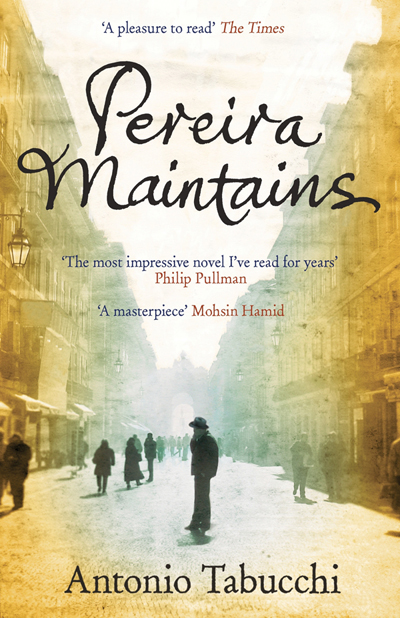
I started things off with this jolly little tale of police suppression in 1930s Portugal. The Pereira of the title is a fat and aging crime reporter who's come down in the world to become the culture section of fledgeling 'non-political' paper the Lisboa. For slightly cosmic reasons, he gets into contact with a philosophy graduate named Monteiro Rossi. Rossi becomes Pereira's assistant at the paper, but he turns out to be pretty much the worst assistant ever - not only did he fake most of his dissertation, but all the articles he writes for Pereira are politically incendiary and therefore unpublishable. You see, this is Portugal under Salazar, a place where people pretend that everything is normal even though the secret police are beating stall-holders to death in the middle of the market. Culture has become dangerous, and the translations Pereira innocently makes of European stories suddenly have new and worrying political meanings.

Pereira begins the novel as pretty much the most clueless, passive person in existence - he's a journalist who has to ask his friends for the news - but he finds his friendship with Rossi changing how he sees the world. Rossi becomes the son he never had, and as Rossi gets deeper into the resistance movement, Pereira is dragged into it along with him. The whole novel is written as Pereira's testimony - of exactly what, we're not sure until the very end.

This is an apparently peaceful and dreamy little book, under which hides some serious subversive meaning. I think it's one of those novels that can be read and re-read, new themes emerging each time. It's clever without being showy, beautifully written (and with visually beautiful images, crystal seas and palm trees waving and so on) but with a really nasty undertaste to it. I think Pereira Maintains is a book that needs to be thought about. I didn't fall in love with it immediately, but it's been growing on me since I put it down, and I think it's going to stay in my brain for quite a while to come.

4.5 stars


Maggot Moon by Sally Gardner

I bought this for my niece for Christmas because I wanted to read it myself. It was that kind of present. Luckily, she read it in three hours flat, and then I wrenched it out of her hands and read it in two.

The number of people I recommend a book to after I've finished it is usually a good test of how much I liked it, and after I finished Maggot Moon I tweeted about it four times in quick succession and then sent three ecstatic emails to friends ordering them to JUST STOP EVERYTHING AND READ THIS BOOK.

It was that good. As I said at the time,


Set in an alternate-reality 1950s Soviet state, Maggot Moon is the story of Standish Treadwell. On the eve of a planned great moon landing by the Motherland, Standish dreams of flying away to his own perfect planet, Juniper, with his best friend Hector. On Planet Juniper the Cadillacs are the colour of ice cream, the Croca-Colas never run out and there are no secret police waiting to turn you and your family into maggot food if you disobey the Motherland.

Maggot Moon is a totally black dystopian fantasy told with incredibly effective simplicity. Standish is a wonderful, idiosyncratic narrator (he's dyslexic, so words come out of his head sounding brilliantly wrong), likeable and heartbreakingly honest. It'd have been easy to have made him one of those wide-eyed teen narrators living in a world he doesn't understand, but Gardner's smarter and more realistic than that. Standish absolutely does understand all the horrendous adult things that happen around him, even though he processes them in an utterly teenage way. He knows what happened to his parents and he knows what's likely to happen to him and his Gramps, but all the same he clings on to the wonderful world of Juniper that he's built in his head.

As the Moon Landing gets closer, it becomes clear that Standish is in possession of some pretty important information - the kind of stuff that could either destroy the Government or (more likely) himself and the people he loves. Then Hector goes missing, and Standish realises that he's got to be brave enough to use what he knows before the Government are able to make him disappear too.

This is a book about a kid making the kind of impossible decisions that most adults wouldn't be able to face. But like all the best fantasy, it feels real, totally believable and totally tragic. The ending, I warn you now, is awful, but it's one of those endings that destroys you in a hopeful sort of way, leaving you feeling slightly fire-damaged but lighter because of it.

Honestly, this snuck in from absolutely nowhere to become one of my books of 2012. I think it's one of the most perfect pieces of teen fiction I've read, maybe ever. I wish I had written it. Why didn't I write it?

5 stars.


Hand in Glove and Dead Water by Ngaio Marsh

The good thing about Agatha Christie is that, even when she's phoning it in, the result is still readable. The bad thing about Ngaio Marsh is that, when she's phoning it in, the result is... really not. Her entire back catalogue was recently re-published in fat omnibus editions, and as I work my way through them I am more and more reaching the conclusion that, although when Marsh is good she is very very good (see: A Surfeit of Lampreys, still one of my top favourite crime novels ever), when she is bad, she is horrid.

Hand in Glove and Dead Water are both thick with hackneyed stereotypes, gurning yokels and clangingly awful love-affairs, and the murders in them are both done for overwhelmingly stupid reasons, by methods that are needlessly complex and/or totally unbelievable. I mean, the whole of Hand in Glove revolves around the premise that a cigarette case is an object important enough to bother about. And then there are all the couples who conduct entire love affairs via sentences like Come here, silly darling, and let me clasp you to my bosom! And then there are the aforementioned yokels, who hawk and mumble away as though they have been endowed with the brains of rats instead of human beings. Seriously, Ngaio Marsh, going to Cambridge is not a test you have to pass to become a person.

God, these books. I just can't. I give up. It's a good thing that Marsh is dead, so she can't see me denounce her.

1.5 stars.


Broken Voices by Andrew Taylor

Broken Voices is a brand-new Kindle-only novella by Andrew Taylor - and since I have a brand-new Kindle it seemed a necessary purchase. Set one hundred years ago in a Fenland cathedral city, this a gloriously straight-up ghost story, one of those English classics of the genre in which nothing happens except a lot of chilling suspense.

The main character, a pupil at the city's King's School, has been stuck at the cathedral over the Christmas period while his parents stay in India. He's boarding at the house of a poor ex-teacher along with another pupil, an ex-choirboy who's suffering a terrible disgrace. Both boys are lonely and embittered, and when they hear a mysterious story about the Cathedral's history they decide that this is their opportunity to prove themselves.

Taylor's real strength - I've mentioned this before - is his extraordinary ability to evoke atmosphere, and that's something that's great for this tale. His historical settings feel both right and at the same time deliciously wrong. Something is always rotten in an Andrew Taylor novel, the skies are grey and the buildings lour. In Broken Voices there's a very nasty cat, an even nastier bit with some rats, chilly winter nights, cold Cathedral stones and a beautifully joyless Christmas day. Uncertainty is the name of the game - as the very first line asks,
'Was there a ghost? Was there, in a manner of speaking, a murder?'
(Taylor, like me, doesn't seem to be able to get away from murder. I can understand that.) His main character is a typically sulky and selfish teenage boy - and, in fact, all of his characters are small and basically unsympathetic. This is a cold-hearted world where there's really no one to root for, and that's perfect for the maybe-ghost story Taylor's telling.

I believe firmly that Christmas wouldn't be Christmas without a few really good scary stories (see also my own effort), and so this made my holiday season feel complete. Simple but effective, Broken Voices is an excellent marriage of author and subject which does exactly what it promises to do.

4 stars.

Thursday, 30 June 2011

Reviews: Go Tell It On The Mountain, Written on the Body and The Lost Books of the Odyssey

Ah, the silly season is upon us. Today a tourist asked me where to find pads of paper "like the students use, that say 'OXFORD' on them". I pointed out that students would probably use blank refill pads, like all other people, and she looked confused, as though I had shattered her illusions.

Then another lady asked where "the Mister Moss series of books are, that someone told me about, I think they're by an author called - Dexter?" I did not laugh, but oh god was it hard. I think I like this one better than the request I once got for How To Cook A Mockingbird.

Anyway.

Today I have three reviews for you, or rather two reviews and a short bit where I am rude about Jeanette Winterson. As I have been taught in many careers self-improvement sessions, I will sandwich the bad between the two goods, so as to cleanse it from your minds and leave you with a general impression of the four stars that I have given both of the books that happen not to have been written by Jeanette Winterson.

The books in question: Go Tell It On The Mountain by James Baldwin, Written on the Body by Jeanette Winterson and The Lost Books Of The Odyssey by Zachary Mason.

First, the Baldwin. I've come at Go Tell It On The Mountain slightly back-to-front, since I read Giovanni's Room last month on a recommendation from my mother, expecting, goodness knows why, something a bit like a gay Good Soldier: beautifully written, mannered and full of characters with dark wicked secrets hidden underneath their detachable collars. Well, it certainly was beautiful, but otherwise completely unlike what I was imagining - it's written in incredibly clear, expressive, immediate prose, with a bastard of a narrator that you instantly sympathise with and a horribly compelling central story. My mother calls Giovanni's Room a "little gem", which makes it sound a bit like salad, but it's not such a bad description - it really is a gorgeous little book. I finished it, realised that I MUST HAVE MORE OF THIS IMMEDIATELY, and the next day rushed out and bought Go Tell It On The Mountain, Baldwin's first published book, written years before he got round to Giovanni.

First published in 1953 (which I guess makes this a classic review), Go Tell It On The Mountain is the story of a black family living in 1930s Harlem. They're all members of The Church of The Temple of the Fire Baptised, which is one of those all-singing, all-dancing affairs that takes the basic view that you're either a saint or you're damned horribly, and you're much more likely to be the latter than the former. The father, Mr Grimes (can you see the symbolism there?), one of the church's preachers and therefore a saint, seems to spend his days helping his children along to godliness by beating them a lot. This makes his eldest son John hate him intensely and then of course feel horribly guilty about doing so - since he hates a saint, he must be a terrible dirty person who's going to go straight to his father's rather detailed version of hell.

As you may already be able to tell, this is a book that has a lot of painful, mightily suppressed issues. The whole plot takes place within 24 hours, on the fourteenth birthday of the main character John (similarity to James Baldwin not coincidental), and most of it goes on inside its character's heads - John's, as he tries to work out whether or not he can be saved; and his mother's, his father's and his aunt's as they go back over the events of their (fairly awful) lives. It's all incredibly interior - one of those books where people just sit in a room and stare at one another meaningfully - but Baldwin's so good at understanding people, how they work and how they think, that you totally believe in his characters and buy into their inner lives.

All the same, though, the lack of forward movement in Go Tell It On The Mountain does get a little irritating at times. Internalised emotional epiphanies are all very well, and perfectly realistic - most of my moments of deep revelation about the course of my life have happened when I was half way through eating an apple, or washing my toe, or handing my ticket to the train guard - but all the same it's nice to have some sort of accompanying emotional resolution out there in the book's real world. Even the characters in To The Lighthouse finally got to go to the lighthouse, for heaven's sake. John never confronts his father about how horrible he is, for example, and his mother never tells him how much she loves him - they think all this in their heads, but nothing actually comes out.

This all sounds a bit like I didn't enjoy Go Tell It On The Mountain, but I really did. It's a fascinating story, beautifully and colourfully written - not quite as perfect as Giovanni's Room, maybe, but still a very worthwhile read.

4 stars.


When I was about half way through Go Tell It On The Mountain, I happened to leave it behind when I went for my break. Instead of running all the way back downstairs to get it, I decided to finally have a go with Written on the Body, which I have been eyeing up for quite a while. I've enjoyed the Jeanette Wintersons I've read before, and Written on the Body is pleasingly small and slight, apparently perfectly break-sized.

This was an error.

It's very rare that I don't finish a book - I've really got to hate something with exceptional fervour - but twenty minutes with this was more than enough for me. It's possible that Written on the Body gets unrecognisably better after page 32, but I decided that in this case I was perfectly happy to take my chances. The thing - up to page 32 - reads like some bizarre Digested Read parody of itself, and of snobbishly literary fiction about romance in general. I'm paraphrasing, because I don't have it in front of me any more, but the average paragraph went something like:
Then I met Helen. She was such a staunch leftie that even her nipples pointed sideways. She loved beauty but was committed to anarchy, which made her sad. I slept with her on a lilo to comfort her but afterwards she was still racked with fundamental doubts. She thought about blowing up some paintings, to show her contempt for the patriarchy, but she found them too beautiful so we decided to detonate a urinal instead. I went into the urinal first to warn the occupants - it was full of pricks. That was a joke. I made a joke! Or maybe I didn't. I'm so fantastically clever that you can't tell. Did I tell you that I've slept with a lot of people? Because I have. Boobs.
On page 32 I gave up, never to return. Two stars, I feel, would be far too generous for what this was.

1.5 stars.


And finally, The Lost Books of the Odyssey. I was lured towards it on the promise of my coworker (who has never been wrong about a book yet) and also because of its cover. I mean, look at that cover. That is a cover that knows its market and calls out to it seductively, like a high-class prostitute in a historically accurate toga. Classics geeks, this one's for you.

I usually don't like describing books by saying 'it's as though Grisham/Joyce/Tennyson/Atwood sat down and wrote a book with Asimov/Heller/Golding/Jodi Picoult', but, in this case, I have to make an exception, because The Lost Books of the Odyssey really is a bit like what would happen if Italio Calvino had written the Odyssey. It's classical myth filled with EXTREME POSTMODERN UNCERTAINTY - non-linear what-ifs, going round and round the original story - what if Penelope was dead, what if Odysseus was a coward, what if (my personal favourite) Penelope was actually a suitor-murdering werewolf. Or, to put it another way, it's 44 bits of really high-end fanfic.

This is definitely a book that works best if you know its source well, both because of how cleverly Mason picks up on little throwaway details from the Odyssey and takes them to their logical conclusion and because of how oddly shocking it is when he departs from the plot you know. Just like in fanfic, an alternative universe where a character is dead is interesting mostly because both the writer and the reader understand that they should really be alive, and that in killing them off they've purposefully messed with the strings of the story.

Because it is so similar to the Odyssey, and at the same time not similar at all, there's a weird, intense, dreamlike quality to The Lost Books of the Odyssey - only it's the sort of dream where your friend has someone else's face and you open your front door to find you're in a garden full of dark statues that turn to watch you as you go by. What I'm trying to say is, it's creepy. Mason's got an incredibly clever, eerie imagination - there's a story, for example, where Paris is Death personified, and Troy is Hell - and when the stories work, they work, like a punch in the (mental) gut. Unfortunately, though, sometimes they don't - Mason's far too fond of putting long words and complex philosophical ideas into the mouths of characters that they don't suit at all, and towards the end of the book I felt like he might be running out of ideas somewhat.

However, for the most part, what he's done in The Lost Books of the Odyssey is awesome. It's gorgeous, and stately, and totally different, and most importantly it's an absolute pleasure to geek out over, top-quality fanfic for people who (mostly) don't even know what fanfic is.

4 stars.