Showing posts with label holiday. Show all posts

Saturday, 21 December 2013

2013: My year in 13 books

Greetings, festive friends! I've had a busy month. In fact, I have had the sort of month that made me want to crawl under a rock and put up a sign saying I NEED TO JUST LIE HERE FOR A WHILE AND BREATHE.

But now I am on holiday (yes! A holiday! For two whole weeks!) and I am rediscovering the concept of leisure, which is apparently a thing that some people get. I just got into the spirit of it by reading the whole of Holly Black's Curse Workers trilogy in 72 hours, and it turns out that leisure is great.

In case you want to keep up to date with my internet activities, I have:

- written a Dear Santa letter for Space on the Bookshelf about why I think there should be a Diana Wynne Jones book in every child's stocking this Christmas.

been hanging out at Author Allsorts again, most recently talking about my top tip for a big edit.

And now, to the main blog. It's the end of the year, which is traditionally the Time of Listmaking. And of course, because my entire life is about books (really, it is, if someone stopped me and asked me to sum up my life in one single word I would just shout "BOOKS!"), here is my year as expressed in 13 of them. I've linked to my reviews of them, where that applies - and I've also given myself a bit of leeway on exactly when I read them. If it was sort of kind of around that month, it counts.

JANUARY 


This was a Christmas present that I read at the very beginning of January, and it got my year's reading off to a start just as magical as my year itself. Dark, gorgeous and headily wonderful, this book was the perfect beginning to an amazing year.

FEBRUARY 
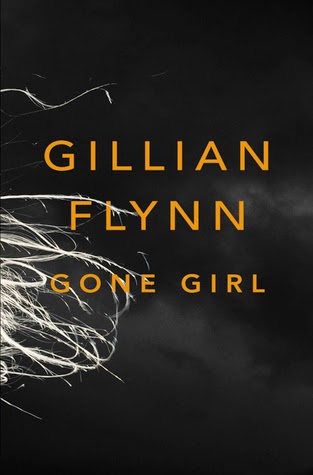


I was lucky enough to review this for The Bookbag when it first came out in paperback, and I've been yelling about it ever since. I like that this is February's book - February is the month of love, after all, and this book makes you fundamentally question everything about the reality of adult relationships. (Don't worry, this has nothing to do with my own life.)

MARCH 


Again, I was lucky enough to get an advance review copy of The Shining Girls from The Bookbag. I admit, I was upset by it - it's so brutal - but it's also utterly brilliant. Seriously not for the faint of heart, but if you can cope with its horrors you'll find it incredibly thought-provoking and well written.

APRIL


I read this in my first months at Orion, and it just blew my mind. It isn't just a wonderful story, it's a wonderful concept - a narrative linked to found photos, which inform the text and are printed alongside it. It makes you constantly wonder if what you're reading is real, and the pictures themselves give you chills. It's such a well-published book, and though I love this book as a reader, I love it even more with my editorial hat on.

MAY


Another book that takes expectations and jumps up and down all over them. It's a middle-grade novel. It's about someone dying of cancer. It's heavily illustrated. Its pictures are the scariest thing about it. And it's fantastic. A Monster Calls completely transcends genres and reading levels. It isn't for children, it's for humans. It's a sad fact that a lot of people stil insist on being very foolish about the quality and importance of children's fiction, and this year my three-word response has become A Monster Calls. I win.

JUNE

The Leviathan trilogy - Scott Westerfeld


When I read Leviathan in June, it had been a long time since I'd been really excited about a trilogy. Then I finished Leviathan, and ran to the nearest bookshop after work to buy Behemoth. Literally. I ran. It's a steampunk adventure set during an alternate universe World War One, and it made my summer.

JULY


I've read a lot of fairy tale adaptations, but this one has to be head and shoulders the best I've ever come across. It felt totally fresh and completely real, and it proved to me that there really are endless places to go with any one concept, no matter how overdone it might seem to be. The kind of book that just makes me excited about fiction.

AUGUST


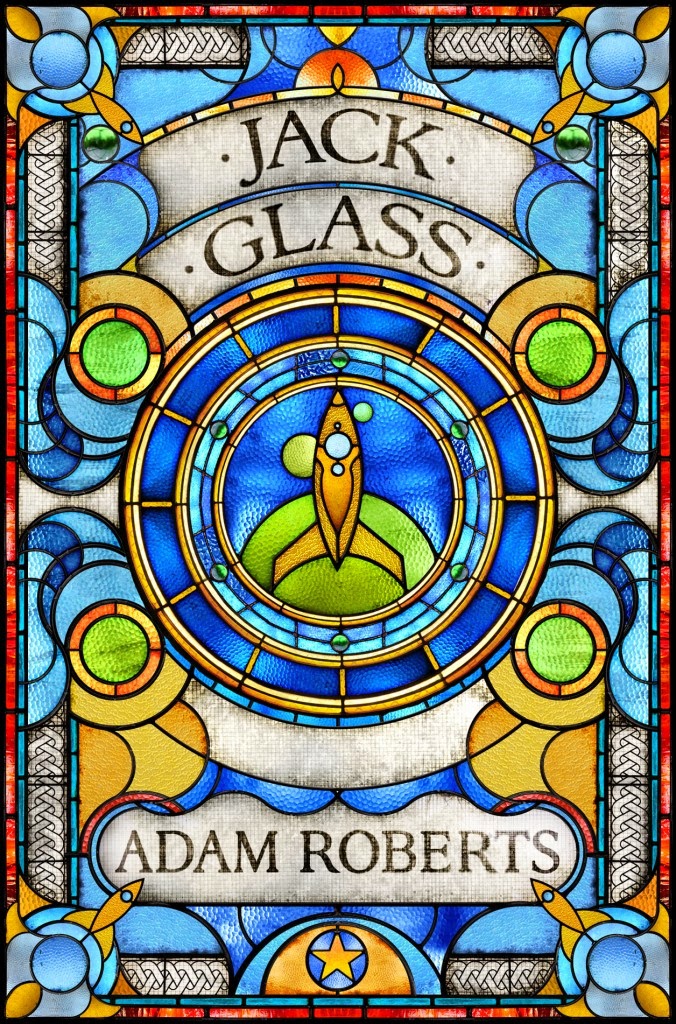
I went on holiday in August, so I've picked two of the best books from my holiday reading. If Tender Morsels made me excited about reading, We Have Always Lived in the Castle and Jack Glass made me excited about being a writer. They're both focused around a past murder - essentially, they're both crime novels - but they both do stunningly unique things with the genre. They're beautifully written, they're creepy and weird and smart and wonderful (and very, very different - Castle is a sort of domestic Gothic, while Jack Glass is Agatha Christie in Space), and if my books end up being even a tiny bit as interesting as these two, I will be very very pleased.

SEPTEMBER


This might just be my book of the year. It reminded me so strongly of my own teenage self, it's so engagingly written and it deals so lightly with such deep issues. And it's a bloody amazing love story. I can't sing Rainbow Rowell's praises highly enough.

OCTOBER


I was just gleeful about discovering this book, an Austen tribute that's not just a rehash. It's incredibly well written, it's extremely clever and it's a big, bold romance that's full of plot. I'd been reading a lot of children's and YA fiction when I picked Longbourn up, and this got me back into adult books again.

NOVEMBER


 This book just about broke my heart. I've read so very many books about World War Two, but this managed to jolt me right out of my general World War Two overexposure apathy. It's wonderful - and coincidentally, I got to meet Elizabeth Wein herself in November, which was pretty amazing.

DECEMBER


Another book that's as beautifully published as it is written and illustrated. We got a copy into the office, and we all crowded around it greedily, murmuring "silver foil! Purple edges! A TINY WEE BOOK IN THE BACK!" It's just touchable. It's also very very funny - and you all know how great Chris Riddell's illustrations are. What this book reminds me is that a) children's books are brilliant and b) children's publishing is brilliant. And I'm so very lucky to be a part of that.

So, those are my 13 picks. What are yours? What have you been raving about this year? What were your unmissable reads of 2013?

Sunday, 2 September 2012

Swiss wine and cheese reviews part 2: The Riddle of the Sands and A Single Man

First, I would like to share some good news with you. The furniture has gone. It has ALL GONE. There are NO MATTRESSES IN THE HALLWAY ANY MORE and there is NOT A WARDROBE IN THE BATHROOM EITHER. I am euphoric but also slightly suspicious, in case this is all too good to be true and I wake up tomorrow and discover that it has returned, bringing friends.

I seem to recall that I only reviewed half of the books I read on holiday. This is because the furniture made me too angry to think. But now it has gone, and I have room in my brain to get angry about books again.

Actually, neither of these books made me particularly angry. One did make me sad (you'll see why), and one just confused me, but both of them turned out to be not at all well-chosen holiday reads. Oops.

First up, The Riddle of the Sands by Erskine Childers.

If this book was a person, and I met it on a singles website (go with me on this), we would immediately flag up high uncompatability and any date we were forced to go on would be a disaster. If it was a dog, it would be a short-haired chihuahua and I would be looking for one of those dogs that look like an enormous toilet brush. What I am saying is, this book was not the book for me.

If you want to find out whether or not you will enjoy The Riddle of the Sands more than I did, you need to ask yourself one important question. Do you like boats?

For me, boats are like horses: I find them pleasant from a distance, but quite puzzling close up. They have lots of bits to them, like jibs and booms and all manner of little clippy things (?) that need constant attention, and I am daunted by this. This is not to say that I am incapable of getting on board with aquatically-themed novels. I read the whole Swallows and Amazons series in my youth (although I did mentally look away during the more naval parts), and I think boats are excellent places to put a plot. But there are books featuring the sea and there are books where THE WHOLE STORY is people belaying the fore-top-poop-sail and then letting it out again. (Or is belaying letting it out? Answers below please). And the second is the case in The Riddle of the Sands.

Unfortunately, my duffer of a brain does not allow me to focus properly on seafaring terms, meaning that I was only able to take in approximately one-third of the words in The Riddle of the Sands. To me, a typical paragraph looked something like this:
"??? the ??? ???!" said Davies. I quickly ???? ???? and jumped into the ?????. "Quick!" cried the normally taciturn Davies, turning a violent shade of puce. "We only have three hours until the ??? fills up the ??? and we are left in the ????" "But what of the villainous Germans?" I asked. "Surely their ??? must ???? on the ???? at ????." "Nonsense," said Davies. "Remember the ??? ???? ????? ???? at eight ????. Also, canals."
The narrator, Carruthers, is a twerp - he begins the story by complaining about how BORED he is of London because all his friends are away and both(!) of his clubs are being cleaned - but even though the real hero is sweet, silent Davies, he is still too nautical to make me feel like I had discovered a kindred spirit. Our intrepid heroes (?) have to foil some sort of plot to do with Germans and canals, which they are either in, or not in, or in the wrong ones, or something. Anyway, the important point is that they are VILLAINOUS, like all Germans in British novels at the beginning of the twentieth century.

If you want a good tonal comparison for The Riddle of the Sands, think The 39 Steps but with boats. It's got the same jolly-ho British gentlemen, casual racism, open-air chases and random but very dangerous danger. I think I would have found The Riddle of the Sands gently amusing in its own unintentionally offensive way had I not been so befuddled by all the boat words. If you do like boats, I think you'll find it charming but dated, but because I don't I have to give it

2.5 stars.


My last holiday book was A Single Man by Christopher Isherwood. So far, I have had 100% success with Isherwood. Even though I'm not sure Isherwood's someone I'd like to hang out in a pub with, I love his prose style, and both of the books I've previously read by him were pretty dark but unfailingly funny. In this novel, though, he has magnificently lost his sense of humour.

It's clear that Isherwood was going through a very, very bad time when he wrote A Single Man. Every page of it washes you with utter black despair of the kind I haven't experienced since the last time I read The Bell Jar (which I keep doing because I love it, even though I know that afterwards I will have to crawl into bed and stare at the ceiling for a while thinking about doom). Like The Bell Jar, it feels intensely personal in a way that makes you want to phone the Samaritans on the author's behalf.

Set in sixties America, it follows one day in the life of George, whose life-partner Jim has suddenly died. Because George is a man and Jim was one also, he can't acknowledge his grief, he can't properly mourn and he has no physical or legal claim on the person he loved. (Sounds familiar? Of course it does. And the worst thing is that it's not just ancient history. In the kind of life-mirroring-art that you wish would never happen, George's exact story played out again last year. That last link, by the way, is to a youtube video made by the surviving partner, and you should probably be in a strong mental state before you click play.)

Feel depressed yet? It gets worse. If that whole scenario wasn't awful enough on its own, A Single Man is set in Los Angeles, the most grim city in the universe, where the roads are neverending circles of hell, the sky is a permanent weird shade of yellow and everyone is starving hungry and hates each other. Everything is horrible, George hates everyone and his life is just A LITANY OF DESPAIR. And that is how this book goes.

I felt uncomfortable and upset while I was reading it, and disliked George intensely, which I'm sure is exactly what what Isherwood wanted to happen. The idea he's trying to get across- and it's an extremely powerful one - is that if you're subjected to hate all your life, you will become a hateful person. If you simply feel soggily sorry for George, you've missed the point. He's not a tragic martyr, he's a painfully angry, sad man, and that's the fault of all the people who have made sure that he can't be open about the life that he's lived. Isn't that a jolly holiday thought?

A Single Man was incredibly powerful, but also incredibly embittered. Rage and sorrow just shoot out of it in waves. I think it'll stay with me, and I know I agree with what it's got to say, but I didn't actually enjoy the experience of reading it.

I just wish it wasn't still so completely relevant.

3.5 stars.

Sunday, 26 August 2012

Swiss wine and cheese reviews part 1: A Dark Anatomy and The Colour


Last week my boyfriend and I went to Switzerland, where we shocked our bodies by alternatively pounding up and down large alps and eating our bodyweight in Gruyere. We also visited the chateau where Byron wrote one of his tragic poems; went to a St Bernard dog museum (complete with real dogs, all lying lazily upside-down with their eye-folds drooping); and (in my case) read a lot of books.

First was A Dark Anatomy by Robin Blake, a trashy historical murder mystery that reminded me why I'm usually cautious about reading trashy historical murder mysteries.

I’ve said before that there are several different ways to make your historical novel seem properly historical. You can either go ploughing through actual accounts from your chosen period and come up with scrupulous background detail about roofing materials and recipes; or you can read a lot of contemporary literature to make sure your characters sound right; or (and funnily enough, this is often the most successful method if you’re trying to write a crowd-pleaser) you can sit down and brainstorm vague popular concepts about your period and then make sure you name-check every single one of them. For example, if you’re writing about the middle ages, at least three of your characters must die of the plague; if it’s Victorian you must feature a fat cruel overseer whipping poor people and screaming “TO THE WORKHOUSE!” and if your story is set in Pompeii you must have someone turn to his friend and say, “Goodness, hasn’t the mountain been quiet recently?”

Different as they are, all of those methods nevertheless rest on the basic understanding that History is not just some vanished place where all the people had bad teeth and ate a lot of radishes. As every historical novelist should know, 1540 is not the same as 1640 which is not the same as 1740, just like China is not the same as Japan which is not the same as Korea. 

I wish someone had explained this to Robin Blake before he sat down to write A Dark Anatomy. I very much suspect that Blake (who does grave discredit to the noble first name that he and I share) saw C. J. Sansom’s sales figures and decided that he wanted a piece of that action. Obviously, he couldn’t set his own historical detective series in Tudor England, so he slammed his hand down on the number section of his keyboard, got ?17!40* and went with it. 

I am making this up, of course, but it would certainly explain the bewildering contents of A Dark Anatomy. I tried so hard to make the outfits, speech patterns and background detail chime in any way with what I know about the eighteenth century, but it just did not happen. There were no stomachers or tricornes. There was no political humour, or, in fact, humour of any kind. There was vague acknowledgement that British people occasionally travelled overseas, but no mention of them bringing back anything other than improbable wives – no sugar, for example, or silk, or tea. Even the poor old Enlightenment, which was sort of the defining idea of the entire century, got barely a look-in. The microscope, for example, gets a single mention (in the same sentence as molly-houses: Blake pretty much uses up his entire fund of historical detail in that one paragraph). I might be wrong – Blake might be perfectly evoking 1740s Preston, which I admit I know nothing specifically about – but none of it seems right, and when you’re writing cheap, fun historical fiction, seeming right is almost more important than being right.

Allegedly, the whole plot takes place in and around an eighteenth-century country house, and yet the characters talk and behave as though they’ve been shot through a worm-hole from (heavily stereotyped) 1540. There’s a hilariously mud-encrusted and motley cast of halfwit peasants and flatulent local officials who all stagger around praying randomly and screaming about werewolves like medieval idiots. Even local doctor Fidelis, who admittedly does have new-fangled notions about ice keeping meat fresh, is bewilderingly ready to believe that the devil might be hanging out round the back of the privy. At least coroner Cragg is reassuringly bad at detecting things. The notion that there might be MORE THAN ONE POTENTIAL MURDERER, i.e. MULTIPLE SUSPECTS, is so shocking that it blows his mind for about five chapters. He barely comes back from it in time to solve the murder.

The plot’s cookie-cutter: when Squire Brockletower’s wife Dolores is found nastily slain in some woodland, it is up to Cragg and Fidelis to work out whodunit. Blah blah blah, etcetera. There’s exactly the proscribed number of shock discoveries and suspicious characters who all turn out to be innocent, and if you’ve ever read a historical murder mystery, you’ll have essentially read this one. It’s nothing more than an ugly and fundamentally awkward serving of History Stew, written by someone who doesn’t understand how to use the material he’s been given. 

Trash, and not the good kind.

2 stars.

After A Dark Anatomy, Rose Tremain’s The Colour was a total delight. A book by someone who knows how to use words! Where the characters do not speak like Ye Olde Knocke-Offe Shoppe cut-price human beings! Where a historical period is well-imagined and made to seem interestingly different from both our own and any other! I kept turning to my boyfriend and exclaiming, “Did you know books could still be GOOD?”, and he would reply, “Yes dear,” which I knew meant that he was very happy for me.

The Colour - on the 1001 Books list, by the way, and deservedly so - is all about the New Zealand gold rush of the late nineteenth century (hence the title: in this book, gold is always referred to as the colour, which can be a bit puzzling at first if you inadvertently picture blue, or pink). Awful human being Joseph Blackstone has dragged his aged mother Lillian and reluctant new wife Harriet (who is reluctant about being a wife, not about going to New Zealand) halfway around the world to start a farm in the wilderness. When he finds a tiny bit of gold in the creek near his house, though, he loses his mind and decides that he has to have ALL THE GOLD, otherwise his life will be worthless. So he abandons Lillian and Harriet (who is way too good for him in every way possible) and goes to seek his fortune in the goldfields across the mountains. 

Of course, he doesn’t find any more gold. He ends up a horrible beardy skeleton, scrabbling around in the bottom of muddy pits and weeping (which is no more than he deserves). The farm, meanwhile, goes to pot, and Harriet is forced to go trekking awesomely across the New Zealand landscape, slowly realising as she does so that her husband is awful and she would be so much better off without him.

It’s a great plot, nicely and intelligently written, and Harriet is a wonderful main character. Admittedly, the book wastes time on a puzzling sub-plot, in which a white child and his Maori nurse slowly and mystically fade away because of something magical and Spirit-Worldy. I suppose it's all very tragic and romantic, but reading it I just wanted them to stop messing about, get up and have a sandwich. I don’t think I’m a very Spirit World kind of person.

Concentrate on the Harriet part, though, and The Colour is great, clever and fun, with a satisfactory strand of commonsense morality underneath it: don’t go chasing after gold, because you will end up losing everything and feeling really stupid. I approve of that message, and I thoroughly approve of the world Tremain has so carefully and imaginatively constructed. After I win the lottery, my next holiday will be in New Zealand.

4 stars.

Monday, 8 August 2011

Holday Review - Cat's Eye

Yesterday I ordered a 'mini shake' and was given a terrifying column of ice cream the size of a hefty six-month-old baby. The cause of America's obesity epidemic is no longer a mystery to me.

Review again, this time of Cat's Eye, which is about Canada and feminism and marbles as repositories of memory. Or maybe it's just about little girls bullying each other like tiny sadists.

I really like Margaret Atwood, and I thought I was going to really like this book, so I was a bit surprised how up-and-down I felt about it in the end. Its premise, especially, pleased me – it’s all about a girl who finds other girls deeply strange and unsettling, which is something I can definitely relate to. Like Elaine, the main character, I suspect that somewhere along the way I missed a crucial lesson called ‘How To Be Female: Giggling, Squealing and Applying Makeup’. Because of this lack, whenever I go into a room with a large concentration of women I am at an instant disadvantage. Not only do I not have any idea how to proceed, but I am filled with a deep and constant suspicion that I may be wearing The Wrong Thing. It’s very upsetting, and the reason why many of my friends are men. 

While boys tend to say what they think (and generally don’t think very much, which is soothing), girls have schemes, and poor Elaine is unlucky enough, aged nine, to fall into the clutches of a group of three horrible little schemers. They make her life so much of a living hell that she blanks it out for years afterwards, and then spends the rest of her life going through a long and incomplete process of recovery. Cat's Eye, as a consequence, is rather oddly set out - all of the events that matter take place in the first few chapters, and then the rest of the story is taken up with characters reacting to them, over and over again. 

I do (as I’ve said already) like Margaret Atwood’s writing style and what's going on here is entertaining enough. However, I can’t get away from the fact that I have read this book before. Last time, it was called The Robber Bride. The time before that, it was Lady Oracle. I perfectly understand a bit of thematic recycling, from time to time, but this is just wholesale. Margaret Atwood’s books are populated by legions of little girls in snowsuits, who all go wallowing over ravines on the way to school looking for lurking rapists. Years later they have failed marriages and callous daughters, and this causes them to wander through Toronto (or Vancouver) alone, thinking about times past, tragedies unsolved and the large droopy bags under their eyes. It’s a miracle they don’t all run into each other.

It’s not only their experiences that are the same, either. Every single one of Margaret Atwood’s main characters seem to have the same bizarre, overblown reaction to adult female bodies. They imagine them as rather like very large and unmanageable Adipose, only bloodier and full of grimly leaking fluids. This is very alarming, and not at all like what goes on inside my own brain. I very much suspect, therefore, that it’s what goes on inside Margaret Atwood’s. I suppose everyone has to be allowed to use their own experiences in their writing, but all the same this much rehashing is patently cheating and I will not have it. 

Another thing that I had a problem with was far more to do with personal taste, but bothersome nonetheless. I’ve said before that I have difficulty reading about characters getting maimed, because I tend to imagine it happening to me, but I didn’t explain that this also extends to much smaller injuries and illnesses. I had to stop reading Midnight’s Children because Salman Rushdie spent pages and pages describing Saleem’s permanent nasal drip (which is probably meant to be an allegory for India’s weakened, ill state after Partition, but is unfortunately also non-allegorically DISGUSTING). After a while all I could see was this revolting child and his revolting nose, dripping all over me, and I felt sick and had to put down the book. 

I very nearly went the same way with Cat’s Eye. Elaine, driven quietly dotty by all the bullying, relieves her feelings every night by methodically peeling the skin off her feet, ‘down to the blood’. I don’t think I even took in the next few chapters, because all I could think was FEET FEET FEET YOUR POOR FEET THEY HAVE NO SKIN OH GOD YOUR POOR FEET. Thank god, Elaine finally got over her habit, and I got to finish reading in a state of comparative mental peace, but all the same I was distressed.

In the end, I did definitely enjoy Cat's Eye. I think I would have liked it a lot more, though, if it had felt like a new book, rather than something I've read several times before. I approve of what Margaret Atwood has to say, but I can't help feeling that she needs to learn some new words.

3.5 stars.

Tuesday, 2 August 2011

Holiday Review - The Tiger's Wife

Yesterday I told my nephew I was the Great White Whale and got him to chase me round the pool for an hour or so. I try to give him a proper grounding in the classics.

Anyway, here is another review! This time, it's The Tiger's Wife, by girl genius Tea Obreht. I know I have been bitter about her youthful success before, but now I have to say that, as far as this blog is concerned, Tea Obreht is hereby allowed to keep her Orange Prize. 

If she’d like, I’ll even re-award it to her (or a mocked-up printout version of it, anyway) in person, because after reading The Tiger’s Wife I’ve decided that Tea Obreht and I ought to be friends. We could go hang out in a pub together telling rude jokes and talking about how great we think Angela Carter is, and then we’d walk down the road and tell every dog we pass that they’re a dog! They’re a dog! What are they? They’re a dog! (The ‘You’re a dog!’ thing actually happens in the book, which delights me. This is a woman who has her priorities right.)

Animals, in The Tiger’s Wife, are a huge deal. Everyone gets described in relation to them – someone looks like a penguin, someone else like an owl – and there’s an entire village that spends its leisure hours drawing pictures of the same dog, over and over again. In the slightly off-kilter fairy-tale world of The Tiger’s Wife (it’s set in some never-named country in the Balkans, where there’s always a war on) animals are more than worth bothering about. When enemy planes begin to bomb the City’s zoo, its citizens turn out in force, wearing home-made animal costumes, and protect it by standing there all night holding up silly signs. 

There’s a brilliant, fun, rude sense of humour that runs all the way through The Tiger’s Wife, in the matter-of-fact way that superstitions are described (if you are ill, it’s because an unburied member of your family is cursing you, of course) as well as the sort of gleeful interest in people having bits chopped off that you find in all the best fairy tales. It’s a world of endless fascinating possibilities (a boy can walk into a barn at night and find a tiger there, a man can be shot in the head twice and then sit up and ask for water), a Chinese box of stories within stories, each one sharper and more beautiful than the last. 

There are three main strands to The Tiger’s Wife, all of them connected to the narrator Natalia’s grandfather – the story of his meeting with the Tiger’s Wife, the story of his friendship with the Deathless Man and the story of his own life and death, as told by Natalia herself. There’s not a tremendous amount of forward-moving plot, but the point is to be carried away by the stories themselves and the way they’re told. Although I'm pretty much always going to approve of anything which has animals, magic and fairy tales in it, I still think this is a stand-out both for the genre (if 'magic, fairy tales and animals' is a genre, which it should be) and for books in general. For me, The Tiger's Wife more than worked – in terms of sheer delight, I don’t think I’ve enjoyed anything this much for quite a while.

Tea Obreht obviously had a tremendous amount of fun writing The Tiger’s Wife, and huge fondness for her characters, and that shows through. And it helps, of course, that she can write disgustingly well. She’s created an extraordinarily vivid, weird and funny world and she absolutely deserves that Orange Prize of hers. And she’s only 25. What a cow. (Which I hope she would take as a compliment. Cows are actually rather nice).

4.5 stars.

Saturday, 30 July 2011

Holiday review - Before I Go To Sleep

One book read! One beach visited! One jungle trekked through! One surprise bathtime roach killed! The holiday proceeds apace.

Before I Go To Sleep was an excellent aeroplane book. I am a nervous flyer, and I have fundamental issues with being a very great distance from the ground in a yawing, bouncing death machine that does not supply its passengers with parachutes as standard. Therefore the fact that (even though I'd guessed its twist) I was too busy reading the final chapter of Before I Go To Sleep to notice we were landing says a lot about how very exciting it was. 

Before I Go To Sleep turned out to be the neatest, best sort of thriller, one that’s not ridiculously grim or mindbogglingly complicated, just filled with the subtle, creepy sense that Something is Very Wrong. 

It tells the story of mysterious amnesiac Christine, who wakes up every morning with all her memories from the previous day (and the previous twenty years of her life) completely wiped away. She doesn’t recognise her house, or her husband, or even her own face in the mirror. It’s the sort of ghoulish, naughtily interesting story that you shouldn’t want to hear all about (except of course you do); something straight out of one of those cornershop magazines that run articles like Too Fat To Go To My Own Wedding and My Secret Love Twins – But Their ‘Father’ Is Another Woman! 

Actually, though, despite its premise, Before I Go To Sleep manages to walk the line between being either too gossip-magazine silly or just plain boring – since most of the book is the journal Christine keeps, it could very easily have devolved into something like:

Woke up. Don’t know who I am. Read yesterday’s journal entry. Re-learned all the things I learned yesterday. Processed them. Felt confused. Went to sleep.

Woke up. Don’t know who I am. Read yesterday’s journal entry. Re-learned all the things I learned yesterday. Processed them. Felt confused, suspicious. Will I ever be a whole person? Went to sleep.

Woke up. Don’t know who I am. Read yesterday’s journal entry. Re-learned all the things I learned yesterday. Processed them. Felt confused. Has this all happened before? Went to sleep.

All credit to S J Watson that (most of the time at least) it doesn't.

Extra information about how Christine became the way she is gets teased out as you move through the story, and the more you learn about it, the more certain you are that Christine needs to get the hell out of dodge ASAP. Of course, because this is a thriller, she doesn’t, and so you're forced to tear through the book as quickly as possible to make sure that poor Christine manages to avoid the sticky end that you can tell is coming for her. There are some great oh, shit! moments along the way, and it all builds up into a finale that's mad exciting even if, as I did, you sort of guess what's really going on.

Nice stuff, and perfect holiday reading.
3 stars.

Sunday, 24 July 2011

Holiday Reads

On Monday I shall be getting on a plane and going on holiday, which in my family means going to visit as many relations as possible in three weeks or less. Clearly I need literary backup to get through this difficult endeavor, and clearly I need to share my choices with you.

Without further ado, therefore, let me introduce you to my holiday reading.

The Marriage Plot by Jeffrey Eugenides. 
Insanely excited about this one. One of the guys I work with (blessed be his name for this) managed to score me the proof copy so I get to read it months before everyone else. I have only the vaguest idea what it's going to be about and I don't much care. Smug and excited.

Cat's Eye by Margaret Atwood
I've been saving this one up for a while. I hear it's about childhood bullying, so maybe not such a great holiday choice, but I'd happily read Margaret Atwood's commentary on the drying of paint. She is my hero.

Ngaio Marsh Collection 5
A bit of old-fashioned crime is obviously necessary in any holiday situation, and it's three books in one so more murder for my money. I am expecting great silliness and a lot of theatrical talk. And murder.

Before I Go To Sleep - S J Watson
My trashy aeroplane book. The description makes it sound like 50 First Dates, if 50 First Dates was a grim thriller rather than a crap romantic comedy. This is going to be good.

The Tiger's Wife by Tea Obreht
I like fairy tales, I like tigers, I hear there's a vampire in it and Tea Obreht looks exactly like my friend Sarah. Obviously I have to read this book.

The Glass Bead Game by Herman Hesse
Apparently this is science fiction! I never knew. People keep telling me it's really good, anyway, and this cover is great (Vintage Publishing, I love you, let me come work for you and I will be happy for ever). It's also one of the 1001 Books, and I recently made a rash agreement with some friends to get 50% through the list by the time I turn 28. I'm 23 (and a half) now. I need to get my ass in gear. So I bought this book.

 A Handful of Dust - Evelyn Waugh
Another 1001 Books selection, picked on the basis that a) it was sitting on my mother's bookshelf b) it is quite thin and light and c) I very much like Evelyn Waugh, although Brideshead Revisited does make me concerned about dating a Catholic, in case he experiences a sudden return to the faith and renounces me for a purer, better life. This ones sounds depressing too. Oh well.

Hopefully that should see me through six (!) long-haul flights (the Redbreastedbirds are a very transatlantic family, we never settle less than two timezones away from each other if we can help it) and many crowded family gatherings.

We shall see, though. I read fast.