Showing posts with label children's fiction. Show all posts

Saturday, 21 December 2013

2013: My year in 13 books

Greetings, festive friends! I've had a busy month. In fact, I have had the sort of month that made me want to crawl under a rock and put up a sign saying I NEED TO JUST LIE HERE FOR A WHILE AND BREATHE.

But now I am on holiday (yes! A holiday! For two whole weeks!) and I am rediscovering the concept of leisure, which is apparently a thing that some people get. I just got into the spirit of it by reading the whole of Holly Black's Curse Workers trilogy in 72 hours, and it turns out that leisure is great.

In case you want to keep up to date with my internet activities, I have:

- written a Dear Santa letter for Space on the Bookshelf about why I think there should be a Diana Wynne Jones book in every child's stocking this Christmas.

been hanging out at Author Allsorts again, most recently talking about my top tip for a big edit.

And now, to the main blog. It's the end of the year, which is traditionally the Time of Listmaking. And of course, because my entire life is about books (really, it is, if someone stopped me and asked me to sum up my life in one single word I would just shout "BOOKS!"), here is my year as expressed in 13 of them. I've linked to my reviews of them, where that applies - and I've also given myself a bit of leeway on exactly when I read them. If it was sort of kind of around that month, it counts.

JANUARY 


This was a Christmas present that I read at the very beginning of January, and it got my year's reading off to a start just as magical as my year itself. Dark, gorgeous and headily wonderful, this book was the perfect beginning to an amazing year.

FEBRUARY 
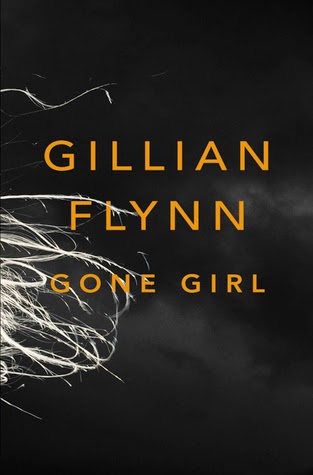


I was lucky enough to review this for The Bookbag when it first came out in paperback, and I've been yelling about it ever since. I like that this is February's book - February is the month of love, after all, and this book makes you fundamentally question everything about the reality of adult relationships. (Don't worry, this has nothing to do with my own life.)

MARCH 


Again, I was lucky enough to get an advance review copy of The Shining Girls from The Bookbag. I admit, I was upset by it - it's so brutal - but it's also utterly brilliant. Seriously not for the faint of heart, but if you can cope with its horrors you'll find it incredibly thought-provoking and well written.

APRIL


I read this in my first months at Orion, and it just blew my mind. It isn't just a wonderful story, it's a wonderful concept - a narrative linked to found photos, which inform the text and are printed alongside it. It makes you constantly wonder if what you're reading is real, and the pictures themselves give you chills. It's such a well-published book, and though I love this book as a reader, I love it even more with my editorial hat on.

MAY


Another book that takes expectations and jumps up and down all over them. It's a middle-grade novel. It's about someone dying of cancer. It's heavily illustrated. Its pictures are the scariest thing about it. And it's fantastic. A Monster Calls completely transcends genres and reading levels. It isn't for children, it's for humans. It's a sad fact that a lot of people stil insist on being very foolish about the quality and importance of children's fiction, and this year my three-word response has become A Monster Calls. I win.

JUNE

The Leviathan trilogy - Scott Westerfeld


When I read Leviathan in June, it had been a long time since I'd been really excited about a trilogy. Then I finished Leviathan, and ran to the nearest bookshop after work to buy Behemoth. Literally. I ran. It's a steampunk adventure set during an alternate universe World War One, and it made my summer.

JULY


I've read a lot of fairy tale adaptations, but this one has to be head and shoulders the best I've ever come across. It felt totally fresh and completely real, and it proved to me that there really are endless places to go with any one concept, no matter how overdone it might seem to be. The kind of book that just makes me excited about fiction.

AUGUST


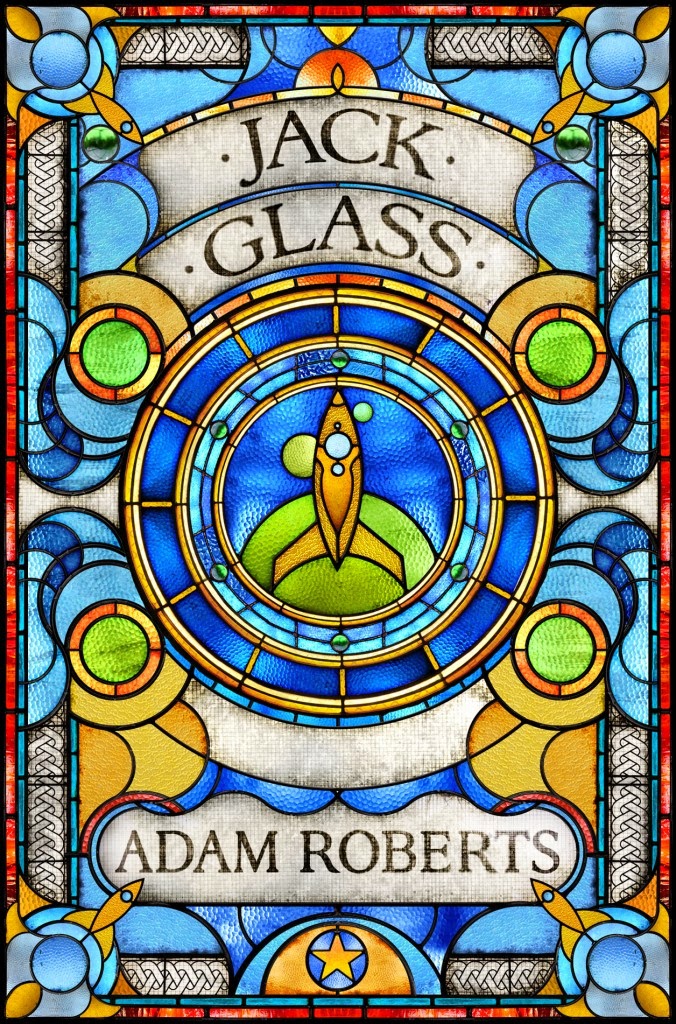
I went on holiday in August, so I've picked two of the best books from my holiday reading. If Tender Morsels made me excited about reading, We Have Always Lived in the Castle and Jack Glass made me excited about being a writer. They're both focused around a past murder - essentially, they're both crime novels - but they both do stunningly unique things with the genre. They're beautifully written, they're creepy and weird and smart and wonderful (and very, very different - Castle is a sort of domestic Gothic, while Jack Glass is Agatha Christie in Space), and if my books end up being even a tiny bit as interesting as these two, I will be very very pleased.

SEPTEMBER


This might just be my book of the year. It reminded me so strongly of my own teenage self, it's so engagingly written and it deals so lightly with such deep issues. And it's a bloody amazing love story. I can't sing Rainbow Rowell's praises highly enough.

OCTOBER


I was just gleeful about discovering this book, an Austen tribute that's not just a rehash. It's incredibly well written, it's extremely clever and it's a big, bold romance that's full of plot. I'd been reading a lot of children's and YA fiction when I picked Longbourn up, and this got me back into adult books again.

NOVEMBER


 This book just about broke my heart. I've read so very many books about World War Two, but this managed to jolt me right out of my general World War Two overexposure apathy. It's wonderful - and coincidentally, I got to meet Elizabeth Wein herself in November, which was pretty amazing.

DECEMBER


Another book that's as beautifully published as it is written and illustrated. We got a copy into the office, and we all crowded around it greedily, murmuring "silver foil! Purple edges! A TINY WEE BOOK IN THE BACK!" It's just touchable. It's also very very funny - and you all know how great Chris Riddell's illustrations are. What this book reminds me is that a) children's books are brilliant and b) children's publishing is brilliant. And I'm so very lucky to be a part of that.

So, those are my 13 picks. What are yours? What have you been raving about this year? What were your unmissable reads of 2013?

Thursday, 12 September 2013

Autumn update: on Allsorts, copyedits, research and my first ever author panel!

Happy September all!

First, some nice author news. The lovely people at Author Allsorts have invited me to join their team (gang? crew?), and so I am now officially An Allsort. Watson even features on their mascot page!

This means that from now on I will also be popping up over on their blog from time to time. Look out for me there!

And, if you want to see me in the actual flesh, you CAN: on November 5th, I will be doing my very first panel, for the SCBWI, as part of their Professional Series. I will be talking with the amazing Non Pratt (by coincidence also an Allsort) and various other excellent people about what it's like to be publishers by day and writers by night (spoiler: quite exhausting but entirely wonderful).

So come along! I will be imparting many words of wisdom (such as: I still can't spell 'submissions' even though they make up about half of my job, and, er - more will come to me in time) and we can all go to the pub afterwards in celebration.

Now, book stuff!

For those of you following the progress of Murder Most Unladylike as it gallops towards bookhood, an exciting update: my last round of edits turns out to have been my last. The plot holes are filled, the timetable clashes have been resolved and the manuscript has been officially handed over to the copy editor.

This is marvelous, and terrible, and terrifying, because it means that the book is essentially done. I can't turn to people any more and say, "Don't worry, it's going to get MUCH better before you read it!" and I don't get to just keep tinkering about with it endlessly.

This is a bit hard to get my head around, because what I've discovered during the all the revisions I've done on this book is how much I LOVE editing. First drafts, for me, are things that have to happen so I can get to the good bit. I know how to make them go more easily (planning), and why they drag when they do (because I haven't planned), but a first draft for me always feels - thin. The characters don't seem as rich as they are in my head, there are sub-plots that I have to leave hanging and the whole world just isn't down on the page yet. But at the editing stage I can take my plodding first draft and start to really play with it.

More and more, I'm seeing the books I write as patterns. They aren't things, rocks that fall out of the sky into my head, they're lots of little strands that I can mix up and weave together any way I want. I can do anything with my story, and that's what the editing process is all about. You take your ideas, and the ideas of your readers, or your agent, or your editor, and spin them together into a newer, better version of your first draft. To me, it feels a bit like advanced-level magic. ABRACADABRA! Now your characters are on a boat! SHAZAM! Now they're speaking French! CRASH! Now they're all women! BANG! Now you've introduced a giant talking ocelot into the middle of a formal dinner party! BOOM! Now everyone's dead!

Rest assured, there are no talking ocelots in Murder Most Unladylike. But it's nice to know that there could be, if I decided that I wanted to. Or at least, there could have been before that final edit. The end of the editing process is the moment when a writer finally has to relinquish control of their pet world, and that's a weird feeling. I can't play with my story any more. I have to hand it over to the copy editor, and then the proofreader, and finally to you. And I miss it!

Which is why I've started to think about writing Book 2.

Yes, I'm back in Hazel and Daisy's world already. I have a title (not that I'm telling you lot what it is yet) and, more importantly, I have a murder weapon. This time around I shall be bumping off my luckless victim with arsenic, and that means that I am currently doing a lot of slightly disturbing research into poisons. So, if you've noticed my Goodreads lately (as one friend did, and messaged me in alarm), be not afraid - I'm just preparing to kill fictional people again.

(c) buildingbuttercream.blogspot.co.uk
In the process, I'm learning many fascinating things. For example, I've finally understood, after YEARS of confusion, exactly why you're not supposed to eat green cake in Peter Pan. 

It's because, in the 19th century, bright green (also known as Scheele's green) was made by using ARSENIC. It was put into everything - household goods, toys, clothes and food - because it looked so pretty. But, by the time J. M. Barrie was writing, the public had caught on to its potentially lethal side effects. They had learnt that green things were dangerous, and so they would have instinctively understood why you should never eat green cake - because it was very likely crammed with arsenic. And that's why the Lost Boys get told not to eat green cake. Because it's POISONOUS.

Isn't that interesting? I do love research. My favourite book at the moment is The Arsenic Century by James C. Whorton - basically, it's an amazingly detailed and very interesting guide to everything about arsenic in the 19th century. I'm about half way through, and I have no idea how any Victorian managed to actually stay alive. Arsenic was literally everywhere (and I mean literally ... literally. You could not MOVE without running into some). Look out for an upcoming geeky blogpost about historical poisonings - but for now, I'm going back to my reading. I've got a new book to write!

Sunday, 28 July 2013

The Books that Made Daisy and Hazel

As some of you may know, I finished the latest draft of Murder Most Unladylike yesterday. This means that we're one stage closer to turning my brain's random firings into an actual, physical book.

In a few months, Daisy and Hazel aren't just going to be mine any more. They're going to belong to you, to every single person who reads about them, and some of you are not going to like them. It's a surprisingly scary thought.

Anyway, to stop myself worrying about that, I've come up with a list of books that I was thinking about when I wrote Murder Most Unladylike, a handy guide to what's in Daisy and Hazel's literary DNA. This is where the Wells and Wong Detective Society started . . . 


1. The Complete Sherlock Holmes by Arthur Conan Doyle

Of course this one was going to be in here! My father gave me a copy of A Study in Scarlet when I was eight (an interesting choice of childhood reading material, and one which may have been intended to make a passive-agressive point about the nuttiness of my mother's Mormon family members), and I've loved Holmes and Watson ever since.

There's a lot of the Great Detective in Daisy. He's a detective who's 's successful largely because of all the localised know-how he has. Take him out of London, or ask him to solve a crime that doesn't involve any of his specialised areas of knowledge and he's just not quite as brilliant. Daisy, likewise, is able to solve the murder because she's made an obsessive study of all the goings-on at Deepdean school. But she's also a bit anti-Holmes: when I was making up my detectives I wondered what would happen if someone as smart as Sherlock was actually interested in human emotions as well as footprints, and Daisy was the result.

Hazel, meanwhile, is a bit of a mixture. She's a tribute to Watson - not the dopey TV version, but Conan Doyle's smarter, cooler original who actually helped Holmes solve his cases - but she's also got Sherlock's three-pipe armchair brilliance. And that's very helpful, because all Daisy wants to do is shout, "THE GAME'S AFOOT!" and wrestle the murderer to the ground in triumph, but she couldn't get there without Hazel.


2. The Famous Five by Enid Blyton

When I was researching Murder Most Unladylike I realised with total horror that I couldn't have any of my characters actually reading an Enid Blyton book. The first Famous Five was published in 1942, eight years after the events in my book (process this, if you can: in the 1930s they had linoleum but no Enid Blyton). But of course, Daisy and Hazel wouldn't exist without Blyton's stories about Mallory Towers, St Clare's and the Famous Five.

The Famous Five are really the Famous Two and Three Complete Idiots. Timmy the Dog contributes more to any one mystery than Anne does to the entire series. In fact, all Anne does is cook and cry, and all Julian does is look after Anne, and all Dick does is chase after Julian looking adoring. They're rubbish. It's up to George, ably assisted by Timmy, to single-handedly protect the Cornish coast from smugglers, and I've always very much respected her as a detective heroine. Like George, Daisy and Hazel are extremely determined to solve their case, and they're also just as willing to take on grown-ups who they think are Up To No Good. Also, they like to eat cake and drink ginger beer while they do it. I hope Enid would approve.


3. Harry Potter and the Philosopher's Stone by J.K. Rowling

This might seem a bit weird at first, but the Harry Potter series made me want to write detective novels. I remember reading Philosopher's Stone for the first time when I was eleven and realising with total excitement that J.K. Rowling had written a whodunit.

Think about it. In each of the Harry Potter books you have to work out who the bad guy is. Most of them actually feature a murder in some way or another. In fact, the whole series begins with the murders of Harry's parents, and it's largely about Harry's quest to bring their killer to justice. And then there's Hermione, superstar girl detective, who always solves the case. See what I mean? Harry Potter is just a mystery series with wizards. There's definitely a bit of Hogwarts in Deepdean, and a lot of Harry, Ron and Hermione's friendship in Daisy and Hazel's.


 4. Cat Among the Pigeons by Agatha Christie

I doubt you'll be surprised that I've got some Agatha Christie in this list. It's probably equally unsurprising that I've chosen her school spy story to feature here. Normally, Christie doesn't really write about children, and that's possibly because she's so awful at it. Her under-16s are basically just lumpy, pupal pre-adults, and when I first read her books (aged twelve) this really bothered me. I wanted to read a murder mystery with characters like me, and there just weren't any in Christie. Even the older teenage characters just ended up getting married, which was not a life path I could relate to. I think I wrote Murder Most Unladylike so that my twelve-year-old self could finally read about kids solving a Christie murder.

Anyway, Cat Among the Pigeons is an exception to Christie's general no-children rule, and I think it's quite great. It's got an exciting jewel heist, midnight shenanigans in the sports pavilion, lots of hockey and tennis and even more teacherly intrigue.

It also features a non-white pupil, Princess Shaista. I admit, said princess is an utterly rubbish stock character, but the fact that she's there is really interesting. It made me want to write a non-white, non-English character who was actually a human being, and thinking that was one step on the way to creating Hazel. 


5. Partners in Crime by Agatha Christie

Another Agatha Christie! Everyone knows about Poirot and Miss Marple, but she also wrote other detectives, and my favourite of those are Tommy and Tuppence. They are adorably immature adults (weirdly enough, I think Christie wrote her best child characters when she wrote about grown-ups), and they solve crime by pretending to be their favourite fictional detectives.

What's delightful is how silly Tommy and Tuppence are about really serious things, and how much fun they have with the detection process. That's the kind of detective novel I like to read. I love books that turn the crime into a puzzle to be solved, something that's awful but essentially fixible. And I love making jokes about serious things. Agatha Christie is the queen of all of that.


6. Trent's Last Case by E.C. Bentley

The cool thing about Sherlock Holmes is that he's always right. When you read a Holmes story you almost don't have to bother working things out for yourself (not that you even can, most of the time, unless you know 800 types of tobacco or the precise footprint tread depth left by a man carrying a body) because he's on the case. But it's also pretty cool to realise that sometimes, even detectives can be wrong.

Trent's Last Case introduced me to the concept of the fallible detective. Trent gets called in to solve a murder and completely screws his investigation up. He accuses the wrong person and awful things happen as a result. To me this was a total revelation. I suddenly realised that the reader could be allowed to be a better detective than the one the author's written. You could beat the professionals!

Daisy and Hazel may think they're pro detectives, but in true Trent style they go horribly wrong in the course of the investigation. They get there in the end (otherwise it wouldn't be much of a detective novel, would it?), but . . . well, all I'm going to say is that they get there in the end.


7. Raffles the Amateur Cracksman by E.W. Hornung

I like my detectives to be a bit bad. Even Miss Marple, for all her kittenish old lady-ness, has a naughty side. A good detective needs to be able to break the rules (and to quite enjoy doing it), and so I think that this series, about a gentleman thief called Raffles and his adoring and spectacularly stupid sidekick Bunny, is pretty wonderful. The author, Hornung, was actually related to Conan Doyle (he was his brother in law), and these books were essentially fanfiction - Hornung wanted to write a version of Holmes where he was against the law rather than on its side.

So Raffles and Bunny go on daring night-time jewel heists, and steal priceless paintings from the Queen's collection, and it's all completely amazing and totally ridiculous. But the important thing about Raffles is that, even though he spends his evenings robbing people, by day he is the quintessential English cricket-playing gentleman. That's very similar to what's going on with Daisy. She seems like the perfect English young lady, but secretly she's a super-cool super-smart detective who will stop at nothing to solve a case. And she, like Raffles, is not above breaking the law - although when she does steal things she always makes sure to give them back afterwards.


8. Miss Pym Disposes by Josephine Tey

This is it. This is the one. I have read a lot of detective novels in my life, but if I had to pick just one to take to a desert island it would be Miss Pym Disposes. It's a murder mystery set in a girls' boarding school, in which someone is found dead in the Gym - basically, Murder Most Unladylike is an adoring tribute to this book. Miss Pym is a fantastically fallible detective (she gets it horribly wrong on numerous occasions), there's a non-white pupil (although she's another stereotype, sadly), and there's a twist at the end so twistingly twisty that your brain will melt with the horrible amazement of it.

Can you tell that I love this book? Tey is a really fabulous writer, and a very clever plotter, and she really deserves to be known much more widely than she is. Don't worry, the person whodunit in Miss Pym Disposes isn't at all the person whodunit in Murder Most Unladylike, so one will not spoil you for the other, but there is a lot of Ley's Physical Training College in Deepdean, and a lot of Miss Pym in Daisy and Hazel.


And that's your lot! Of course, there's an awful lot more where that came from. I'm a bit of a detective novel fan. Let's just hope that Nat likes what I've done to Murder Most Unladylike . . . and that, in eight months or so, you like it too.

Sunday, 14 July 2013

Best of the books: May and June

I've been a bit busy lately, for which I apologise. (Wait, no, what am I saying? I don't apologise. I'm becoming too British.)

Anyway, I've been editing and reading and working and so on, and I haven't had any time to blog about it. So, while I've got a brief free weekend (there are only ten other things I should be doing, it's fine), here's a round up of my best-of-the-best recent reads.


The Abominables by Eva Ibbotson

I have a lot of favourite authors. Eva Ibbotson is one of them. But I don't think any other authors have affected the way I live my life more than she has. Ibbotson's main characters are not just good, they're nice, on a really micro level. They move worms off hot pavements, forgive the foibles of unsuitable family members and are kind to weird old people even though they smell a bit funny, and as a child I decided (god help me) that this was how I wanted to lead my life.

Of course, being an Eva Ibbotson heroine is impossible, because it involves essentially becoming Eco-Jesus, but I tried, and to a large extent I'm still trying. I rescue snails from the paths of cars. I chase after people who have dropped small items of baggage. And it's all because of Eva Ibbotson's books.

So I put off reading The Abominables for quite a while, because finishing it meant that I would have read the final words of my guru. And then I finally did read it, and I cried a little bit because it was so lovely.

It's all about a family of Himalayan Yetis who are discovered by a determined Edwardian lady. She teaches them to be kind and polite to all things (they are vegetarians, but still carefully say "sorry," to their food before they eat it), and that's fine for a while - until they're forced to go out into the modern world and seek their fortunes. The rest of the plot is all just classic Eva Ibbotson, with some especially lovely asides about death and how important enjoying life is even though you know it's finite. As a swan song, it's perfect - and as a story it's pretty great as well. Bless her.

4 stars.


The Ocean at the End of the Lane by Neil Gaiman

Of course this one was going to be in here. I went to see his RSL lecture on it (oh yes, Warwick English professors who refused to supervise my dissertation on Gaiman because he wrote 'comix'. My proposed subject got a gig at the RSL being interviewed by Claire Armitstead. And A. S. Byatt reviewed his book. I hope you feel really bad now), and one of the best things he said as part of the talk (although there were a lot of them) was that the only real difference between adults' and children's fiction is that in adult fiction you get to leave in the boring bits.

Unfortunately, that doesn't really apply here, because there are no boring bits in The Ocean at the End of the Lane. It's certainly an adult book rather than one for kids in that it's about how adults remember childhood, but what Gaiman does is pick you up and slam you back into his seven-year-old protagonist's mind.

Ocean is full of the joy of small things, like the way food tastes and the way it feels to run through a a secret overgrown path at the bottom of the garden. But there's also a lot of the everyday nastiness that is so much a part of childhood. Ocean describes how it feels to be small, to be ignored, to be punished unjustly and to be powerless to right that wrong. And then, of course, because this is a Gaiman novel, it's also full of the most amazing flights of imagination - an evil nanny from another dimension, a field that grows kittens, an ocean that can fit into a bucket. The Ocean at the End of the Lane is beautiful and terrifying and incredibly poignant because of how fundamentally real it is, and it's the kind of book that adults should be glad that they're being sold.

5 stars.


Tender Morsels by Margo Lanagan

So, this is just one of the best books ever. A reimagining of the Snow White and Rose Red fairytale (and a lot more besides, I spotted Goldilocks and the Three Bears, Rumpelstiltskin and Red Riding Hood and I'm guessing there are more), it does things that I've never seen before in the genre and it's written so well that even her descriptions of furniture sent shivers down my spine.

This book isn't just about fairy tales. It reminds you of why people need fairy tales in the first place - as shield, as consolation, to make sense out of a senseless universe. It's full of magic, but magic used in a way that perfectly expresses some seriously deep truths about human emotions. It's also not afraid to deal with some of the darkest parts of human nature with the kind of rough black humour that's both astonishingly daring and oddly beautiful. Its brand of justice is shockingly, juicily, dreadfully well done (there is a scene at the end of the book so vivid that I read the whole thing with my mouth quite literally hanging open in shock) - ferocious enough to make you cheer, and nasty enough for your higher brain to be horrified at how you're reacting.

Like all the best fantasies, every part of this book is real, and I just can't praise it enough.

5 stars.


Eleanor & Park by Rainbow Rowell

Like The Ocean at the End of the Lane, this isn't really a book for teenagers. It's a book about being a teenager. That's not to say that teenagers wouldn't love it. They would! But Eleanor & Park is a quirky love story very much about remembering what it's like to be in your teens. It's about falling in love for the first time, and about all the sweetness and confusion and total insecurity you feel when that happens to you.

Eleanor and Park themselves are two wonderfully off-beat and realistic protagonists who subtly play with the conventions of male and female romantic leads, and it's important to appreciate how rare this is. There are so many impossible, Ayn Rand-style people in literature at the moment, especially in YA - heroines who can't manage to eat a whole lettuce leaf and but then manage to roundhouse kick five fully grown men while wearing a ball gown, for example - but Eleanor and Park, characters who in most novels would be 'too' fat and 'too' thin and 'too' weird and 'too' crazily dressed,  manage here to find very true love in each other. It's the most delicious antidote to all the romance novel nonsense that's out there. And did I mention that Eleanor and Park fall in love through the medium of comic books? Brilliant.

4.5 stars


A Monster Calls by Patrick Ness

A Monster Calls has basically become my case-in-point when I go off on one of my love-rants about the power of children's fiction to address serious issues in ways that adult fiction sometimes can't manage. It's a heartbreaking discussion about the way it feels to lose a parent ... but it's equally, and just as literally, about the way it feels to have an actual, real monster turn up in your garden.

There are no metaphors in this book. Conor's mother is dying of cancer. A monster comes to his window every night to tell him stories. And both of these parts of his life are portrayed as equally real.

The kids' version is terrifyingly illustrated by Jim Kay - no matter your age, you must not make the mistake of buying the version of this book without pictures - and all in all it's one of the most frightening and heartbreaking things that I've ever read.

5 stars.


Skellig by David Almond

I never read this as a child. I was always afraid of it for some reason. I think I thought Skellig sounded creepy. I was totally right, he is creepy - but wonderfully creepy, and I know my childhood self would have loved this book. Oops.

The plot is exceedingly strange. A little boy called Michael finds a man called Skellig living in his garage. Although it's never directly explained, Skellig pretty obviously a fallen angel who's just given up on life. What he's done is never mentioned, and it doesn't really matter - the point is that he's a bit dirty, a bit tainted, but (although he doesn't realise it) still very much worth loving.

Michael is having a very difficult time himself. He's got a baby sister who was born prematurely, parents who are totally focused on her, and a new house that's basically an overgrown dump. Michael is lonely and confused, but when he discovers Skellig he's suddenly given a purpose. Then he meets strange, lovely Mina, who's homeschooled and who believes in the wonderfulness of the world, and she shows him what he needs to do to save Skellig. That all sounds kind of hokey, doesn't it? Believe me, it's not - instead it's beautifully presented, perfectly paced and totally unsentimental.

4.5 stars

Sunday, 16 June 2013

My first writers' retreat: Team Cooper 2013

Last weekend I went to my first ever writers' retreat, organised by the best of all agents, Gemma Cooper, especially for her clients.

What is a writers' retreat? I hear you ask. (I hear this because I am psychic. Or maybe you haven't asked, and I'm just wrong. Whatever. I'm going to tell you anyway.)

This is not what a writers' retreat is
I think a lot of people have vague, slightly religious visions of a large house in the forest, filled with ethereal people in muumuus who look a lot like Margaret Atwood.

Maybe that is what happens sometimes. I don't know. But the writers' retreat I went to consisted of a group of people talking enthusiastically about everything from Doctor Who to ballroom-dancing unicorns and taking frequent breaks for cake, wine and workshops.

The workshops - which included a talk on the publishing process by Annalie Grainger of Walker Books and a seminar on school visits by Mo O'Hara (who, judging by the presentation she gave, does THE BEST school visits ever, complete with comical fish impressions) - were completely fantastic. I came out a lot more confident about my own writing process, and desperate to get started on about ten new projects. Oddly enough, though, I think the most exciting part of the weekend was just being able to spend time with the other members of Team Cooper.

Even though I spend my working days with people whose job it is to create and sell books about time-travelling pirates and sexy Russian soldier witches and then come home to a boyfriend who last week told me that he wanted to change his last name to Ladle, it's sometimes quite difficult to explain to them that my head is full of people without sounding totally nuts. So it's pretty nice to hang out with similarly afflicted weirdos, who, when you begin to describe the intricate lives of your characters, say "THAT IS SO COOL!" and actually mean it, and then tell you about their own brain-children. On the retreat, we were all mad, and that was OK.

Actually, this whole experience has reminded me that not only that am I lucky in my agent and her choice of clients (Gemma, you pick well!), but that I'm lucky in my genre.

Yes, you could argue that there's a vast difference between board books and YA, and also that a realistic middlegrade novel and a middlegrade novel about fairies in the underworld, despite sitting on the shelf next to each other, are really poles apart. But all of these vastly different kinds of books get gathered up together in one big glorious mush of 'children's fiction', and I'm actually incredibly glad about that. Because what it provides is the most incredible opportunity for creativity from the people who write it.

I went into the retreat weekend thinking of myself as an (upper) middlegrade writer, with maybe some leanings towards YA, and came out of it reminded (by Gemma's excellent picture book and non-fiction workshop, among many other things) that because I'm a children's writer I've actually got license to try my hand at anything I want to. I could write a picture book about dragons who bake doughnuts, or a 7+ about werewolves in space, or a non-fiction book in which historical characters fight for supremacy in a giant pit of jelly. Not that I am planning to do any of those things. But I could.

THIS is what a writers' retreat is. Team Cooper salute you. Photo credit Benjamin Scott.

As a teenager, when I was first reading Big Grown-Up Books (Virginia Woolf's To The Lighthouse springs to mind especially), I kept coming across descriptions of the Pain of Authorial Creation, and getting really worried. I'd always thought of writing as a basically fun, if occasionally annoying, activity, but here were all these adults wailing and groaning and straining their brain-muscles about the sheer HORROR of putting pen to paper (or fingers to keyboard). For a while I wondered if I was doing something wrong in not being so tormented. Did I need to stop writing about talking werewolf cats in space, and start an epic of the human condition?

The problem was that I didn't really want to write an epic of the human condition. I wanted to write about horrible murders and zombies and vampires and exploding universes. It took me quite a while to realise that it was totally OK to write children's books, and to love doing it.

I don't know, obviously, but I do wonder whether most children's writers have gone through a similar process of discovery, and whether it's made them more chilled than adult writers about the things they create as a result. Certainly, the rest of Team Cooper are incredibly practical and non-precious about the projects they're working on, and (like a lot of other kids' authors I've come across) they're also pretty amazing to hang out with.

All of Team Cooper have experienced those infuriating moments when you can't get words out, or when the words you do get out just look wrong. But the retreat weekend reminded me that despite the difficult times, most of the time writing should be, and is, fun for us. We write because we love to do it, because we couldn't wake up in the morning and not want to make up a story.

We may be a bit mad, but I think that we're also very lucky.

Saturday, 25 May 2013

On Finding My Literary Counterpart: Sleuth on Skates

If I was making a list of my top books of the year so far, Sleuth on Skates by Clementine Beauvais would be extremely high up it. It was handed to me during an internship at Hodder in January, and I went from ‘What is this?’ to ‘OH MY GOD EVERYONE IN THE WORLD NEEDS TO READ THIS!’ in twenty seconds.

This is firstly because it is extraordinarily hilarious. Any fool can make a reader feel sad (imagine a three legged puppy being smacked. See?), but it takes a special talent to make them belly-laugh, and Clementine has that ability in spades.

Secondly, Clementine has created one of the most fantastic girl detectives I’ve come across in a long time. Girl detectives are one of my favourite things (I even have a couple of my own), but Sesame is exceptionally great. She’s despicably smart, slightly mad and totally delightful, and I wish I could meet her in real life so she could bamboozle me with her mind.

I do accept, though, that I might have been predisposed to love Sesame. See, Sesame is the daughter of two academics, one of whom is the head of Christ's College, Cambridge. She lives surrounded by students, porters, tourists, dons and ducks, and she solves mysterious crimes with the help of her trusty pet cat. I, by contrast, was the daughter of two academics, one of whom was the Master of Pembroke College, Oxford. I grew up surrounded by students, porters, tourists, dons and the ferocious long-horned cattle in Christ Church Meadow, and I tried (and failed) to discover mysterious crimes to solve with the help of my trusty pet dog.

I think you’ll agree that there are certain similarities here.

When I told Clementine that she had essentially written about my childhood (by leaping on Twitter and sending her a calm and well-reasoned tweet that went something like OH MY GOD YOU’VE WRITTEN ABOUT MY CHILDHOOD I LOVE YOU) she seemed pleased (or alarmed, I don’t know. She hid it well). I promised to write a blog post about being a more real, more boring Sesame – and since Sesame has finally been released into the wild this month (available in all good bookshops and online retailers, etc etc), I thought that it was, at last, time for that post.

So . . .

Nine Ways In Which My Childhood Was Like Sesame Seade's (And One In Which It Wasn't)

1) As part of the perks of my dad's job, we got to live in Pembroke itself, in the Master's Lodgings. This house was big. How big? I played catch with my dog in the top floor corridor. My mother installed a backwards baby-monitor between my room and the kitchen so she could call me down to dinner. I was convinced a pack of werewolves lived in the shadows at the end of the downstairs hall, and although I turned out to be wrong about that, there would certainly have been room for them.

2) The house was, in fact, so big that most human beings failed to register it as a private house. If you stand on the street outside it, it takes up an entire town block, and its front door looks like the entrance to Dracula's castle. One morning my mother opened up the front door and a homeless man who had been using it as a sleeping place fell into the entrance hall. He was very alarmed, and so was my mother.

Slightly to the left: my house. Not to be confused with a castle.

3) Like any good mystery-reading child, I took one look at the Master's Lodgings, with its huge dark rooms and fireplaces you could burn a whole witch in, and decided that it had to be FULL of secret passageways. I dedicated most of my childhood to working out how to get into them. I concentrated particularly on the Oak Room, which was enormous and entirely covered in nobbly wooden panelling. I spent hours carefully prodding and twisting bits of wall, sadly to no avail. I was probably just looking in the wrong places. I wish Sesame had been around to help me out.

4) Sesame and I, as children of dons, were taught early to scorn tourists. I even carried out a minor campaign of delinquency against them because I felt it was required of me. Unfortunately, because I was really shy and worried about hurting people, it was the dullest campaign ever. I spent whole minutes playing musical instruments obnoxiously out of my bedroom window to see if anyone in the street below looked up (they didn't). Also I used to sneak through the gate at the end of our garden that my mother thought was locked, climb to the top of the Oxford city wall and hang out into the perilous 40-foot void throwing very small twigs at passersby, thereby putting myself in more danger than any of the tourists.

5) I also (this is very Sesame Seade) used to spy on the students. But although Sesame is cool enough to have the entire student body eating out of the palm of her hand, to me they were terrifying, unknowable creatures with weird hair and unclean habits who I could only watch from afar. I discovered that part of our garden shared a wall with the side of the library, so I'd climb up onto the ledge and stare at the students as they worked. Looking back on this, I realise that I must have terrified the hell out of them. They were innocently working on their essays - and then they looked up and there, glaring through the window at them like a vision from a nightmade, was a small and very dirty child.


Pembroke, though not my house

6) Luckily, I got on with other members of the college much better than I did with the students. Sesame understands, as did I, that the college porters are the rulers of their universe. Cross them, and you might as well just set yourself on fire. They know all, they see all, and if you want to survive as a college kid, you must befriend them. My favourite porter was called Andy, and he, as much as Poirot, was part of the reason why one of my major childhood ambitions was to grow a magnificent walrus moustache.

7) As well as the porters, an Oxbridge college is actually run by an army of cleaners, cooks and secretaries, while the actual dons flap about uselessly and think they are being helpful. About half of my childhood was spent trailing adoringly after our housekeeper Nina. To Nina's eternal credit, she didn't tell me to go away - instead, she let me engage in some light child labour, which I absolutely loved. Nina is the reason why I understand that cleaning toilets and scrubbing floors is a noble and exciting thing to do, and why I've never been able to work out why Cinderella would give up her virtuous and useful cleaning lifestyle to marry some boring creep prince.

8) As you might have guessed from the above, I had very few friends who were younger than 50 and/or human. In fact, I had one. Sesame has at least two, which I think is extremely impressive - but her favourite person is still her pet cat Peter Mortimer. I understand this. I was convinced that my dog Heather was a very small and oddly shaped human, and I spent many satisfactory hours pretending she was a space panther and teaching her to do circus jumps out of the ground floor windows using the college's priceless silk-lined chairs for liftoff. I also draped blankets over her head and made her pretend to be the Virgin Mary, which she enjoyed less. She was my partner in crime, and I could not have wished for a better one.

9) But, of course, Heather wasn't much of a talker. If I wanted to experience a conversation, my options were: Nina or Andy, the dons, or the people in my books. Therefore, what came out of my mouth tended not to resemble things a normal child would say. This is why one of my favourite things about Sesame is how verbal she is. She never uses a word of one syllable when there's a ten syllable alternative available, and that's absolutely right for an Oxbridge college child. Other children thought I was weird because I used words like obtuse in sentences, and I thought they were weird because they didn't know what emaciated meant.

10) So that's the story of my Sesame Seade-style past. Sadly, unlike Sesame, I never actually uncovered a dastardly mystery. I did once find a kitten up the eucalyptus tree in our garden, but that turned out to be a student's illegal pet.

Of course, because Sesame is fictional, she is not constrained by normality. She gets to solve some seriously mind-bending puzzles, and she does it with vast aplomb. Mysterious logos, missing ballerinas, dubious benefactors and pregnant ducks all feature (yes, really) in the first book alone. And, of course, plenty of rollerskating. It's fantastic. You all need to read it. Although I admit, I might be a bit biased . . .

Tuesday, 26 March 2013

The Long and Beautiful Story of How I Got my Agent

This week is the Bologna book fair, the biggest event in the children’s publishing calendar. It’s where agents and publishers meet to exchange ideas, pitch and acquire books and discover the next big thing in children’s writing.

And this year something I wrote is part of it. My agent, Gemma Cooper, is at this very moment pitching my novel to UK and US publishers (if you’re interested in how she does it, here’s her blog post explaining the whole exhausting process), and by next week Hazel, Daisy and their tale of daring detection will be sent out on submission to every publisher who has expressed interest in them.

I still find this whole experience beyond astonishing. Three months ago, if someone asked me about my writing I would say, ‘I, er, wrote a book. I’m not sure it’s much good. It’s about these girls who solve a murder,’ and now when someone asks me the same question I can say, ‘Yes, I wrote a book. My agent has taken it to Bologna book fair. I think. Unless this is all actually a dream. It feels like a dream, except that no one has stabbed each other or turned into a dolphin yet.’

A long time ago, back when the book was 28,000 words longer and nothing in it made any sense, I told you all that I was going to write a post about how the whole Gemma-becoming-my-agent thing happened. After that, life sort of intervened, but here I am, two rewrites later, about to explain exactly that.

Are you ready? Are you remembering that this is my entirely subjective account of my entirely subjective experience, and I don't really have any idea what I'm talking about?

Yes?

Then I’ll begin.

1) I wrote a book. This could actually be a blog post in and of itself. This turned out to be very difficult but also unexpectedly simple, in that you start to write the book, you continue to write the book and then you carry on writing the book until the book is finished. If you like things to happen quickly, don’t write books.

2) I polished my manuscript. I used youwriteon.com for this and found it incredibly helpful. Basically, you need to find yourself some disinterested people who are willing to be incredibly mean about what you have written, in a constructive way, until you have made it a lot better. When this has happened (hint: this also takes a lot of time), you are ready to pitch your manuscript to agents.

3) I pitched my manuscript to agents. For this, you need a polished manuscript (see points 1 and 2) and a good query letter. For how to write a good query letter, see Query Shark’s website, and for the query letter I ended up writing to Gemma, see my post about it here.

Once you have your query letter, you need to do some serious, major, Pinkerton-level research. By all means, use The Writers and Artists’ Yearbook as a jumping-off point. But, as I learnt to my cost, there is absolutely no point pitching to an agent just because they like crime and so do you. If you have written (just for example) a historical mystery with an Agatha Christie vibe for young teenagers, you don’t just want an agent who likes crime. You don’t just want an agent who likes YA. You want an agent who is looking for a historical mystery with an Agatha Christie vibe for young teenagers. THIS IS EXTREMELY IMPORTANT.

Every writer who I have spoken to has a different and totally random story about how they got their agent. Hanna Jameson met hers at a gig afterparty, for example. But the one thing that all these stories have in common is this: the writer found an agent who wanted to buy the exact thing that they were selling.

4) Some magic happened. Like I said, every writer’s story is different. So many people find their agents as a result of a real-world meeting or a good old fashioned email exchange, but I’d advise all aspiring authors to get themselves on Twitter and follow every creative person they come across. First, because they are mostly great people who it’s a pleasure to be in contact with, and second, because you never know what might happen if you’re in the right e-place at the right time.

 This is what happened to me.

 At the end of October last year I got into a Twitter conversation with the estimable Louie Stowell. I mentioned that I was in the process of querying my manuscript. “Well,” said Louie (I’m paraphrasing), “If you’re looking for representation you should follow Liz de Jager. She knows a lot of agents.” So I followed Liz. And (I am not kidding) that evening Liz tweeted about an agent called Gemma Cooper who had just moved to the Bent Agency and who was actively looking for new clients. I clicked on the link to Gemma’s site, read her wishlist and pretty much fainted dead away in my wheelie chair because she was looking for my book.

 I sent my query letter, along with the exact number of manuscript pages requested on the Bent Agency’s website (This is crucial. When you query, DO WHAT THE AGENCY TELLS YOU TO DO. They are the puppet master. You are the puppet. Dance for them) to Gemma’s email address .

Less than forty eight hours later I had an email back from Gemma requesting the full manuscript.

5) I wish I could say that the rest was history. Alas! If you were expecting this post to end here, you are still young in the ways of the publishing business.

What happened next was that I sent off my manuscript, weeping just a little out of sheer panic, and then… I waited.

And I waited.

I waited and I waited and I waited.

And then I waited some more.

Now, this is not because Gemma was being mean to me. It is because all good agents are extremely busy. Most of their working week is (of course) taken up with their existing clients – working on their manuscripts, going to endless meetings with publishers to drum up interest, organising events and so on for ever. Most of the rest of their waking lives is spent reading queries. No, not full manuscripts. Queries. Agents’ inboxes are flooded with hundreds of first-chapter queries each week, and they will read – or at least skim over – each one. Out of every hundred manuscripts, they maybe request to see fulls of three, but what with client demands and that never-ending query deluge, it will sometimes take them a while to get round to reading those fulls.

How long is a while? I submitted my full in November. By the beginning of January I still hadn’t heard back, apart from a kind and apologetic holding email telling me that my manuscript was still under consideration. And then one morning I woke up to this tweet.
It was the first time in my life I have asked 'am I awake?' and been genuinely unsure of the answer. She was reading my manuscript and she liked it. A few hours later I got an email from Gemma telling me that she was half-way through the book, and that she’d be able to give me an answer in three days. For those three days I was not a delight to live with.

And then, on day three, I was sitting at my computer when I saw this tweet.
You know the scene in Julie and Julia, when Meryl Streep gets the acceptance letter from Knopf that she has waited years for, and she just takes hold of it and presses it reverently to her bosom while she stares up at the sky with a rapt look on her face? I wish that's what I looked like when Gemma's email pinged into my inbox. Sadly, I am not Meryl Streep, so I received my good news hunched up in front of my computer screen, sobbing brokenly into an entire box of tissues.

6) You think that this story is over now? THINK AGAIN. Contrary to popular belief, Gemma did not offer me representation in that first email. She was friendly and complimentary about the book, but she did not commit herself beyond a request that we meet over coffee to talk about what I had written.

This meeting (it could be a phone or Skype conversation if the agent is not in the same place you are) is standard, and absolutely crucial to your chances of getting represented. It is also something that not many people discuss when they explain the process of becoming agented. It happens because agents need to find out whether they can work with the author, and more importantly if they want to, and because writers need to find out the same things. Don't worry, though. It’s basically like the nicest interview you’ll ever go to.

I turned up, vibrating with excitement but trying to pretend I was totally cool with it all, and it all went astonishingly well. Again, Gemma was absolutely lovely about the book – I’ve written before about how impressed I was with how much she just got it – but she also had a list of large changes that she thought should be made in its next draft. It was only after I’d gotten really enthusiastic about her ideas, and I’d suggested some new things that she was excited about, that she made her formal offer of representation.

She gave me as long as I wanted to think about it, and actually told me that she didn’t want an answer until the next week (I think this was to prevent me just screaming YES I WILL BE REPRESENTED BY YOU! at her in the middle of St Pancras Station). Then I went home and cried a little bit. There is a lot of crying in this story.

7) I said yes! Of course I did. I wouldn’t be writing this if I hadn’t. But before I did (this is another extremely important thing) I made sure I’d read through the contract thoroughly, googled Gemma and the Bent Agency and chatted to two of Gemma’s existing clients to hear about their experiences with her.

Agent contracts (believe me) are pretty binding, so you want to make sure that you’re happy with the professionalism and business sense not only of the agent themselves but their agency too. It’s so exciting to suddenly be in a position where an agent is asking you for something that it’s easy to get carried away. I know I did. Gemma was honest enough to remind me to calm down and think sensibly, but I suspect that some other agents won’t be. Be savvy, writers! Take your time. Future-you will thank you for it.

8) I signed with my new agent! Believe me, I have never seen a more beautiful contract. And then Gemma and I got to work.

So that's my story! Yours probably is, or will be, nothing like this at all. Publishing is a mad and tricksy business that does not operate logically. This is why it's so awesome. Good luck to those of you who are trying to catch an agent of your very own - but please remember that, as I said before, I really know nothing. Do not be tempted to take my word as law. I'm just some random person who is quite good at making words look like they mean things.

And now I shall go back to refreshing Twitter for news about Bologna.

Saturday, 29 December 2012

Quick-fire reviews: my Christmas book list

I personally move to rename Christmas, Bookmas. I can hear the Christians wailing and gnashing their teeth from here, but it would be a more accurate description of my activities during the festive period. There is a bit of Christ, but there are a lot of books, and as you all know, I am all about the books.

Please note that the following reviews are not of the books I received for Christmas. Oh no. I have not even begin to make a dent in that towering pile. These are merely the books I read during my 'holiday' at home (ho ho), while the rest of my family revolved around me screaming and shouting and playing endless games of Battleship.


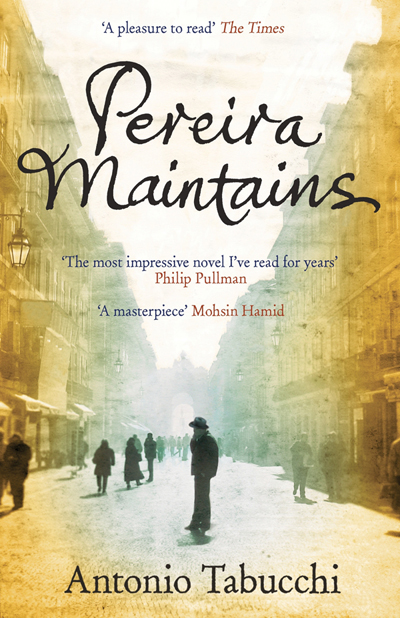
Pereira Maintains by Antonio Tabucci

I started things off with this jolly little tale of police suppression in 1930s Portugal. The Pereira of the title is a fat and aging crime reporter who's come down in the world to become the culture section of fledgeling 'non-political' paper the Lisboa. For slightly cosmic reasons, he gets into contact with a philosophy graduate named Monteiro Rossi. Rossi becomes Pereira's assistant at the paper, but he turns out to be pretty much the worst assistant ever - not only did he fake most of his dissertation, but all the articles he writes for Pereira are politically incendiary and therefore unpublishable. You see, this is Portugal under Salazar, a place where people pretend that everything is normal even though the secret police are beating stall-holders to death in the middle of the market. Culture has become dangerous, and the translations Pereira innocently makes of European stories suddenly have new and worrying political meanings.

Pereira begins the novel as pretty much the most clueless, passive person in existence - he's a journalist who has to ask his friends for the news - but he finds his friendship with Rossi changing how he sees the world. Rossi becomes the son he never had, and as Rossi gets deeper into the resistance movement, Pereira is dragged into it along with him. The whole novel is written as Pereira's testimony - of exactly what, we're not sure until the very end.

This is an apparently peaceful and dreamy little book, under which hides some serious subversive meaning. I think it's one of those novels that can be read and re-read, new themes emerging each time. It's clever without being showy, beautifully written (and with visually beautiful images, crystal seas and palm trees waving and so on) but with a really nasty undertaste to it. I think Pereira Maintains is a book that needs to be thought about. I didn't fall in love with it immediately, but it's been growing on me since I put it down, and I think it's going to stay in my brain for quite a while to come.

4.5 stars


Maggot Moon by Sally Gardner

I bought this for my niece for Christmas because I wanted to read it myself. It was that kind of present. Luckily, she read it in three hours flat, and then I wrenched it out of her hands and read it in two.

The number of people I recommend a book to after I've finished it is usually a good test of how much I liked it, and after I finished Maggot Moon I tweeted about it four times in quick succession and then sent three ecstatic emails to friends ordering them to JUST STOP EVERYTHING AND READ THIS BOOK.

It was that good. As I said at the time,


Set in an alternate-reality 1950s Soviet state, Maggot Moon is the story of Standish Treadwell. On the eve of a planned great moon landing by the Motherland, Standish dreams of flying away to his own perfect planet, Juniper, with his best friend Hector. On Planet Juniper the Cadillacs are the colour of ice cream, the Croca-Colas never run out and there are no secret police waiting to turn you and your family into maggot food if you disobey the Motherland.

Maggot Moon is a totally black dystopian fantasy told with incredibly effective simplicity. Standish is a wonderful, idiosyncratic narrator (he's dyslexic, so words come out of his head sounding brilliantly wrong), likeable and heartbreakingly honest. It'd have been easy to have made him one of those wide-eyed teen narrators living in a world he doesn't understand, but Gardner's smarter and more realistic than that. Standish absolutely does understand all the horrendous adult things that happen around him, even though he processes them in an utterly teenage way. He knows what happened to his parents and he knows what's likely to happen to him and his Gramps, but all the same he clings on to the wonderful world of Juniper that he's built in his head.

As the Moon Landing gets closer, it becomes clear that Standish is in possession of some pretty important information - the kind of stuff that could either destroy the Government or (more likely) himself and the people he loves. Then Hector goes missing, and Standish realises that he's got to be brave enough to use what he knows before the Government are able to make him disappear too.

This is a book about a kid making the kind of impossible decisions that most adults wouldn't be able to face. But like all the best fantasy, it feels real, totally believable and totally tragic. The ending, I warn you now, is awful, but it's one of those endings that destroys you in a hopeful sort of way, leaving you feeling slightly fire-damaged but lighter because of it.

Honestly, this snuck in from absolutely nowhere to become one of my books of 2012. I think it's one of the most perfect pieces of teen fiction I've read, maybe ever. I wish I had written it. Why didn't I write it?

5 stars.


Hand in Glove and Dead Water by Ngaio Marsh

The good thing about Agatha Christie is that, even when she's phoning it in, the result is still readable. The bad thing about Ngaio Marsh is that, when she's phoning it in, the result is... really not. Her entire back catalogue was recently re-published in fat omnibus editions, and as I work my way through them I am more and more reaching the conclusion that, although when Marsh is good she is very very good (see: A Surfeit of Lampreys, still one of my top favourite crime novels ever), when she is bad, she is horrid.

Hand in Glove and Dead Water are both thick with hackneyed stereotypes, gurning yokels and clangingly awful love-affairs, and the murders in them are both done for overwhelmingly stupid reasons, by methods that are needlessly complex and/or totally unbelievable. I mean, the whole of Hand in Glove revolves around the premise that a cigarette case is an object important enough to bother about. And then there are all the couples who conduct entire love affairs via sentences like Come here, silly darling, and let me clasp you to my bosom! And then there are the aforementioned yokels, who hawk and mumble away as though they have been endowed with the brains of rats instead of human beings. Seriously, Ngaio Marsh, going to Cambridge is not a test you have to pass to become a person.

God, these books. I just can't. I give up. It's a good thing that Marsh is dead, so she can't see me denounce her.

1.5 stars.


Broken Voices by Andrew Taylor

Broken Voices is a brand-new Kindle-only novella by Andrew Taylor - and since I have a brand-new Kindle it seemed a necessary purchase. Set one hundred years ago in a Fenland cathedral city, this a gloriously straight-up ghost story, one of those English classics of the genre in which nothing happens except a lot of chilling suspense.

The main character, a pupil at the city's King's School, has been stuck at the cathedral over the Christmas period while his parents stay in India. He's boarding at the house of a poor ex-teacher along with another pupil, an ex-choirboy who's suffering a terrible disgrace. Both boys are lonely and embittered, and when they hear a mysterious story about the Cathedral's history they decide that this is their opportunity to prove themselves.

Taylor's real strength - I've mentioned this before - is his extraordinary ability to evoke atmosphere, and that's something that's great for this tale. His historical settings feel both right and at the same time deliciously wrong. Something is always rotten in an Andrew Taylor novel, the skies are grey and the buildings lour. In Broken Voices there's a very nasty cat, an even nastier bit with some rats, chilly winter nights, cold Cathedral stones and a beautifully joyless Christmas day. Uncertainty is the name of the game - as the very first line asks,
'Was there a ghost? Was there, in a manner of speaking, a murder?'
(Taylor, like me, doesn't seem to be able to get away from murder. I can understand that.) His main character is a typically sulky and selfish teenage boy - and, in fact, all of his characters are small and basically unsympathetic. This is a cold-hearted world where there's really no one to root for, and that's perfect for the maybe-ghost story Taylor's telling.

I believe firmly that Christmas wouldn't be Christmas without a few really good scary stories (see also my own effort), and so this made my holiday season feel complete. Simple but effective, Broken Voices is an excellent marriage of author and subject which does exactly what it promises to do.

4 stars.