Showing posts with label 4 stars. Show all posts

Sunday, 14 July 2013

Best of the books: May and June

I've been a bit busy lately, for which I apologise. (Wait, no, what am I saying? I don't apologise. I'm becoming too British.)

Anyway, I've been editing and reading and working and so on, and I haven't had any time to blog about it. So, while I've got a brief free weekend (there are only ten other things I should be doing, it's fine), here's a round up of my best-of-the-best recent reads.


The Abominables by Eva Ibbotson

I have a lot of favourite authors. Eva Ibbotson is one of them. But I don't think any other authors have affected the way I live my life more than she has. Ibbotson's main characters are not just good, they're nice, on a really micro level. They move worms off hot pavements, forgive the foibles of unsuitable family members and are kind to weird old people even though they smell a bit funny, and as a child I decided (god help me) that this was how I wanted to lead my life.

Of course, being an Eva Ibbotson heroine is impossible, because it involves essentially becoming Eco-Jesus, but I tried, and to a large extent I'm still trying. I rescue snails from the paths of cars. I chase after people who have dropped small items of baggage. And it's all because of Eva Ibbotson's books.

So I put off reading The Abominables for quite a while, because finishing it meant that I would have read the final words of my guru. And then I finally did read it, and I cried a little bit because it was so lovely.

It's all about a family of Himalayan Yetis who are discovered by a determined Edwardian lady. She teaches them to be kind and polite to all things (they are vegetarians, but still carefully say "sorry," to their food before they eat it), and that's fine for a while - until they're forced to go out into the modern world and seek their fortunes. The rest of the plot is all just classic Eva Ibbotson, with some especially lovely asides about death and how important enjoying life is even though you know it's finite. As a swan song, it's perfect - and as a story it's pretty great as well. Bless her.

4 stars.


The Ocean at the End of the Lane by Neil Gaiman

Of course this one was going to be in here. I went to see his RSL lecture on it (oh yes, Warwick English professors who refused to supervise my dissertation on Gaiman because he wrote 'comix'. My proposed subject got a gig at the RSL being interviewed by Claire Armitstead. And A. S. Byatt reviewed his book. I hope you feel really bad now), and one of the best things he said as part of the talk (although there were a lot of them) was that the only real difference between adults' and children's fiction is that in adult fiction you get to leave in the boring bits.

Unfortunately, that doesn't really apply here, because there are no boring bits in The Ocean at the End of the Lane. It's certainly an adult book rather than one for kids in that it's about how adults remember childhood, but what Gaiman does is pick you up and slam you back into his seven-year-old protagonist's mind.

Ocean is full of the joy of small things, like the way food tastes and the way it feels to run through a a secret overgrown path at the bottom of the garden. But there's also a lot of the everyday nastiness that is so much a part of childhood. Ocean describes how it feels to be small, to be ignored, to be punished unjustly and to be powerless to right that wrong. And then, of course, because this is a Gaiman novel, it's also full of the most amazing flights of imagination - an evil nanny from another dimension, a field that grows kittens, an ocean that can fit into a bucket. The Ocean at the End of the Lane is beautiful and terrifying and incredibly poignant because of how fundamentally real it is, and it's the kind of book that adults should be glad that they're being sold.

5 stars.


Tender Morsels by Margo Lanagan

So, this is just one of the best books ever. A reimagining of the Snow White and Rose Red fairytale (and a lot more besides, I spotted Goldilocks and the Three Bears, Rumpelstiltskin and Red Riding Hood and I'm guessing there are more), it does things that I've never seen before in the genre and it's written so well that even her descriptions of furniture sent shivers down my spine.

This book isn't just about fairy tales. It reminds you of why people need fairy tales in the first place - as shield, as consolation, to make sense out of a senseless universe. It's full of magic, but magic used in a way that perfectly expresses some seriously deep truths about human emotions. It's also not afraid to deal with some of the darkest parts of human nature with the kind of rough black humour that's both astonishingly daring and oddly beautiful. Its brand of justice is shockingly, juicily, dreadfully well done (there is a scene at the end of the book so vivid that I read the whole thing with my mouth quite literally hanging open in shock) - ferocious enough to make you cheer, and nasty enough for your higher brain to be horrified at how you're reacting.

Like all the best fantasies, every part of this book is real, and I just can't praise it enough.

5 stars.


Eleanor & Park by Rainbow Rowell

Like The Ocean at the End of the Lane, this isn't really a book for teenagers. It's a book about being a teenager. That's not to say that teenagers wouldn't love it. They would! But Eleanor & Park is a quirky love story very much about remembering what it's like to be in your teens. It's about falling in love for the first time, and about all the sweetness and confusion and total insecurity you feel when that happens to you.

Eleanor and Park themselves are two wonderfully off-beat and realistic protagonists who subtly play with the conventions of male and female romantic leads, and it's important to appreciate how rare this is. There are so many impossible, Ayn Rand-style people in literature at the moment, especially in YA - heroines who can't manage to eat a whole lettuce leaf and but then manage to roundhouse kick five fully grown men while wearing a ball gown, for example - but Eleanor and Park, characters who in most novels would be 'too' fat and 'too' thin and 'too' weird and 'too' crazily dressed,  manage here to find very true love in each other. It's the most delicious antidote to all the romance novel nonsense that's out there. And did I mention that Eleanor and Park fall in love through the medium of comic books? Brilliant.

4.5 stars


A Monster Calls by Patrick Ness

A Monster Calls has basically become my case-in-point when I go off on one of my love-rants about the power of children's fiction to address serious issues in ways that adult fiction sometimes can't manage. It's a heartbreaking discussion about the way it feels to lose a parent ... but it's equally, and just as literally, about the way it feels to have an actual, real monster turn up in your garden.

There are no metaphors in this book. Conor's mother is dying of cancer. A monster comes to his window every night to tell him stories. And both of these parts of his life are portrayed as equally real.

The kids' version is terrifyingly illustrated by Jim Kay - no matter your age, you must not make the mistake of buying the version of this book without pictures - and all in all it's one of the most frightening and heartbreaking things that I've ever read.

5 stars.


Skellig by David Almond

I never read this as a child. I was always afraid of it for some reason. I think I thought Skellig sounded creepy. I was totally right, he is creepy - but wonderfully creepy, and I know my childhood self would have loved this book. Oops.

The plot is exceedingly strange. A little boy called Michael finds a man called Skellig living in his garage. Although it's never directly explained, Skellig pretty obviously a fallen angel who's just given up on life. What he's done is never mentioned, and it doesn't really matter - the point is that he's a bit dirty, a bit tainted, but (although he doesn't realise it) still very much worth loving.

Michael is having a very difficult time himself. He's got a baby sister who was born prematurely, parents who are totally focused on her, and a new house that's basically an overgrown dump. Michael is lonely and confused, but when he discovers Skellig he's suddenly given a purpose. Then he meets strange, lovely Mina, who's homeschooled and who believes in the wonderfulness of the world, and she shows him what he needs to do to save Skellig. That all sounds kind of hokey, doesn't it? Believe me, it's not - instead it's beautifully presented, perfectly paced and totally unsentimental.

4.5 stars

Sunday, 7 April 2013

March reading round-up

Good weekend, Internet! I have several things to share with you today.

First, the two reviews I wrote for The Bookbag last month.

- The Shining Girls by Lauren Beukes. It's not out until later this month, but I got my hands on it early, and I can tell you now that is is terrifying, weird, gross and totally brilliant. I loved it.

- Blessed Are Those Who Thirst by Anne Holt. Many, many reviews ago, I wrote about Holt's novel 1222 on this very blog, and now I have reviewed her earlier (but more recently translated) effort. Unsurprisingly, it wasn't a patch on 1222, but it was an intriguing and far more than competent novel. Still definitely worth a read.

I also read a few books in my own time. Now, before you think that I'm falling down on the job, please know that not pictured are the thirty or so Orion Children's and Indigo titles that I've powered through with vast enjoyment. It feels a bit too odd to review work books on this very much non-work blog, so I'll just say that they were all extremely wonderful. I love our list.

Not on our list, though, were these - and they too were all fantastic, in very different ways. I think I've been lucky with my recent reading.


The Coronation by Boris Akunin

I have really worshipful feelings towards Boris Akunin. Recently, I went to a lecture he gave and came away dazzled by his literary genius. He looks like a twinkly silver-haired criminal mastermind, and he thinks so beautifully about what he writes and how he writes it.

In Akunin's lecture, he talked about the snobbery he encounters from people who think he's wasting his talents (he used to translate literary fiction) on silly, populist crime novels. You probably know what I think about that. To me, the Fandorin books are pretty much the epitome of what a really good reading experience should be - a book that's very well-written but also exciting and fun. They aren't afraid to enjoy themselves, and as a result they're a joy to read.

In Russia, Akunin's novels sell more than J K Rowling, and in my opinion they absolutely deserve to. Although each one features sexy aristocratic detective Erast Fandorin, they are all about very different types of crime, told in very different ways, and so they never stop feeling fresh and smart.

The Coronation is a racy tale of kidnap and jewel theft. It's narrated by stuffed-shirt butler Ziukin, who becomes Fandorin's unwilling stooge as they race to save both a child's life and the reputation of the Romanov family. As always, it was hugely entertaining and very clever, and as always, I loved it.

4 stars.


The Dispossessed by Ursula le Guin

I have very high standards when it comes to science fiction. Yes, I want to feel transported to somewhere entirely different, but at the same time I want to feel absolutely connected to the characters who are seeing those strange sights. Because they're having such alien experiences, their essential humanity (even if they're aliens themselves) needs to be in no doubt. They have to be more human than human.

That's why I love Ursula le Guin so much. She's meticulous about creating her alien worlds - everything from geography to politics is beautifully thought through - but she's also fantastic at creating places and characters that feel real. The main character, Shevek, is both clearly from an alien culture and someone who you might meet on the street any day, and although she's obviously using our own world to inform Urras and Anarres, they're more than just allegorical Earths. They're places with distinctive characteristics of their own.

Be warned, though: if you're looking for a pacy sci fi read, you won't find it here. In fact, in terms of its actual contents, The Dispossessed is slightly boring. The story of mathematician Shevek and his quest to discover the principle of simultaneity, there are a lot of scientific concepts and very little action. But somehow, in the hands of Ursula le Guin, this dull material is made to sing. Shevek is such a believable main character that I passionately wanted him to succeed, and when he does - in a scene where he finally writes out the equation he's been searching for his entire life - it was such an emotionally recognisable moment that (I am not exaggerating) I had tears in my eyes. Yes. Ursula le Guin made me cry over some maths.

I'm pretty sure that, in terms of sci fi, no one does it better than le Guin. I loved this, and the only reason why I'm not marking it higher is because, when I read it many years ago, I remember loving its companion novel The Left Hand of Darkness even more.

4.5 stars.


Miss Peregrine's Home for Peculiar Children by Ransom Riggs

One of the best things about writing fiction is that you're allowed to decide what's true. In the world you create, you make up the rules - and as soon as you've made them up, they become the peculiar reality of that part of fantasyland. Philip Pullman, for example, made up a world with daemons partly because he saw paintings of people with their pets and thought but what if they weren't just pets? What if they were really part of those people?

Much along the same lines, Ransom Riggs looked at a series of weird old staged photographs that he and his friends found in charity shops, of sepia people dressed up in faceless clown costumes, or hovering five inches above the ground, or with an extra reflection, and thought, but what if these weren't staged? What if they were real?

So he wrote a book in which they were. As I tweeted at the time:
 If Miss Peregrine's was just a great story I would still have loved it. I mean, a group of superpowered children living a secret existence on a hidden island of time? I'm sold. But Miss Peregrine's is a great story intertwined with an amazing (and totally terrifying) series of images that lifts it into being something even more special. It feels and looks precious, and it's very, very clever.

I'm all for ebooks in general, but this is one book that needs to be touched as you read it. It's very different from anything else I've read for a very long time, and - as I said in my tweet - I adored it.

4.5 stars.


Amity and Sorrow by Peggy Riley

There's been a lot of talk about this book lately. This always makes me a bit trepidatious, in case it turns out to be a case of mass hysteria. Having now read Amity and Sorrow, though, I think that in this instance the crowd has wisdom. It's an extremely well-written and weird take on sex and God in the American midwest, a novel that evokes its setting so vividly that, even though the weather is struggling to get into double figures in England at the moment, I was transported straight to the dust-dry heart of the Oklahoma summer.

The novel follows ex-cult member and first wife of fifty Amaranth, on the run from her abusive husband with her daughters Amity and Sorrow in tow. When Amaranth crashes her car at a remote gas station, the three are stranded, forced to assimilate into what is, for them, an alien world. But while Amity is happy to learn that it's OK to do things like read and go inside houses, Sorrow (who was the cult's oracular wunderkind) reacts to her freedom in a way that, to most readers, is going to seem completely insane. She spends half of her time crouched over a pot of water trying to have a vision of God (also known as her father), and the other half setting fire to things to bring about the Apocalypse. But although this may seem crazy, I think Riley has a point. Her story gives a balanced and intelligent look at the effects of brainwashing that doesn't (as many such books do) just show its ex-cult member characters shouting "Hooray!" and embracing the wonders of A&W's and network cable with open arms.

Plural marriage really fascinates me, partly because I just can't wrap my head around the emotional weirdness of it, and also because I have had to trot out the same no-actually-the-Church-of-Latterday-Saints-has-not-condoned-polygamy-since-1890-so-my-mother's-family-in-no-way-resembles-the-one-on-Big-Love explanation approximately one thousand times, whenever someone finds out that most of my relatives are Mormon. I think this is a sensitive and believable exploration of the issue that understands why someone would get into that kind of situation while it still concludes that it's a pretty terrible idea. I'm impressed.

4 stars.

Saturday, 2 March 2013

February Reading

The manuscript revision, as Poirot would say, marches. It marches fairly well. And when it does not march so well, I am getting a wonderful opportunity to learn the art of absolute Zen-like acceptance and calm in the face of metaphorical lions and tigers and bears.

Nothing matters! It's all fine! In fact, it's GREAT. An entire subplot has to be cut? Great! The last third of the book does not make sense any more? Great! The title may have to be changed? GREAT! I cry. WONDERFUL! YES! BRILLIANT!

(No, really, it is all wonderful, and it will all be fine.)

Anyway, I have another very good piece of news to share with you all. Ladies and gentlemen of the internet, I finally have a job! As of last week, I work in the magical emporium of words that is Orion Books. I now spend all day working on other people's books and then come home and write my own. Basically, my inner twelve-year-old thinks I am THE BIGGEST STAR IN THE UNIVERSE.

I should, however, probably make some disclaimers before I carry on: despite what happens in my professional life, this is still very much my personal blog. Nothing in it has anything to do with the official opinion of Orion and the Hachette Group at large. Likewise, anything I may previously have said about an Orion or Hachette title is my own view of it, and springs from my crabbed soul alone.

Luckily the titles I'm reviewing today are nothing to do with Orion at all. So, with a clear conscience, I will now have at my February book list.


Moon Tiger by Penelope Lively

Alas. Rarely have I ever read a book that I appreciated so much in the abstract but which bored me so heavily in practice. The writing in Moon Tiger is hauntingly lovely, its premise clever (the whole stretch of history viewed as it relates relation to the life of one woman, the tempestuous Claudia) and that premise well-executed. And yet, it had all the emotional effect on me of a lukewarm glass of milk.

Have I gotten too used to books with punchy, linear plots? Probably. I kept longing for stuff to blow up already - and then realising that the whole book was about the horrors of World War II and feeling crass.

I don't know what happened. There's a dreamy underwater aspect to this book, and maybe I wasn't in the mood for dreaminess. Objectively, I have to say that this was a beautiful book. Subjectively, it took me two weeks to get through its 200 pages and I resent it utterly as a result.

3 stars.


Code Name Verity by Elizabeth Wein

In terms of actual technical accomplishment, this is far inferior to Moon Tiger. Subjectively, though? I enjoyed it a whole lot more.

Also (oddly enough) about the horrors of World War II, Code Name Verity is written as the account of a British spy who has been captured by the Nazis during her very first mission to occupied France. Verity (not her real name) has been ordered to write down everything she knows about British intelligence in exchange for her comfort in prison, but what she actually writes is a sort of third-person love-letter to Maddie, the girl who piloted her into France.

This is being marketed as YA, mainly because the two main characters are quite young. I'm not sure it should be. I get the feeling that someone said to Elizabeth Wein, "This is great, but because this is now for teens you need to make it LIGHTER! We need to LAUGH!" This is the only explanation I can find for the frankly weird tone of parts of the novel. The bits where Verity is recounting the story of her friendship with Maddie is both sweet and perfectly convincing, but around those we get passages about Verity's treatment in prison which can best be described as 'I've been captured by the Gestapo! LOL!'

This is horribly offputting, not to mention extremely unlikely, and although in later parts its inclusion does begin to make more sense, Verity would have been a markedly better book without it. I think Wien became a bit of a victim of her own admittedly good plot idea (I don't want to give anything away, but if you've read it you'll know what I mean). I see why Verity's story is the shape it is, but all the same the editor in me sat up and said, I want to cut ALL OF THIS PART.

Basically, this was an intensely mixed bag of a text. I loved parts of it, I disliked other parts. But overall I enjoyed myself, and that counts for something.

4 stars.


Armadale by Wilkie Collins

I have nothing to say about this book other than YES. I've registered my love for Wilkie Collins on this blog before. For me he's Dickens sans draggy social conscience and plus a lot of extra murder and bigamy and pirates. Basically, he's Dickens BUT BETTER.

This highly ridiculous, hugely fun novel is entirely based on the premise that everyone in it is called Allan Armadale. OK, I'm slightly exaggerating, but not much. There were two men called Allan Armadale who hated each other and swore an eternal feud, and then they both had sons, and they both got called Allan Armadale, and now they're meant to carry on the eternal feud - EXCEPT - they meet unexpectedly and become Best Friends. Are Allan and Allan fated to do ill to each other? Can their loyalty to Allans peres overcome their loyalty to each other? And what will happen when they both fall in love with the same (evil) lady?

Cue idiocy and fabulously manufactured mayhem. In a Wilkie Collins novel, six impossible things happen before breakfast in every single chapter, but he's so good at creating plot twists that you don't even notice how brain-achingly stupid all of them really are. Yes, all his heroic characters are sappy fools. Yes, his villainous characters are so evil that they might as well come with fangs and a pointy tail attached. But his stories are AWESOME.

As a side-note, Armadale gave me additional joy when I realised that wicked quack make-up artist Mrs Oldershaw is a fantastic caricature of real-life quack make-up artist Madame Rachel, subject of a biography I read last year. I love it when books connect. Anyway, Armadale was daft but great, a rollicking souped-up sensational yarn where everyone runs about crying and screaming and having prophetic visions. My favourite.

4 stars.


Size 12 Is Not Fat by Meg Cabot

I cherish a deep and abiding love for the romance novels of Meg Cabot. Their protagonists are delightfully sweet, if very dim (I can't tell if Cabot does this ironically or not. I have the bad feeling that she does not, but I am not going to pry into it in case I confirm my suspicions), and they all fall in love with lawyer prince vineyard owners and live happily ever after. I cannot even tell you how many times I have read the Queen of Babble trilogy (hint: many). They are so soothing and lovely, like mental ice-cream, and sometimes we all just need some mental ice-cream in our reading. So me going on holiday last week was the perfect excuse to buy one of the Meg Cabots I hadn't already read, the first in her series of gentle-murder-mysteries-that-are-secretly-romance-novels.

Heather Wells is a washed-up teenybop sensation (with weight issues) who's been forced to take a job as deputy building manager for a New York University hall of residence. When a girl falls to her death down one of the elevator shafts, Heather is the only one who suspects that it might not actually be an accident. Can she find the murderer?

Can she heck. Heather does eventually solve the murder (it's pretty easy), but throughout the book she is waaay more interested in getting into the pants of her preternaturally attractive and super-rich (of course) private detective roommate Cooper. Sure, this is a romance-thinly-disguised-as-a-murder-mystery, but REALLY I think that someone investigating a murder would not spend 95% of her waking life wondering whether or not a boy liiiiikes her. Jeeze, Heather. He likes you. Now go work out who is pushing girls down lift shafts.

I think that maybe pairing a romance with a murder mystery is a less good idea than it seemed a first. I like Meg Cabot romance novels. I like murder mysteries. And yet I sensed many flaws in this particular marriage of the two genres.

2.5 stars.


Blacklands by Belinda Bauer

I reviewed Belinda Bauer's latest crime novel, Rubbernecker, for Litro last week and LOVED it. If I had been handing out stars, it would have been a 4.5 grading to 5. So obviously I had to buy her first book to make sure she was that good all the way through.

And she is. Blacklands is the story of 11-year-old Stephen Lamb, whose uncle Billy was the victim of a high-profile white-van paedophile called Arnold Avery. Billy never came home, and never grew up, and his loss (his body has never been recovered, although Avery has admitted to his abduction) has devastated the lives of Stephen's mum and grandma. Neither of them have time for Stephen, and so Stephen hits on a plan to bring the family back together - he's going to go out on Exmoor and find Uncle Billy's body. When his search does not seem to be coming up with the hoped-for results, he tries a new tactic: contacting Avery in prison to ask where Billy can be found. But it turns out that Avery is more interested in Stephen himself...

This is an incredibly terrifying and ballsy premise, and it gets even more shocking from there. About a third of the book is written from Avery's perspective, a man who's Humbert Humbert crossed with one of Terry Pratchett's grinning psychopaths. Bauer writes a chillingly logical justification of his actions that feels disgustingly likely. He's a realistically evil character, just as Stephen (almost more impressively) is an absolutely realistic 11-year-old boy. It's rare to read a book not for children that bothers with getting its child characters right, but Bauer's really done it here. I loved Stephen and I was completely gripped and freaked out by his story. I think Belinda Bauer's my new crime writing hero.

4.5 stars.


We Need to Talk about Kevin by Lionel Shriver

Last week, while I was reading this, I tried to explain it to my boyfriend by saying, "I'm reading a book about a serial killer."

"You're always reading a book about a serial killer," he replied, at which point I realised that he was completely right and felt terrible about it. The only vague justification of my reading habits I can give is that they're not all this gruesomely harrowing. I actually, er, prefer the funny ones. Or is that a worse admission?

Anyway, Kevin is all about a truly horrible high-school shooting. It's written from the perspective of the mother of the perpetrator, as she tries to come to terms with what her son has done and her own culpability for his actions. A lot of it is startlingly, unpleasantly realistic, and Shriver has done an excellent (maybe too excellent) job of bringing Eva's fear and distress and guilt to life. Likewise, Eva's marriage to the dopey but well-meaning Franklin is similarly well imagined - Shriver is a really good and very meticulous writer.

What I honestly just could not buy, though, was Kevin himself. We're meant to understand Eva as a flawed narrator, but even so I just could not believe for a second that even a version of her slit-eyed snakelike Son of Satan could ever possibly exist. In her mind, he literally is Rosemary's baby but without the little horns and cloven hooves. The rest of Shriver's world is so banal, so full of things that are just OK (and only if you squint) that Kevin the Evil Genius doesn't seem to fit into it.

I read about - and write about - murder because I don't understand why anyone could commit atrocities, and I think Shriver's asking the same questions here. I don't really agree with her answers, and I think that's because what interests (and terrifies me) is the idea of sliding scale between not-killer and killer, the connections between a good, moral, kind person and someone who eats babies. Yes, Shriver does try to show similarities between Eva and her son, but Kevin's so soaked through with cartoon villain evil that it doesn't really work.

That's not to say I wasn't heavily upset by Kevin. It's a harrowing read, and one that I don't want to go through again. If you want to attempt it yourself, make sure you have someone on hand to give you a hug at the end of each chapter.

3.5 stars.

Thursday, 31 January 2013

Something's Gotta Give: Slimline Reviews

My edits have now arrived, proving once and for all that this agent thing is really real and not something I made up in an overexcited moment.

I am preparing myself for the great task ahead of me: wantonly destroying all the characters and scenes in the book that are lovely but completely pointless to my plot. This will obviously take some time, and time is something that seems to be in short supply in my life already.

Therefore, I am proposing a change to this blog's reviewing rules. I just can't do a full blog post on every novel I read any more (and was anyone reading them anyway, my grandmother excepted?), so from now on I'm going to be doing lists of snap reviews.

Like this!

Before the Fact by Francis Iles

Alas, this was a good idea, lamely executed. Iles (pen name of Anthony Berkeley, a slightly less ingenious contemporary of Agatha Christie) was interested in making up new ways to write crime novels. This one is set before the crime actually happens. You'd think that this would be a promising concept. A woman wakes up one day convinced that her husband wants to murder her. But is she right?

Well... yes. As is painfully evident from the first page, her husband is going to murder her. We have to trail painfully through years of their life together, until we get to the day when he actually kills her. Believe me, by that point you will be begging him to go ahead and do it.

There's a very interesting question buried in Iles's premise, about whether we can ever really know what kind of person we're spending our life with, but he does absolutely nothing interesting with it. Frankly, this is one of the most boring thrillers I've ever read.

 If you want a book that does run with that idea in an awesomely clever way, try Gone Girl by Gillian Flynn (which I just happened to read for The Bookbag the week after I read this). It's amazing. This isn't.

2 stars.


The American Boy by Andrew Taylor

Now this one was good. A creepy historical murder mystery (it's Taylor, what else would you expect?) that's based on events during the childhood of Edgar Allen Poe, it's well imagined and satisfyingly well executed. It's got a nice, big, engrossing plot, full of mistaken identities, big chilly houses and lots of gloomy weather.

Taylor's novels aren't just mysteries, they're stories, and often quite involved ones - novels that happen to have murders in them, rather than novels about murder. The star of the show is always the setting, the (very accurately rendered) historical moment, and I thought that the world of The American Boy (Regency England) was particularly well imagined.

This is a book that you can get your teeth into, a blockbuster production that's good down to its smallest details. It's delightfully dark and twisty with just the right level of nastiness - basically, this is vintage Taylor. The sequel (prequel?) is out next month. Let me tell you, internet, I am excited.

4 stars.


The Night Circus by Erin Morgenstern

Let me sell you this book in a single sentence: it's about a magical Victorian circus. A MAGICAL. VICTORIAN. CIRCUS. And not just any magical Victorian circus, either. It's pretty much the slickest, the most sideways and in all ways the best vision of the best possible circus you could ever imagine. Only it's better.

Morgenstern's cirque des reves assaults all your senses at once. Her writing makes you slaver over the burnt-caramel smell of popcorn, taste cinnamon pastries and light up your mind's eye with fire and fluttering ribbons. There's a circus tent that's a garden made entirely of ice, a tent where you climb up into a labyrinth in the clouds and one where you can smell stories.

The circus itself is the setting for an absolutely beautiful love story. The two main characters of The Night Circus are a boy and girl who have been brought up knowing that they have to fight a mysterious and fatal magical duel - except that when they actually meet, they realise that all they want to do is spend the rest of their lives together. Can they manage it? Or will the power of the circus, the setting for their great game, send events spinning out of their control? Morgenstern plays with time and place masterfully, messing with the lives of her wonderful characters in a way that's like watching an illusionist carry out a virtuoso magic trick.

When I finished this book, I physically missed it. I wandered tragically around my house hugging it to me and whispering, what do I do with my life? I loved The Night Circus heartbreakingly much. I can do nothing else but give it

5 stars.


Ketchup Clouds by Annabel Pitcher

I have been itching to get my hands on this one for a long time. A teenage girl writes a series letters to a convicted murderer on Death Row, confessing to a terrible crime that she's kept secret from everyone she knows.

I loved this idea from the moment I first heard about it (you know how I love terrible secret crimes), but, more importantly, on closer acquaintance the story stands up to its premise.

I think what Pitcher has done with her hook is exceptional. She doles out the suspense - what did Zoe do, and who did she do it to? - in perfectly pitched little sips. I was going completely mental trying to work out which of the two possible victims Zoe has actually killed, so much so that I read half of the book on the train to work, and the other half on the train on the way home. Was the actual moment of the crime a let-down? Slightly, but that's just because I was keyed up to such a pitch that I would have been disappointed with anything that wasn't as insane as what I had been picturing in my head.

Zoe is a wonderful narrator, though, so realistic and funny that the book's success doesn't rest on the reveal of her crime alone. She's a real presence, and her words bring her world to life. Cleverly on Pitcher's part, one of the book's most engaging and present characters never actually appears in the text or says a single word. Zoe's murderer, Stuart Harris, never replies to her letters (he can't, since Zoe writes from 'Fiction Drive' to keep her story secret), but nevertheless he becomes an incredibly important person in her life. Zoe has made up a totally romanticised concept of him, the magical persona she needs to listen to her and understand the awful things that she's done. Like the rest of Ketchup Clouds, it's a perfectly pitched little detail that will break your heart and make you feel absolutely complicit in even the worst of Zoe's actions.

4.5 stars.

Monday, 14 January 2013

1001 Books Reviews: Kindle Reads Edition

This new Kindle of mine is not good for my to-read pile, although it is already doing excellent things to the status of my 1001 Books challenge. I can now get endless out-of-copyright books for free, and this has sent me slightly loopy with excitement. Here's a quick run-down of my latest classic reads.


Vathek by William Beckford

A lot of people wonder why I'm doing this 1001 Books project. To be honest, when I stare into a future consisting of the whole of The Forsyte Saga, I wonder as well. But while there are some 'classics' that give reading for pleasure a bad name (James Joyce, I am looking at you), there are some that remind me that there's method to my madness. And Vathek turns out to be one of the latter.

One of my favourite Gothic novels of all time is The Castle of Otranto by Horace Walpole. This completely bonkers little book was one of the novels that kicked off the entire genre - and when you consider that it starts with a GIANT, UNEXPLAINED HELMET just FALLING OUT OF THE SKY and CRUSHING SOME GUY TO DEATH, you understand why people (especially me) have loved the Gothic ever since.

To my great joy, Vathek turns out to be The Castle of Otranto with camels. Completely insane and completely nonsensical, it's the literary equivalent of a Vegas showgirl's outfit, an outrageous flight of fancy by someone who has absolutely no idea what he's talking about and doesn't even care. It's a nonsense view of the Middle East, so off-target that it's almost beyond offensive (note: almost, but not quite), just because it so little resembles any actual Middle East that ever was or will be.

Illustration by Richard Westall, V&A collection
Marina Warner's Stranger Magic, which I read a few months ago, explains how the first European translation of The Thousand and OneNights, Antoine Galland's 1704-17 French version, sparked off a massive fetishy craze for all things Oriental. People literally could not get enough of houris and dervishes and magic carpets, and you can absolutely see this coming out in Vathek. There are evil enchantresses and mummies and camels (which I think Beckford may have confused with elephants) and deadly potions and Genii and riches beyond compare... and so on, and so on, in total excess, for ever.

There really isn't a plot, to speak of - things just happen, and keep on happening, until the story ends with everyone dead in a big ridiculous heap. Nominally, it's about Vathek, an evil ruler who has a Palace of Sin, and... goes on a quest to find some sort of Oriental hell (said quest keeps being interrupted as Beckford gets bored and makes new plots up). Vathek also has a super-evil enchantress mother, who likes killing people and has a poisonous camel (the mother and the camel are my favourite parts of this book), and they do stuff, and then they meet this beautiful princess and... I don't even know. It's like all of the Arabian Nights got rolled up into one. Vathek is totally crazy and ridiculous, and also terribly written, and I totally loved it.

3.5 stars


Trilby by George du Maurier

I am a Dracula superfan. Seriously. I am so obsessed that I am tiresome about it. Start me talking about the lack of good movie versions of this book and I could bore you for hours. Also I wrote an essay for my MA about Freud and Dracula, on how Dracula's female vampires are just poorly-disguised hysterics who need to be cured by the love (and the stakes) of good Victorian men (think about this. It is true). So when I heard people saying that the Svengali character in Trilby is basically the Count Dracula of the music scene, in that he is villainously foreign and enjoys altering the character of women by hypnosis, I knew I had to read the book. It was the first thing I downloaded on my new Kindle, and the first thing I read on it, and I thought that it was awesome.

Trilby, although it's been largely forgotten about today (apart from when people talk about an overbearing impresario being a 'Svengali', and even then they've usually got no idea what they're really referring to), was a huge craze when it came out. It was basically the Twilight of 1894. In the same way that people buy underwear and bedspreads with Edward's face on them today, people in 1894 bought Trilby perfume, and Trilby boots, and Trilby hats (yes, trilby hats! That's where the term comes from).

Trilby is about three English bohemians in Paris in the 1850s - think the Pre-Raphaelite Brotherhood gone Gallic - and the artists' model they all fall for, Irish lass Trilby O'Farrell. I was expecting Trilby to be a mimsy little Dickens heroine, or a slender and fainting fin-de-siecle angel, but instead she's a big, rowdy, fun-loving woman with a great sense of humour. For once, it's not hard to see why every man she comes across is so fascinated by her - the three Englishmen, of course, and all their friends, but also their sinister foreign acquaintance Svengali. Svengali's possibly Jewish (it's that kind of latently racist book), a musical impresario who's got a good sideline in hypnotism. He loves Trilby in a way that's terribly creepy (his most-used chat-up line is basically: if you don't love me then one day I will come VISIT YOUR CORPSE IN THE GRAVEYARD, which... is not a turn-on), and keeps trying to hypnotise her in a pretty obvious bid to get her under his evil spell.

One of du Maurier's original drawings
Unsurprisingly, Trilby is not taken with Svengali. More inexplicably, she is taken with one of the three Englishmen, the painter Little Billee (I know. His name is awful, twee and tiresome, just like Little Billee himself), but after their love-affair is broken up by Billee's officious middle-class idiot of a mother, Billee and his friends lose track of Trilby. Five years later, though, they hear about a mysterious Madame Svengali who's taking the whole world by storm with her astonishing vocal feats. And Madame Svengali is always accompanied by her husband, who manages her stage performances and seems to control her in every way...

It's really interesting to read this book now, because (just like Dracula) its main plot twist has become so immediately obvious. In 2013 it's impossible to get more than ten pages into Dracula without thinking, dude. Come on. He's a VAMPIRE, and likewise you can't read Trilby without understanding that Trilby is being hypnotised. Both ideas were completely new when the books first came out - that was one of the reasons why they were so popular - but while in one respect this makes their plots totally dated, there's also something about the characters' totally shocked responses to the nature of the horror that's unfolding in front of them that still feels fresh.

It also doesn't hurt that Trilby is such a great heroine. She's in the Mina Harker mould of smart, bold New Women, and while she's obviously not without her issues, she's a damn sight better than most of the rest of the leading women of the time. And then there's all the Bohemian hijinx that goes on at the beginning of the book (fun, if rambling), and the super hyped-up theatrical scenes at the end (fun, if OTT). I can absolutely see why 1894 loved this book so much. In fact, I pretty much agree with them.

4 stars.


A Modest Proposal by Jonathan Swift

The fact that I read A Modest Proposal for the first time a week ago is one of the dark literary secrets of my heart. It was on my university reading list and I, er, didn't see it there, I guess. I sat in my seminar for an hour nodding intelligently and privately thinking EATING BABIES? What IS this? Well, I can now tell you that A Modest Proposal is indeed about eating babies. More specifically, it's a deceptively calm and understated response to the problem of Irish poverty that suggests that it would be cost-effective to just eat the nation's excess children.

Swift lays out a whole economic model: each baby would fetch so much money and would save so many pounds of food a year, and their skins could be made into so much leather, and so on, and so on. I know it was written more than 200 years ago, but I can very easily imagine this being published today as a long comment piece in a left-leaning paper, ironically insisting that we all pop down to the Job Centre and pick ourselves up a tasty NEET or two for dinner. Swift's prose is incredibly dark and very barbed, but (probably because of that darkness) it's also extremely funny. Sadly, it's also still very relevant.

The Tale of a Tub by Jonathan Swift

I'm pretty much lumping this together with A Modest Proposal. They're both polemical state-of-the-nation pieces dressed up as bits of almost-fantasy - with, in The Tale of a Tub's case, a side of transparent allegory. The Tale itself comes chopped up into little bits, with random little pieces, or 'digressions', about criticism and authorship and modern taste shoved in between its chapters. These are funny and quite clever in themselves (I guess), but also pointedly pointless and with their wit incredibly overworked in that special self-hating eighteenth century style that really hasn't aged well. Honestly, they nearly finished me off. I had to strive to get through them - but every time I got close to breaking point, another part of the Tale would come along and wake me up again.

What still works about Swift - and there's something about him that really does still work - is his ability to write satire that, while it obviously started its life directed at a completely contemporary issue, nevertheless manages to pick out timeless human failings that will never stop feeling relevant to readers. The Tale is a criticism of different factions of Christianity, pointing out how far each sect has diverged from the religion's original tenets. It's about three 'brothers' who are given a 'will' by their 'father'. They follow it for a while, and then they all begin to reread the document in ways that fit with what they want out of life. There are lots of really good digs at a lot of holy cows, and while a lot of them are aimed at Catholicism, Anglicanism comes in for a few nice shots too. Swift clearly thought that the whole world was full of idiots (he is probably right), and was very good at communicating that vision in a way that makes you laugh even as you feel depressed.

Swift was most definitely cleverer than me. I think I'd have enjoyed knowing him, back in the day, and I do enjoy reading the things that he's written. But all the same, I don't think I'm ever going to read either A Modest Proposal or The Tale of a Tub again.

They both get 3 stars.

Wednesday, 9 January 2013

Delicious Death: Sophie Hannah

Another book that I read at the end of 2012! This holiday season I read A LOT OF BOOKS.

I first really came across Sophie Hannah when I saw her speak about literary crime novels a few months ago. She talked about writing puzzles and loving Agatha Christie and she pretty much had me from there. I asked for her first novel for Christmas, it arrived in my stocking and then I read it in a day.

Little Face is about new mother Alice Fancourt who comes home from her very first trip out of the house alone to find a strange baby in her two-week-old daugher's cot. Is she insane? Or is this a plot cooked up by her controlling husband - a man whose first wife died a few years ago in mysterious circumstances...?

Good plot idea, right? And rest assured, this book was GOOD. It was a thriller that actually thrilled, a book with a plot so involving that I literally couldn't put it down. And it was very, very well written. If I didn't believe in the concept before, after reading Little Face I couldn't possibly argue that there is no such thing as a crime novel that is also good literature. (Please note: I am not arguing against this for a second. Of COURSE crime novels are literature. I will defend the crime novel to the bitter death).

Hannah's very good at teasing you with details that seem mundane, until she flips them around to reveal the whole frighteningly crazy picture they build up to reveal. Alice's dull, shiny upper middle class life, in her big house with her proud husband and wealthy mother in law, steadily turns into Gulag Suburbia, everyone playing everyone else with layer upon layer of insane mind games that aren't so far from the mind games Hannah herself is playing with her readers. This is a crime novel where you aren't actually sure for quite some time whether a crime has actually been committed at all, let alone who committed it.

Even the police are scarily fallible, both of the main detectives personable but deeply flawed characters who get involved in a weird love triangle with Alice that gets steadily more strange and awkward as the novel goes on. Hannah's very interested in how people interact with each other, the emotional motives behind every action that a person makes. It's a psychological story with an intensely inward-looking plot, and it absolutely works. I tore through it like a storm.

The only flaw I could find was in the ending. Little Face has a twist in its tale, but whereas there are books (see Before I Go To Sleep) where the twist has you running through the house yelling I KNEW IT! I KNEW IT! I AM FABULOUS!, there are also books where you stop, stare blankly ahead of yourself and go, wait, what? Little Face, for me, was one of the second kind. The conclusion was objectively very clever, but it smacked me in the face with a spin on events that I didn't totally like. Some characters didn't get the resolution I'd hoped for for them (or, in other cases, the retribution), and the ending left me feeling a bit thwarted. I suspect, though, that my reaction to the reveal comes from the fact that I was enjoying the book and its characters so very much that I got carried away and started writing my own ending in my head, and when Hannah's perfectly good one (inevitably) didn't match mine it confused me. I mean, I love Dorothy Sayers but I am still mad at her for making the wrong person the murderer in The Documents in the Case, ten years after I first read it. Not that I think the wrong person did it here, but... you get what I mean. I have difficulty turning off the 'writer' part of my brain sometimes.

Nonetheless, god does Sophie Hannah write well, and god is she a sneaky plotter. This was great, and I need all of her other books immediately.

4 stars

Friday, 4 January 2013

1001 Books Review: Parade's End


Let's carry on the 2013 reviews by featuring something I actually read in 2012. I know, I've been lazy. But there is just so much to this book that I'm daunted by the thought of trying to sum it all up. Here goes.

Parade's End has recently been a TV show starring Benedict Cumberbatch and his strangely motionless face, but, before that, it was a novel by Ford Madox Ford. In fact, it is four novellas packed into one enormous 800 page tome. About the effect of World War I on England in general, and about one hidebound bastion of English maleness in particular, Parade's End is the story of how Christopher Tietjens learned to shut up and be unfaithful to his wife already.

Tietjens presents himself as the last outpost of true English values, which he sees as being located firmly in the eighteenth century. This is brilliant in ways that Ford probably couldn't even predict, since these days we think of English values being eternally Victorian (or even Edwardian) - proving, if any more proof were needed, how nostalgia is permanently jumping backwards to the year before, and the year before that, and so on for ever. I bet the first Homo sapiens got nostalgic about being Australopithicae.

Anyway, Tietjens has a sulky and unfaithful wife called Sylvia who sort of hates him and sort of loves him and LONGS to divorce him - but he won't, because he believes in keeping up appearances (also known as parades, you see. There are a lot of different parades in this novel). Then Tietjens falls in love with a youthful suffragette called Valentine Wannop (a glorious name) and dooms them, because of his refusal to divorce his wife, to years of sexless super-British yearning. And then along comes WW1.

None of their faces ever move.
I'd read some Ford before - The Good Soldier, coincidentally also about miserable early twentieth-century marriage - so I was sort of expecting a more protracted version of that. But not at all. The Good Soldier is an Edwardian novel, albeit one with its petticoats over its head, but Parade's End is a fully-fledged modernist text, slightly mad and stark and with lashings of disconnected stream-of-consciousness confusion. Almost the whole thing is told as a series of flashbacks, which is very disconcerting. A character sits staring at a pot of flowers for ten straight pages, thinking about elephants and metaphysics and breasts, and then suddenly it's five years later and we're in France and the same character is huddling under a shell bombardment that sounds like metaphysical elephants dropping pans on each other's breasts. Or something.

I'm being facetious - really, I enjoyed this book. Sylvia, especially, is an astonishing character. She's so bad, but you understand and empathise with every step of that badness and with every nutty action it drives her to carry out. It's also got a lot of very smart things to say about gossip and reputation. So much mud is flung at Tietjens and the other characters during the novel and (I think this is a brilliant touch) not a single one of those rumours is true. Everyone is better, and more boring, than they are painted. Even Tietjens' brother Mark, who lives in sin with his mistress, has been faithful to her for twenty years and comes home every evening to the meat and potatoes she has cooked for his supper.

For a book that seems like it might be full of reactionary muttering about how bad change is, I was quite delighted by how balanced Ford is about the way that life - and the world - is constantly moving on. Christopher needs the parades he's so obsessed with to be over so he can finally free himself from mad Sylvia. His brother Mark, heir to an ancestral title he doesn't want, needs the world to change so he's not forced to manage a huge estate that he hates. Those that don't or won't change die - no, literally, they die - and what's left are those who are willing to alter and compromise. Thank god, Parade's End is a nostalgic novel that's not sentimental.

There are a lot of lovely things about Parade's End.  The relationship between Tietjens and Valentine is wonderful - they fall in love by having an argument about Latin translations, and the main reason why Tietjens fights through the war to get back to her is because he wants to spend the rest of his life talking to her about interesting ideas. The book itself, for all its convolutions and modernist clever-clever, is beautifully written and the characters are sympathetically drawn. This is not a novel to pick up lightly - seriously, it's got a heft like a brick - but it is one that deserves to be given the time it takes to read it. And, having read it, I can endorse the amazing BBC TV series even more fully than I did before.

4 stars.

Thursday, 3 January 2013

Review battle: ladies of the night edition

The two books I'm reviewing today complimented each other in ways I didn't even fully realise they would until after I'd finished the second. The connection I was originally going for, ignorant of all but their blurbs, was prostitutes. The protagonist of the first, after all, is a very successful one, and the action of the second centres around a home for (supposedly) reformed ones. But while the wholly expected pleasure of the first is its unrepentant, unlikely, idiotic naughtiness, its absolute commitment to the propagation of the myth of the happy and gloriously rapacious prostitute, the unexpected joy of the second is how it takes that expectation and kicks it straight in the face.

So, step into the ring Fanny Hill and The Unpierced Heart.

Fanny Hill by John Cleland

This is a novel on my 1001 Books list, and one with a history as eventful as its contents. First published in 1748 while its author languished in debtor's prison, it's been in trouble with the censors ever since. It's got a long and proud tradition of being only available in underground, bootleg editions, and it wasn't until the 1970s that it was available to purchase in legal and unexpurgated form. Essentially, the courts decided that while it was obscene, they'd seen obscener, and that it's also a pretty well-written book whatever its content. And I'd have to agree.

Rest assured: this book is erotica. Of course it is. Approximately half of the words in it are descriptions of genitals, and most of the rest are lavish descriptions of how those genitals are used. But it's also a lot of really charming fun. Fanny herself is a lively, lovely heroine. She's sharp and determined, with a sexuality that's shown in a basically positive light, and her story is an engaging Bildungsroman with naughty bits. You want her to triumph over adversity and masculine wiles, and she does. Cleland's female protagonist isn't just languishing about like Clarissa (a character I hate so much that I swear to god I would set her on fire if I ever came across her in real life), she's getting up and taking control of her own fortunes. Yes, she's doing it by, er, having graphic sex with a lot of men, but this is a woman with ambitions and intelligence, who knows what she wants and gets it.

It's much clearer to me than it usually is why this book deserves a place on the 1001 list.  It's not just a good novel in and of itself, it's a foundational text for a genre which could be broadly defined as Books About Saucy Ladies of the Night, and which still sells today. The Crimson Petal and the White, Memoirs of a Geisha, Tipping the Velvet - they're all Fanny's progeny in one way or another.

Which brings me on to my next point. Yes, I enjoyed Fanny Hill. Yes, some bits of it are sexy. But others are much more problematic. A lot of episodes that are presented as happy fun sex times are, to put it baldly, rapes. Waking a woman up by having sex with her? That would be called rape. Grabbing a woman and forcing her to have sex with you? Yes, that's rape too. Sadly, many people in 2012 still struggle to understand what is rape and what is not (clue: rape is when you have sex with someone without their consent), so it's difficult not to conclude that Cleland, writing 250 years ago, was part of an anti-female culture so horrendous that he should get at least something of a pass. But acknowledging that doesn't make my discomfort with parts of Fanny Hill go away. A lot of this novel is sexploitation. Fanny and her female friends may be engaged in conning their johns out of some serious money, but they do it by allowing themselves to be abused and belittled in ways that are described for the express titillation of the reader.

So while reading Fanny Hill made me realise where a lot of the novels I love have come from, it also made me understand exactly what those more modern books are subverting. Tipping the Velvet, in particular, suddenly made about 100% more sense to me - while it essentially follows Fanny's main plot points (even down to some of the orgies), Waters makes her 'Fanny' a lesbian and gives her and the other characters back actual human emotions - like shame at being publically abused, or anger at being forced into prostitution. It was a huge aha! moment for me - I finally discovered what book Sarah Waters is mad at, and why she's justified in so being.

Actually, since Waters wrote an entire book pastiching Fanny Hill, I suspect she loves it even while she's being mad at it, which is pretty much how I feel myself. There's so much wrong with Fanny Hill's morality, and so many dumb contrivances in its plot, but all the same I also thought it was pretty great. And I'm not going to apologise for either emotion.

3.5 stars

The Unpierced Heart by Katy Darby

Katy, as well as being an author, happens to be my fellow Story Sunday editor over at Litro. When I first joined the team during my MA last year I told our boss Eric that I was writing an essay about Victorian women in public places and he said, "You should meet Katy. She's writing a book. It's about WHORES." "Horses?" I asked, bewildered. "WHORES!" said Eric. "WHOOOOORES."  And that was how I found out about Katy Darby.

Katy and I obviously have a lot of the same mind-furnishings. A pastiche sensation novel set in Victorian Oxford and written as a series of 'discovered' documents by linked narrators? It's like someone wrote the book I didn't know I wanted to read. After all, I grew up in the nerdy, donnish world of Oxford colleges (where the nineteenth century is still playing on repeat), and Wilkie Collins and friends were one of the best discoveries of my teenage years.

Sensation novels are so wonderfully plotted, so exciting (stuff happens! All the time!) and so much fun - but I've got to admit that most of their female characters are horrible. The blonde haired angel with the heart of a devil beating in her bosom, the mimsy little heroine so stupid she can barely spell her name and the smart lady too mannish to be loved are all tropes on constant repeat, and none of them (except maybe the smart woman) even vaguely resemble any real person I have ever met. But while there's nothing to be done with the output of long-dead authors, I'm damn sure (see above) that I want any modern takes on their genre to correct those errors. And Katy, I discovered to my joy about three quarters of the way through The Unpierced Heart, has answered my prayers.

Her anti-heroine Diana seems, at first meeting, to be a vapid, pornographic femme fatale through and through. She makes evil decisions for totally random reasons and ruins the lives of worthy men with callous abandon. First encountered by priggish frame narrator Edward Fraser when he is a Theology undergrad at Cambridge in the early 1880s, Diana's unfaithfulness has already destroyed two of her lovers. So when Fraser meets her again at Oxford, under a new name and with yet another one of his friends within her grasp, he determines to unmask her for the fiend she really is. Can he save his innocent friend, the pathologist Stephen Chapman, from falling prey to Diana's charms? Or will she triumph again?

That's the story that Darby is apparently telling. But, as the tale unfolds, it becomes clear that there's a whole lot more going on here. Without giving the (very satisfactory) twist away, it emerges that Diana has (gasp!) reasons for the things she does. She is actually... a human being! Thoughts go through her brain and emerge as ideas! It's a modern miracle.

Her settings and set-ups may be wholly sensation-novel conventional, but Darby has actually thought about what she's writing and the result is a very intelligent reimagining of all those thoughtless, worn-out sensation tropes. Fanny Hill temporarily seduced me into buying the myth of the willing prostitute, but The Unpierced Heart reminded me that, in reality, they inhabit a grim, dangerous and thankless world where a woman won't magically fall in love with the life she's been forced to lead. Diana comes to Oxford to run a halfway house for Jericho prostitutes (hence the title of the hardback edition of this book, The Whores' Asylum), and although most of said prostitutes are unrepentant, they are also wholly human. They're no better and no worse than the novel's men (and actually much better than its male villain), and that's as it should be. There are misunderstandings and stupid decisions on all sides, and the tricky plot rattles along under the steam of those confusions to produce a fast-paced and intriguing sensation narrative that's nevertheless a lot more emotionally real than the genre it's working from.

I honestly really liked this book. It's very clever, it's well written (with a good ear for the turns of phrase used by novelists from Darby's chosen period), it's set in one of my favourite eras and it's about one of my favourite places. Spot on, essentially. I may have liked Fanny Hill, but this descendant of hers is one that I both like and fully approve of.

4 stars.

Saturday, 29 December 2012

Quick-fire reviews: my Christmas book list

I personally move to rename Christmas, Bookmas. I can hear the Christians wailing and gnashing their teeth from here, but it would be a more accurate description of my activities during the festive period. There is a bit of Christ, but there are a lot of books, and as you all know, I am all about the books.

Please note that the following reviews are not of the books I received for Christmas. Oh no. I have not even begin to make a dent in that towering pile. These are merely the books I read during my 'holiday' at home (ho ho), while the rest of my family revolved around me screaming and shouting and playing endless games of Battleship.


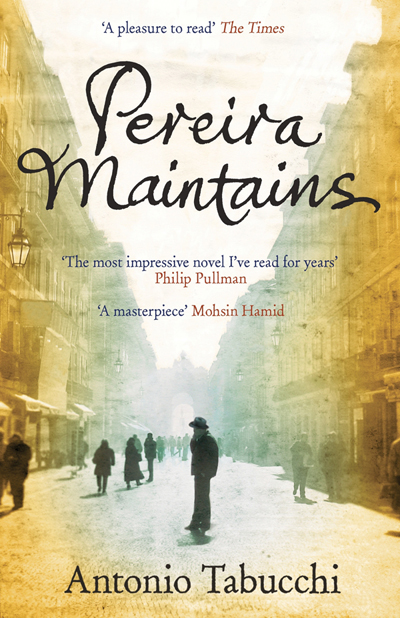
Pereira Maintains by Antonio Tabucci

I started things off with this jolly little tale of police suppression in 1930s Portugal. The Pereira of the title is a fat and aging crime reporter who's come down in the world to become the culture section of fledgeling 'non-political' paper the Lisboa. For slightly cosmic reasons, he gets into contact with a philosophy graduate named Monteiro Rossi. Rossi becomes Pereira's assistant at the paper, but he turns out to be pretty much the worst assistant ever - not only did he fake most of his dissertation, but all the articles he writes for Pereira are politically incendiary and therefore unpublishable. You see, this is Portugal under Salazar, a place where people pretend that everything is normal even though the secret police are beating stall-holders to death in the middle of the market. Culture has become dangerous, and the translations Pereira innocently makes of European stories suddenly have new and worrying political meanings.

Pereira begins the novel as pretty much the most clueless, passive person in existence - he's a journalist who has to ask his friends for the news - but he finds his friendship with Rossi changing how he sees the world. Rossi becomes the son he never had, and as Rossi gets deeper into the resistance movement, Pereira is dragged into it along with him. The whole novel is written as Pereira's testimony - of exactly what, we're not sure until the very end.

This is an apparently peaceful and dreamy little book, under which hides some serious subversive meaning. I think it's one of those novels that can be read and re-read, new themes emerging each time. It's clever without being showy, beautifully written (and with visually beautiful images, crystal seas and palm trees waving and so on) but with a really nasty undertaste to it. I think Pereira Maintains is a book that needs to be thought about. I didn't fall in love with it immediately, but it's been growing on me since I put it down, and I think it's going to stay in my brain for quite a while to come.

4.5 stars


Maggot Moon by Sally Gardner

I bought this for my niece for Christmas because I wanted to read it myself. It was that kind of present. Luckily, she read it in three hours flat, and then I wrenched it out of her hands and read it in two.

The number of people I recommend a book to after I've finished it is usually a good test of how much I liked it, and after I finished Maggot Moon I tweeted about it four times in quick succession and then sent three ecstatic emails to friends ordering them to JUST STOP EVERYTHING AND READ THIS BOOK.

It was that good. As I said at the time,


Set in an alternate-reality 1950s Soviet state, Maggot Moon is the story of Standish Treadwell. On the eve of a planned great moon landing by the Motherland, Standish dreams of flying away to his own perfect planet, Juniper, with his best friend Hector. On Planet Juniper the Cadillacs are the colour of ice cream, the Croca-Colas never run out and there are no secret police waiting to turn you and your family into maggot food if you disobey the Motherland.

Maggot Moon is a totally black dystopian fantasy told with incredibly effective simplicity. Standish is a wonderful, idiosyncratic narrator (he's dyslexic, so words come out of his head sounding brilliantly wrong), likeable and heartbreakingly honest. It'd have been easy to have made him one of those wide-eyed teen narrators living in a world he doesn't understand, but Gardner's smarter and more realistic than that. Standish absolutely does understand all the horrendous adult things that happen around him, even though he processes them in an utterly teenage way. He knows what happened to his parents and he knows what's likely to happen to him and his Gramps, but all the same he clings on to the wonderful world of Juniper that he's built in his head.

As the Moon Landing gets closer, it becomes clear that Standish is in possession of some pretty important information - the kind of stuff that could either destroy the Government or (more likely) himself and the people he loves. Then Hector goes missing, and Standish realises that he's got to be brave enough to use what he knows before the Government are able to make him disappear too.

This is a book about a kid making the kind of impossible decisions that most adults wouldn't be able to face. But like all the best fantasy, it feels real, totally believable and totally tragic. The ending, I warn you now, is awful, but it's one of those endings that destroys you in a hopeful sort of way, leaving you feeling slightly fire-damaged but lighter because of it.

Honestly, this snuck in from absolutely nowhere to become one of my books of 2012. I think it's one of the most perfect pieces of teen fiction I've read, maybe ever. I wish I had written it. Why didn't I write it?

5 stars.


Hand in Glove and Dead Water by Ngaio Marsh

The good thing about Agatha Christie is that, even when she's phoning it in, the result is still readable. The bad thing about Ngaio Marsh is that, when she's phoning it in, the result is... really not. Her entire back catalogue was recently re-published in fat omnibus editions, and as I work my way through them I am more and more reaching the conclusion that, although when Marsh is good she is very very good (see: A Surfeit of Lampreys, still one of my top favourite crime novels ever), when she is bad, she is horrid.

Hand in Glove and Dead Water are both thick with hackneyed stereotypes, gurning yokels and clangingly awful love-affairs, and the murders in them are both done for overwhelmingly stupid reasons, by methods that are needlessly complex and/or totally unbelievable. I mean, the whole of Hand in Glove revolves around the premise that a cigarette case is an object important enough to bother about. And then there are all the couples who conduct entire love affairs via sentences like Come here, silly darling, and let me clasp you to my bosom! And then there are the aforementioned yokels, who hawk and mumble away as though they have been endowed with the brains of rats instead of human beings. Seriously, Ngaio Marsh, going to Cambridge is not a test you have to pass to become a person.

God, these books. I just can't. I give up. It's a good thing that Marsh is dead, so she can't see me denounce her.

1.5 stars.


Broken Voices by Andrew Taylor

Broken Voices is a brand-new Kindle-only novella by Andrew Taylor - and since I have a brand-new Kindle it seemed a necessary purchase. Set one hundred years ago in a Fenland cathedral city, this a gloriously straight-up ghost story, one of those English classics of the genre in which nothing happens except a lot of chilling suspense.

The main character, a pupil at the city's King's School, has been stuck at the cathedral over the Christmas period while his parents stay in India. He's boarding at the house of a poor ex-teacher along with another pupil, an ex-choirboy who's suffering a terrible disgrace. Both boys are lonely and embittered, and when they hear a mysterious story about the Cathedral's history they decide that this is their opportunity to prove themselves.

Taylor's real strength - I've mentioned this before - is his extraordinary ability to evoke atmosphere, and that's something that's great for this tale. His historical settings feel both right and at the same time deliciously wrong. Something is always rotten in an Andrew Taylor novel, the skies are grey and the buildings lour. In Broken Voices there's a very nasty cat, an even nastier bit with some rats, chilly winter nights, cold Cathedral stones and a beautifully joyless Christmas day. Uncertainty is the name of the game - as the very first line asks,
'Was there a ghost? Was there, in a manner of speaking, a murder?'
(Taylor, like me, doesn't seem to be able to get away from murder. I can understand that.) His main character is a typically sulky and selfish teenage boy - and, in fact, all of his characters are small and basically unsympathetic. This is a cold-hearted world where there's really no one to root for, and that's perfect for the maybe-ghost story Taylor's telling.

I believe firmly that Christmas wouldn't be Christmas without a few really good scary stories (see also my own effort), and so this made my holiday season feel complete. Simple but effective, Broken Voices is an excellent marriage of author and subject which does exactly what it promises to do.

4 stars.