Showing posts with label 5 stars. Show all posts

Sunday, 14 July 2013

Best of the books: May and June

I've been a bit busy lately, for which I apologise. (Wait, no, what am I saying? I don't apologise. I'm becoming too British.)

Anyway, I've been editing and reading and working and so on, and I haven't had any time to blog about it. So, while I've got a brief free weekend (there are only ten other things I should be doing, it's fine), here's a round up of my best-of-the-best recent reads.


The Abominables by Eva Ibbotson

I have a lot of favourite authors. Eva Ibbotson is one of them. But I don't think any other authors have affected the way I live my life more than she has. Ibbotson's main characters are not just good, they're nice, on a really micro level. They move worms off hot pavements, forgive the foibles of unsuitable family members and are kind to weird old people even though they smell a bit funny, and as a child I decided (god help me) that this was how I wanted to lead my life.

Of course, being an Eva Ibbotson heroine is impossible, because it involves essentially becoming Eco-Jesus, but I tried, and to a large extent I'm still trying. I rescue snails from the paths of cars. I chase after people who have dropped small items of baggage. And it's all because of Eva Ibbotson's books.

So I put off reading The Abominables for quite a while, because finishing it meant that I would have read the final words of my guru. And then I finally did read it, and I cried a little bit because it was so lovely.

It's all about a family of Himalayan Yetis who are discovered by a determined Edwardian lady. She teaches them to be kind and polite to all things (they are vegetarians, but still carefully say "sorry," to their food before they eat it), and that's fine for a while - until they're forced to go out into the modern world and seek their fortunes. The rest of the plot is all just classic Eva Ibbotson, with some especially lovely asides about death and how important enjoying life is even though you know it's finite. As a swan song, it's perfect - and as a story it's pretty great as well. Bless her.

4 stars.


The Ocean at the End of the Lane by Neil Gaiman

Of course this one was going to be in here. I went to see his RSL lecture on it (oh yes, Warwick English professors who refused to supervise my dissertation on Gaiman because he wrote 'comix'. My proposed subject got a gig at the RSL being interviewed by Claire Armitstead. And A. S. Byatt reviewed his book. I hope you feel really bad now), and one of the best things he said as part of the talk (although there were a lot of them) was that the only real difference between adults' and children's fiction is that in adult fiction you get to leave in the boring bits.

Unfortunately, that doesn't really apply here, because there are no boring bits in The Ocean at the End of the Lane. It's certainly an adult book rather than one for kids in that it's about how adults remember childhood, but what Gaiman does is pick you up and slam you back into his seven-year-old protagonist's mind.

Ocean is full of the joy of small things, like the way food tastes and the way it feels to run through a a secret overgrown path at the bottom of the garden. But there's also a lot of the everyday nastiness that is so much a part of childhood. Ocean describes how it feels to be small, to be ignored, to be punished unjustly and to be powerless to right that wrong. And then, of course, because this is a Gaiman novel, it's also full of the most amazing flights of imagination - an evil nanny from another dimension, a field that grows kittens, an ocean that can fit into a bucket. The Ocean at the End of the Lane is beautiful and terrifying and incredibly poignant because of how fundamentally real it is, and it's the kind of book that adults should be glad that they're being sold.

5 stars.


Tender Morsels by Margo Lanagan

So, this is just one of the best books ever. A reimagining of the Snow White and Rose Red fairytale (and a lot more besides, I spotted Goldilocks and the Three Bears, Rumpelstiltskin and Red Riding Hood and I'm guessing there are more), it does things that I've never seen before in the genre and it's written so well that even her descriptions of furniture sent shivers down my spine.

This book isn't just about fairy tales. It reminds you of why people need fairy tales in the first place - as shield, as consolation, to make sense out of a senseless universe. It's full of magic, but magic used in a way that perfectly expresses some seriously deep truths about human emotions. It's also not afraid to deal with some of the darkest parts of human nature with the kind of rough black humour that's both astonishingly daring and oddly beautiful. Its brand of justice is shockingly, juicily, dreadfully well done (there is a scene at the end of the book so vivid that I read the whole thing with my mouth quite literally hanging open in shock) - ferocious enough to make you cheer, and nasty enough for your higher brain to be horrified at how you're reacting.

Like all the best fantasies, every part of this book is real, and I just can't praise it enough.

5 stars.


Eleanor & Park by Rainbow Rowell

Like The Ocean at the End of the Lane, this isn't really a book for teenagers. It's a book about being a teenager. That's not to say that teenagers wouldn't love it. They would! But Eleanor & Park is a quirky love story very much about remembering what it's like to be in your teens. It's about falling in love for the first time, and about all the sweetness and confusion and total insecurity you feel when that happens to you.

Eleanor and Park themselves are two wonderfully off-beat and realistic protagonists who subtly play with the conventions of male and female romantic leads, and it's important to appreciate how rare this is. There are so many impossible, Ayn Rand-style people in literature at the moment, especially in YA - heroines who can't manage to eat a whole lettuce leaf and but then manage to roundhouse kick five fully grown men while wearing a ball gown, for example - but Eleanor and Park, characters who in most novels would be 'too' fat and 'too' thin and 'too' weird and 'too' crazily dressed,  manage here to find very true love in each other. It's the most delicious antidote to all the romance novel nonsense that's out there. And did I mention that Eleanor and Park fall in love through the medium of comic books? Brilliant.

4.5 stars


A Monster Calls by Patrick Ness

A Monster Calls has basically become my case-in-point when I go off on one of my love-rants about the power of children's fiction to address serious issues in ways that adult fiction sometimes can't manage. It's a heartbreaking discussion about the way it feels to lose a parent ... but it's equally, and just as literally, about the way it feels to have an actual, real monster turn up in your garden.

There are no metaphors in this book. Conor's mother is dying of cancer. A monster comes to his window every night to tell him stories. And both of these parts of his life are portrayed as equally real.

The kids' version is terrifyingly illustrated by Jim Kay - no matter your age, you must not make the mistake of buying the version of this book without pictures - and all in all it's one of the most frightening and heartbreaking things that I've ever read.

5 stars.


Skellig by David Almond

I never read this as a child. I was always afraid of it for some reason. I think I thought Skellig sounded creepy. I was totally right, he is creepy - but wonderfully creepy, and I know my childhood self would have loved this book. Oops.

The plot is exceedingly strange. A little boy called Michael finds a man called Skellig living in his garage. Although it's never directly explained, Skellig pretty obviously a fallen angel who's just given up on life. What he's done is never mentioned, and it doesn't really matter - the point is that he's a bit dirty, a bit tainted, but (although he doesn't realise it) still very much worth loving.

Michael is having a very difficult time himself. He's got a baby sister who was born prematurely, parents who are totally focused on her, and a new house that's basically an overgrown dump. Michael is lonely and confused, but when he discovers Skellig he's suddenly given a purpose. Then he meets strange, lovely Mina, who's homeschooled and who believes in the wonderfulness of the world, and she shows him what he needs to do to save Skellig. That all sounds kind of hokey, doesn't it? Believe me, it's not - instead it's beautifully presented, perfectly paced and totally unsentimental.

4.5 stars

Sunday, 12 May 2013

April Reading Highlights

Reading! Reading! Reading! I think I may have overdosed on books.

Working in a publishing house is one of the greatest things that has ever happened to me, but it is also quite emotionally distressing. There are books everywhere, all around me, and I want to read them all but I can NEVER read them all. It torments me.

So what I'm realising is that I am never, realistically, going to be able to post reviews of every book I read here any more. In the last few weeks I have been reading about a book a day. So I'm reducing down again, to just the pick of the bunch. These are the books I've been evangelising about in the last month.

First, I have managed to do a review for The Bookbag: of Jenni Fagan's utterly, madly, stunningly brilliant The Panopticon. I five-starred it, and would five star again.

And the best of the rest:

Mr Fox by Helen Oyeyemi

I am ashamed to admit that it has taken me three years to read this book. I don't even know why. It's based on my favourite fairy tale, 'The Robber Bridegroom' (the English version is actually called 'Mr Fox', and it is my favourite because it contains animal people, grisly murders and a fierce girl detective who triumphs by using her brain). But somehow it never happened, until I went to the Granta Young British Novelists launch, heard Oyeyemi read and fell in instant and blazing literary love with her.

I pretty much ran to the till with Mr Fox and then fell on it like, er, Mr Fox on one of his victims - and oh my god, it's good. It's a mind-bogglingly smart collection of sharp, terrifying, stunningly well written short stories, all linking together to make up a battle of wits between a male writer and his female muse, an imaginary woman who has taken on a life of her own. Oyeyemi's writing is so bloody amazing, and what she's got to say about the way men control women is so true and (even more importantly) so effortlessly well expressed.

5 stars! 10 stars! How do I become friends with Helen Oyeyemi?


The Ghost Riders of Ordebec by Fred Vargas

I love Fred Vargas. I have nothing bad to say about her. Her mind works in such unique, charming, off-the-wall ways, and the universe she's created for her crime novels is both utterly delightful and full of animals. In The Ghost Riders of Ordebec, a pigeon is as important a character as a police officer, dogs need to be fed sugar at regular times of the day and there are a loving couple of rats who help to solve a murder.

Someone has been committing murders in the town of Ordebec, and the supersitious villagers believe that the culprit is Lord Hellequin, a ghostly rider who punishes the wicked by killing them and stealing their souls. Although the supernatural is never the real answer to one of Vargas's mysteries, there's an atmosphere of misty possibility that make you feel like you're in a slightly alternate universe. Vargas's protagonist Adamsberg is adorably vague, a cloud-shovelling policeman who has trouble remembering people's names and who didn't realise he had an extra illegitimate son because he failed to read a letter properly. This book, like all the others, is softly written but with a beautiful attention to detail and a quirky sense of humour. Vargas has a knack for creating characters (both human and animal, there really is no difference) that you instantly fall in love with, and her good guys radiate real honest goodness.

I think Vargas is the best thing in crime fiction right now. This latest novel is as good as all the others - and now that I've read it I really want a dog called Fleg.

4.5 stars.


The Fault in Our Stars by John Green

Well, we can all pack up and go home. John Green's written the perfect YA novel and there just isn't any point trying to follow his act. As I tweeted at the time:
Seriously, I am only exaggerating a little. This is just a virtuoso work of fiction, something that's beautiful and touching but also completely real in a way that most tearjerkers don't manage to be. The characters seriously read like people (real people, ones who are a bit mean and a bit small and a bit selfish, but still good), and so you can go from crying to laughing outrageously in about half a page. It's the most fearless presentation of the realities of suffering from cancer that I've ever read, as well as one of the best teenage love stories, and it has extremely light and intelligent things to say about everything from Great Literature to computer games.

One in the eye for anyone who thinks that YA is written by people who aren't good enough to write proper books.

5 stars. 


Golden Boy by Abigail Tarttelin

I went to the launch of this (launches, by the way, are the best things about publishing apart from everything to do with the books), and can confirm that Abigail is nice, fun and the same age as me (this is her second book. Yes, really). She is also an extremely thoughtful and imaginative author who has written a novel so compelling that I started it on Friday evening, had to be dragged away from it to go to a dinner party and then leaped out of bed at 7 on Saturday morning because I had to finish it now now now.

I really don't want to give away any of the plot, because so much of the book is about peeling away layers of secrets to reveal the even crazier secret underneath (it's a testament to how perfectly balanced and well-imagined Golden Boy is that when I tried to explain the plot to my boyfriend it sounded like something from Take a Break, like MY STALKER EX-BOYFRIEND ATE MY SISTER'S BABY WHILE HIGH ON DRUGS, but while I was actually reading it it didn't feel sensational at all). Suffice it to say, though, that Max Walker, the apparently perfect golden boy of the title... isn't. At all.

I'm seeing Golden Boy trailed in America as for fans of The Perks of Being a Wallflower, which... I'm not sure I buy into. Sure, it's about a teenager coming of age, and there are some very nicely-observed moments of emotional resolution, but it's also incredibly dark and shocking - and it's got one of the most horrifying openings I've ever come across. I read the first three chapters, put the book down and said, "I can't believe she just did that".

Seriously, though, I loved it, and I think that Golden Boy's going to be huge. Quick, everyone, read it now!

4.5 stars

Thursday, 31 January 2013

Something's Gotta Give: Slimline Reviews

My edits have now arrived, proving once and for all that this agent thing is really real and not something I made up in an overexcited moment.

I am preparing myself for the great task ahead of me: wantonly destroying all the characters and scenes in the book that are lovely but completely pointless to my plot. This will obviously take some time, and time is something that seems to be in short supply in my life already.

Therefore, I am proposing a change to this blog's reviewing rules. I just can't do a full blog post on every novel I read any more (and was anyone reading them anyway, my grandmother excepted?), so from now on I'm going to be doing lists of snap reviews.

Like this!

Before the Fact by Francis Iles

Alas, this was a good idea, lamely executed. Iles (pen name of Anthony Berkeley, a slightly less ingenious contemporary of Agatha Christie) was interested in making up new ways to write crime novels. This one is set before the crime actually happens. You'd think that this would be a promising concept. A woman wakes up one day convinced that her husband wants to murder her. But is she right?

Well... yes. As is painfully evident from the first page, her husband is going to murder her. We have to trail painfully through years of their life together, until we get to the day when he actually kills her. Believe me, by that point you will be begging him to go ahead and do it.

There's a very interesting question buried in Iles's premise, about whether we can ever really know what kind of person we're spending our life with, but he does absolutely nothing interesting with it. Frankly, this is one of the most boring thrillers I've ever read.

 If you want a book that does run with that idea in an awesomely clever way, try Gone Girl by Gillian Flynn (which I just happened to read for The Bookbag the week after I read this). It's amazing. This isn't.

2 stars.


The American Boy by Andrew Taylor

Now this one was good. A creepy historical murder mystery (it's Taylor, what else would you expect?) that's based on events during the childhood of Edgar Allen Poe, it's well imagined and satisfyingly well executed. It's got a nice, big, engrossing plot, full of mistaken identities, big chilly houses and lots of gloomy weather.

Taylor's novels aren't just mysteries, they're stories, and often quite involved ones - novels that happen to have murders in them, rather than novels about murder. The star of the show is always the setting, the (very accurately rendered) historical moment, and I thought that the world of The American Boy (Regency England) was particularly well imagined.

This is a book that you can get your teeth into, a blockbuster production that's good down to its smallest details. It's delightfully dark and twisty with just the right level of nastiness - basically, this is vintage Taylor. The sequel (prequel?) is out next month. Let me tell you, internet, I am excited.

4 stars.


The Night Circus by Erin Morgenstern

Let me sell you this book in a single sentence: it's about a magical Victorian circus. A MAGICAL. VICTORIAN. CIRCUS. And not just any magical Victorian circus, either. It's pretty much the slickest, the most sideways and in all ways the best vision of the best possible circus you could ever imagine. Only it's better.

Morgenstern's cirque des reves assaults all your senses at once. Her writing makes you slaver over the burnt-caramel smell of popcorn, taste cinnamon pastries and light up your mind's eye with fire and fluttering ribbons. There's a circus tent that's a garden made entirely of ice, a tent where you climb up into a labyrinth in the clouds and one where you can smell stories.

The circus itself is the setting for an absolutely beautiful love story. The two main characters of The Night Circus are a boy and girl who have been brought up knowing that they have to fight a mysterious and fatal magical duel - except that when they actually meet, they realise that all they want to do is spend the rest of their lives together. Can they manage it? Or will the power of the circus, the setting for their great game, send events spinning out of their control? Morgenstern plays with time and place masterfully, messing with the lives of her wonderful characters in a way that's like watching an illusionist carry out a virtuoso magic trick.

When I finished this book, I physically missed it. I wandered tragically around my house hugging it to me and whispering, what do I do with my life? I loved The Night Circus heartbreakingly much. I can do nothing else but give it

5 stars.


Ketchup Clouds by Annabel Pitcher

I have been itching to get my hands on this one for a long time. A teenage girl writes a series letters to a convicted murderer on Death Row, confessing to a terrible crime that she's kept secret from everyone she knows.

I loved this idea from the moment I first heard about it (you know how I love terrible secret crimes), but, more importantly, on closer acquaintance the story stands up to its premise.

I think what Pitcher has done with her hook is exceptional. She doles out the suspense - what did Zoe do, and who did she do it to? - in perfectly pitched little sips. I was going completely mental trying to work out which of the two possible victims Zoe has actually killed, so much so that I read half of the book on the train to work, and the other half on the train on the way home. Was the actual moment of the crime a let-down? Slightly, but that's just because I was keyed up to such a pitch that I would have been disappointed with anything that wasn't as insane as what I had been picturing in my head.

Zoe is a wonderful narrator, though, so realistic and funny that the book's success doesn't rest on the reveal of her crime alone. She's a real presence, and her words bring her world to life. Cleverly on Pitcher's part, one of the book's most engaging and present characters never actually appears in the text or says a single word. Zoe's murderer, Stuart Harris, never replies to her letters (he can't, since Zoe writes from 'Fiction Drive' to keep her story secret), but nevertheless he becomes an incredibly important person in her life. Zoe has made up a totally romanticised concept of him, the magical persona she needs to listen to her and understand the awful things that she's done. Like the rest of Ketchup Clouds, it's a perfectly pitched little detail that will break your heart and make you feel absolutely complicit in even the worst of Zoe's actions.

4.5 stars.

Saturday, 29 December 2012

Quick-fire reviews: my Christmas book list

I personally move to rename Christmas, Bookmas. I can hear the Christians wailing and gnashing their teeth from here, but it would be a more accurate description of my activities during the festive period. There is a bit of Christ, but there are a lot of books, and as you all know, I am all about the books.

Please note that the following reviews are not of the books I received for Christmas. Oh no. I have not even begin to make a dent in that towering pile. These are merely the books I read during my 'holiday' at home (ho ho), while the rest of my family revolved around me screaming and shouting and playing endless games of Battleship.


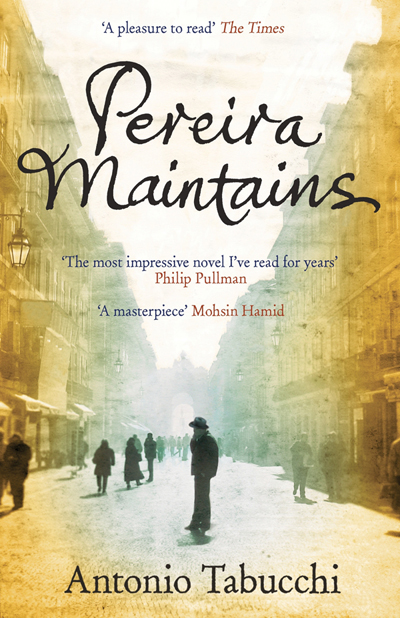
Pereira Maintains by Antonio Tabucci

I started things off with this jolly little tale of police suppression in 1930s Portugal. The Pereira of the title is a fat and aging crime reporter who's come down in the world to become the culture section of fledgeling 'non-political' paper the Lisboa. For slightly cosmic reasons, he gets into contact with a philosophy graduate named Monteiro Rossi. Rossi becomes Pereira's assistant at the paper, but he turns out to be pretty much the worst assistant ever - not only did he fake most of his dissertation, but all the articles he writes for Pereira are politically incendiary and therefore unpublishable. You see, this is Portugal under Salazar, a place where people pretend that everything is normal even though the secret police are beating stall-holders to death in the middle of the market. Culture has become dangerous, and the translations Pereira innocently makes of European stories suddenly have new and worrying political meanings.

Pereira begins the novel as pretty much the most clueless, passive person in existence - he's a journalist who has to ask his friends for the news - but he finds his friendship with Rossi changing how he sees the world. Rossi becomes the son he never had, and as Rossi gets deeper into the resistance movement, Pereira is dragged into it along with him. The whole novel is written as Pereira's testimony - of exactly what, we're not sure until the very end.

This is an apparently peaceful and dreamy little book, under which hides some serious subversive meaning. I think it's one of those novels that can be read and re-read, new themes emerging each time. It's clever without being showy, beautifully written (and with visually beautiful images, crystal seas and palm trees waving and so on) but with a really nasty undertaste to it. I think Pereira Maintains is a book that needs to be thought about. I didn't fall in love with it immediately, but it's been growing on me since I put it down, and I think it's going to stay in my brain for quite a while to come.

4.5 stars


Maggot Moon by Sally Gardner

I bought this for my niece for Christmas because I wanted to read it myself. It was that kind of present. Luckily, she read it in three hours flat, and then I wrenched it out of her hands and read it in two.

The number of people I recommend a book to after I've finished it is usually a good test of how much I liked it, and after I finished Maggot Moon I tweeted about it four times in quick succession and then sent three ecstatic emails to friends ordering them to JUST STOP EVERYTHING AND READ THIS BOOK.

It was that good. As I said at the time,


Set in an alternate-reality 1950s Soviet state, Maggot Moon is the story of Standish Treadwell. On the eve of a planned great moon landing by the Motherland, Standish dreams of flying away to his own perfect planet, Juniper, with his best friend Hector. On Planet Juniper the Cadillacs are the colour of ice cream, the Croca-Colas never run out and there are no secret police waiting to turn you and your family into maggot food if you disobey the Motherland.

Maggot Moon is a totally black dystopian fantasy told with incredibly effective simplicity. Standish is a wonderful, idiosyncratic narrator (he's dyslexic, so words come out of his head sounding brilliantly wrong), likeable and heartbreakingly honest. It'd have been easy to have made him one of those wide-eyed teen narrators living in a world he doesn't understand, but Gardner's smarter and more realistic than that. Standish absolutely does understand all the horrendous adult things that happen around him, even though he processes them in an utterly teenage way. He knows what happened to his parents and he knows what's likely to happen to him and his Gramps, but all the same he clings on to the wonderful world of Juniper that he's built in his head.

As the Moon Landing gets closer, it becomes clear that Standish is in possession of some pretty important information - the kind of stuff that could either destroy the Government or (more likely) himself and the people he loves. Then Hector goes missing, and Standish realises that he's got to be brave enough to use what he knows before the Government are able to make him disappear too.

This is a book about a kid making the kind of impossible decisions that most adults wouldn't be able to face. But like all the best fantasy, it feels real, totally believable and totally tragic. The ending, I warn you now, is awful, but it's one of those endings that destroys you in a hopeful sort of way, leaving you feeling slightly fire-damaged but lighter because of it.

Honestly, this snuck in from absolutely nowhere to become one of my books of 2012. I think it's one of the most perfect pieces of teen fiction I've read, maybe ever. I wish I had written it. Why didn't I write it?

5 stars.


Hand in Glove and Dead Water by Ngaio Marsh

The good thing about Agatha Christie is that, even when she's phoning it in, the result is still readable. The bad thing about Ngaio Marsh is that, when she's phoning it in, the result is... really not. Her entire back catalogue was recently re-published in fat omnibus editions, and as I work my way through them I am more and more reaching the conclusion that, although when Marsh is good she is very very good (see: A Surfeit of Lampreys, still one of my top favourite crime novels ever), when she is bad, she is horrid.

Hand in Glove and Dead Water are both thick with hackneyed stereotypes, gurning yokels and clangingly awful love-affairs, and the murders in them are both done for overwhelmingly stupid reasons, by methods that are needlessly complex and/or totally unbelievable. I mean, the whole of Hand in Glove revolves around the premise that a cigarette case is an object important enough to bother about. And then there are all the couples who conduct entire love affairs via sentences like Come here, silly darling, and let me clasp you to my bosom! And then there are the aforementioned yokels, who hawk and mumble away as though they have been endowed with the brains of rats instead of human beings. Seriously, Ngaio Marsh, going to Cambridge is not a test you have to pass to become a person.

God, these books. I just can't. I give up. It's a good thing that Marsh is dead, so she can't see me denounce her.

1.5 stars.


Broken Voices by Andrew Taylor

Broken Voices is a brand-new Kindle-only novella by Andrew Taylor - and since I have a brand-new Kindle it seemed a necessary purchase. Set one hundred years ago in a Fenland cathedral city, this a gloriously straight-up ghost story, one of those English classics of the genre in which nothing happens except a lot of chilling suspense.

The main character, a pupil at the city's King's School, has been stuck at the cathedral over the Christmas period while his parents stay in India. He's boarding at the house of a poor ex-teacher along with another pupil, an ex-choirboy who's suffering a terrible disgrace. Both boys are lonely and embittered, and when they hear a mysterious story about the Cathedral's history they decide that this is their opportunity to prove themselves.

Taylor's real strength - I've mentioned this before - is his extraordinary ability to evoke atmosphere, and that's something that's great for this tale. His historical settings feel both right and at the same time deliciously wrong. Something is always rotten in an Andrew Taylor novel, the skies are grey and the buildings lour. In Broken Voices there's a very nasty cat, an even nastier bit with some rats, chilly winter nights, cold Cathedral stones and a beautifully joyless Christmas day. Uncertainty is the name of the game - as the very first line asks,
'Was there a ghost? Was there, in a manner of speaking, a murder?'
(Taylor, like me, doesn't seem to be able to get away from murder. I can understand that.) His main character is a typically sulky and selfish teenage boy - and, in fact, all of his characters are small and basically unsympathetic. This is a cold-hearted world where there's really no one to root for, and that's perfect for the maybe-ghost story Taylor's telling.

I believe firmly that Christmas wouldn't be Christmas without a few really good scary stories (see also my own effort), and so this made my holiday season feel complete. Simple but effective, Broken Voices is an excellent marriage of author and subject which does exactly what it promises to do.

4 stars.

Tuesday, 22 November 2011

1001 Books Review - Orlando

1) The lovely people over at Writersdock have re-published two more of my reviews, of 1984 and Angels and Insects.This is very kind of them and makes me extremely delighted.

2) My latest blog for Litro is all about old men in hot pants, the word lentor and my criminal inability to learn languages.

And now, a 1001 Books review with a difference.

The difference is, I'm sorry to say, that this is a cheat. Not only have I read Orlando at least three times before, but I am only reading it now for one of my MA modules, and didn't I tell you I would never subject you to my MA books?

Nevertheless.

Orlando is one of my all-time favourite, love-of-my-life books, one of those pieces of writing that, for me, that only gets better and more astonishing each time I go back to it. This time around I started Orlando at ten thirty a few nights ago, intending to read the first chapter. At one o'clock in the morning, on page 150, I came to myself and realised that I should probably go to sleep at some point.

Re-reading something that means as much to you as Orlando does to me is like meeting someone you love at International Arrivals. You see them and you're overcome with ridiculous joy and recognition, almost irregardless of the merits of the person in question - but, in this case, I think that all the praise I can give it is entirely deserved. Orlando is an astonishing, virtuoso piece of smart, funny, poetic wordplay from a writer who understands the language so well that she's able to do things with it that ought to be entirely impossible. Virginia Woolf can sometimes be so technically high-flown that she's almost entirely impenetrable (read The Waves and see if you can understand more than about half of it), but in Orlando she reigns herself in just the right amount. Unusually for a novel by a high Modernist writer, there are distinct characters and an actual linear plot(!) as well as beautiful images of rubies and falling leaves, and the result is an insane, delightfully out-of-left-field gallop through the last 500 years of English history and literature. Written as a tongue-in-cheek tribute to Virginia Woolf's friend (and girlfriend) Vita Sackville West, it's the maddest biography you'll ever come across, a completely ridiculous story set in a world where literally anything can happen.

Orlando is unbelievably believable, full of brilliantly tall tales of villagers turning to stone during particularly cold winters and cats being mistaken for coals and put on the fire. It's got the most casual attitude to time travel and eternal life you'll ever come across - in it, some people just go on living for four hundred years, not aging, without it being remarked upon at all. I read a Guardian article in which Ursula Le Guin said that Orlando was one of the books that made her want to become a science fiction writer, and I think (as usual with Ursula Le Guin) she's absolutely right. Orlando (with a charming wink in the direction of the audience) turns most of the physical laws of the universe upside down and ties the rest of them in knots. Hours can last years, you can see all of England from the top of a hill and people can change their sex at the drop of a pair of trousers.

This is where Orlando is at its most outrageously clever and witty. Women dress up as men, men act like women (or are they actually women in particularly good disguise?) and the main character, Orlando, lives the first two hundred years of his life as a man before going to sleep for seven days and waking up a woman. Physical gender becomes something like the ridiculous paper hats you might put on at a party - you swap them round, you wear two at once, it's all a bit of a joke and none of it means anything anyway.

Orlando really is a very funny book (though it's laugh-in-the-head rather than laugh-from-the-stomach), a joke at the expense of great authors, high-minded biography and boring history. Worse than that, it enjoys itself immensely, it was clearly written for the sheer jolly love of it, and there are pictures. All of this makes critics terribly nervous. Great Literature should not be funny, it should be full of people sobbing and dying and giving birth under haystacks while it rains, and unspoken conventions like this are why I sometimes get very tired of academics.

In this case, they are wrong, and Orlando is right. In fact, Orlando is wonderful. You should all read it five times in a row and be amazed. It's possible I'm biased, but the nice thing about reading is that it's entirely subjective. I'm free to love this no matter what the critics say.

5 stars.

Sunday, 19 June 2011

Review - New Finnish Grammar

The fact that I am reviewing this book at all is the result of one of the nicest publishing stories of the year so far. A book in translation, by an Italian writer totally unknown in the UK, published by a small, obscure company, with an incredibly uninformative title and a frankly dull cover, we have had more requests for it in the past few weeks than almost any other title, including The Tiger's Wife, we sold 19 copies of it in three days, it has now entirely sold out its first print run and we have 50 more on order. We'll sell them all.

And this is all because of one review that appeared in the Guardian a few weeks ago. Reviews do tend to generate sales, even when they're quite mixed, (I have come to dread the customer approaching the desk clutching a pathetic little bit of newspaper clipping in their hand, because invariably the book they want will be not yet released, or only available in America, or published in 1976 - damn you, newspaper reviewers, damn your eyes) but for the kind of review that this book got, most writers would willingly sell at least one of their kidneys and possibly their spleen.
I can't remember when I read a more extraordinary novel, or when I was last so strongly tempted to use the word "genius" of its author.
I mean. Damn.

So obviously I had to buy New Finnish Grammar to see if it really was that good. And here's the thing - it really is. I'm nearly embarrassed about how much I was bowled over by this book. In terms of style, the way it's written, it's flawless. It's so well written that it doesn't even need to bother with the fancy little fiddles or weird convoluted images that a lot of writers use to show how incredibly 'intelligent' and 'erudite' they are (these words can be substituted with 'infuriating' and 'snobbish', or other, ruder adjectives of your choice). New Finnish Grammar just tells the story it wants to, clearly and beautifully, without being a show-off about it at all. It does what it does, and what it does is astonishing.

It's the story of a man discovered in the port of Trieste in 1943, unconscious and almost beaten to death. The name on his coat's tag is Finnish, and because of this the doctor on board the hospital ship he's taken to, an exiled Finn himself, becomes nearly obsessive about the importance of this man recovering his memory and identity. He teaches him the Finnish language, and ultimately sends him back to Finland hoping that he'll rediscover his roots.

Words in this book become physical things, with meanings that are part of the particular time or place they are spoken, or the person they are spoken by. The main character learns the Finnish language as much by his relationships he forms with other people as by the tables of grammar that he painstakingly writes out, and the words he learns are the way in which he rebuilds his world and himself. There are so many beautiful ideas going on in New Finnish Grammar, about language and identity and nationality, but all the same it doesn't push any of them on you. You're free to notice them, or not, and think about them or not, and the book works equally well either way. It's just lovely, every sentence of it, but it doesn't want to bother you - it's very polite, this book, it never grabs or shoves or overstays its welcome. If you expect fireworks, plot-wise, you'll be missing the point - the joy of New Finnish Grammar is its attention to detail, its descriptions of streets and clouds and trees. It's incredible, for a book written about World War II, how peaceful it is to read.

This book is beautiful. It's absolutely wonderful, and it's very difficult to explain it in a way that does it justice. Just - read it, seriously, read it, and I hope you'll see what I mean.

5 stars.