Showing posts with label marsh. Show all posts

Saturday, 29 December 2012

Quick-fire reviews: my Christmas book list

I personally move to rename Christmas, Bookmas. I can hear the Christians wailing and gnashing their teeth from here, but it would be a more accurate description of my activities during the festive period. There is a bit of Christ, but there are a lot of books, and as you all know, I am all about the books.

Please note that the following reviews are not of the books I received for Christmas. Oh no. I have not even begin to make a dent in that towering pile. These are merely the books I read during my 'holiday' at home (ho ho), while the rest of my family revolved around me screaming and shouting and playing endless games of Battleship.


Pereira Maintains by Antonio Tabucci
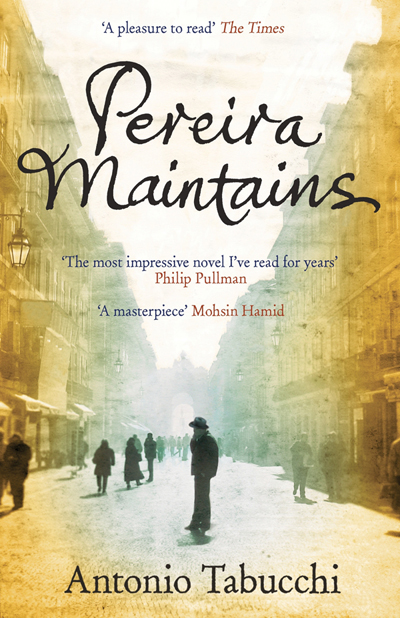
I started things off with this jolly little tale of police suppression in 1930s Portugal. The Pereira of the title is a fat and aging crime reporter who's come down in the world to become the culture section of fledgeling 'non-political' paper the Lisboa. For slightly cosmic reasons, he gets into contact with a philosophy graduate named Monteiro Rossi. Rossi becomes Pereira's assistant at the paper, but he turns out to be pretty much the worst assistant ever - not only did he fake most of his dissertation, but all the articles he writes for Pereira are politically incendiary and therefore unpublishable. You see, this is Portugal under Salazar, a place where people pretend that everything is normal even though the secret police are beating stall-holders to death in the middle of the market. Culture has become dangerous, and the translations Pereira innocently makes of European stories suddenly have new and worrying political meanings.

Pereira begins the novel as pretty much the most clueless, passive person in existence - he's a journalist who has to ask his friends for the news - but he finds his friendship with Rossi changing how he sees the world. Rossi becomes the son he never had, and as Rossi gets deeper into the resistance movement, Pereira is dragged into it along with him. The whole novel is written as Pereira's testimony - of exactly what, we're not sure until the very end.

This is an apparently peaceful and dreamy little book, under which hides some serious subversive meaning. I think it's one of those novels that can be read and re-read, new themes emerging each time. It's clever without being showy, beautifully written (and with visually beautiful images, crystal seas and palm trees waving and so on) but with a really nasty undertaste to it. I think Pereira Maintains is a book that needs to be thought about. I didn't fall in love with it immediately, but it's been growing on me since I put it down, and I think it's going to stay in my brain for quite a while to come.

4.5 stars


Maggot Moon by Sally Gardner

I bought this for my niece for Christmas because I wanted to read it myself. It was that kind of present. Luckily, she read it in three hours flat, and then I wrenched it out of her hands and read it in two.

The number of people I recommend a book to after I've finished it is usually a good test of how much I liked it, and after I finished Maggot Moon I tweeted about it four times in quick succession and then sent three ecstatic emails to friends ordering them to JUST STOP EVERYTHING AND READ THIS BOOK.

It was that good. As I said at the time,


Set in an alternate-reality 1950s Soviet state, Maggot Moon is the story of Standish Treadwell. On the eve of a planned great moon landing by the Motherland, Standish dreams of flying away to his own perfect planet, Juniper, with his best friend Hector. On Planet Juniper the Cadillacs are the colour of ice cream, the Croca-Colas never run out and there are no secret police waiting to turn you and your family into maggot food if you disobey the Motherland.

Maggot Moon is a totally black dystopian fantasy told with incredibly effective simplicity. Standish is a wonderful, idiosyncratic narrator (he's dyslexic, so words come out of his head sounding brilliantly wrong), likeable and heartbreakingly honest. It'd have been easy to have made him one of those wide-eyed teen narrators living in a world he doesn't understand, but Gardner's smarter and more realistic than that. Standish absolutely does understand all the horrendous adult things that happen around him, even though he processes them in an utterly teenage way. He knows what happened to his parents and he knows what's likely to happen to him and his Gramps, but all the same he clings on to the wonderful world of Juniper that he's built in his head.

As the Moon Landing gets closer, it becomes clear that Standish is in possession of some pretty important information - the kind of stuff that could either destroy the Government or (more likely) himself and the people he loves. Then Hector goes missing, and Standish realises that he's got to be brave enough to use what he knows before the Government are able to make him disappear too.

This is a book about a kid making the kind of impossible decisions that most adults wouldn't be able to face. But like all the best fantasy, it feels real, totally believable and totally tragic. The ending, I warn you now, is awful, but it's one of those endings that destroys you in a hopeful sort of way, leaving you feeling slightly fire-damaged but lighter because of it.

Honestly, this snuck in from absolutely nowhere to become one of my books of 2012. I think it's one of the most perfect pieces of teen fiction I've read, maybe ever. I wish I had written it. Why didn't I write it?

5 stars.


Hand in Glove and Dead Water by Ngaio Marsh

The good thing about Agatha Christie is that, even when she's phoning it in, the result is still readable. The bad thing about Ngaio Marsh is that, when she's phoning it in, the result is... really not. Her entire back catalogue was recently re-published in fat omnibus editions, and as I work my way through them I am more and more reaching the conclusion that, although when Marsh is good she is very very good (see: A Surfeit of Lampreys, still one of my top favourite crime novels ever), when she is bad, she is horrid.

Hand in Glove and Dead Water are both thick with hackneyed stereotypes, gurning yokels and clangingly awful love-affairs, and the murders in them are both done for overwhelmingly stupid reasons, by methods that are needlessly complex and/or totally unbelievable. I mean, the whole of Hand in Glove revolves around the premise that a cigarette case is an object important enough to bother about. And then there are all the couples who conduct entire love affairs via sentences like Come here, silly darling, and let me clasp you to my bosom! And then there are the aforementioned yokels, who hawk and mumble away as though they have been endowed with the brains of rats instead of human beings. Seriously, Ngaio Marsh, going to Cambridge is not a test you have to pass to become a person.

God, these books. I just can't. I give up. It's a good thing that Marsh is dead, so she can't see me denounce her.

1.5 stars.


Broken Voices by Andrew Taylor

Broken Voices is a brand-new Kindle-only novella by Andrew Taylor - and since I have a brand-new Kindle it seemed a necessary purchase. Set one hundred years ago in a Fenland cathedral city, this a gloriously straight-up ghost story, one of those English classics of the genre in which nothing happens except a lot of chilling suspense.

The main character, a pupil at the city's King's School, has been stuck at the cathedral over the Christmas period while his parents stay in India. He's boarding at the house of a poor ex-teacher along with another pupil, an ex-choirboy who's suffering a terrible disgrace. Both boys are lonely and embittered, and when they hear a mysterious story about the Cathedral's history they decide that this is their opportunity to prove themselves.

Taylor's real strength - I've mentioned this before - is his extraordinary ability to evoke atmosphere, and that's something that's great for this tale. His historical settings feel both right and at the same time deliciously wrong. Something is always rotten in an Andrew Taylor novel, the skies are grey and the buildings lour. In Broken Voices there's a very nasty cat, an even nastier bit with some rats, chilly winter nights, cold Cathedral stones and a beautifully joyless Christmas day. Uncertainty is the name of the game - as the very first line asks,
'Was there a ghost? Was there, in a manner of speaking, a murder?'
(Taylor, like me, doesn't seem to be able to get away from murder. I can understand that.) His main character is a typically sulky and selfish teenage boy - and, in fact, all of his characters are small and basically unsympathetic. This is a cold-hearted world where there's really no one to root for, and that's perfect for the maybe-ghost story Taylor's telling.

I believe firmly that Christmas wouldn't be Christmas without a few really good scary stories (see also my own effort), and so this made my holiday season feel complete. Simple but effective, Broken Voices is an excellent marriage of author and subject which does exactly what it promises to do.

4 stars.

Tuesday, 23 October 2012

Delicious Death: Some Quickfire Crime Reviews

First, some links to my latest reviews for The Bookbag:

Desolation Island by Adolfo Garcia Ortega (short answer: very very good)

The Story of English by Joseph Piercy (short answer: very very mixed)

Now I don't know if you've heard, but I like crime. Theoretically, of course. This blog does not endorse wrongdoing in any way, shape or form, and in fact would encourage you all to be nice to other people and not kill them.

Nonetheless, in the abstract, crime soothes me. Here is a round-up of my latest toothsome murder selections.


Sovereign by C. J. Sansom.

I've said before that I like Sansom's books a lot. Not only does he have a very good, very full-blooded line in historical recreation, he's becoming a technically better writer as he goes along. Sovereign is the third in his series of novels about a crime-solving hunchbacked lawyer struggling to stay alive among the political intrigue of Henry VIII's court. It's set in 1541 and concerns two of the aging Henry's more disastrous decisions: his marriage to hot young thing Catherine Howard (the second beheaded, according to the rhyme) and his royal Progress around a very tetchy and still rebellious North of England.

Matthew Shardlake and his sexy assistant Jack Barak are sent to York on a mission to look after the safety of a political prisoner. Of course, Shardlake gets royally mixed up in Henry's progress and ends up uncovering a plot to destabilise the entire Tudor succession. As you do. It's all a bit ridiculous (although based on real events and real intrigue, like all the best fiction) but thoroughly fun, and the story carrys you along at a breathless pace all the way to the end. It's a 650 page book that reads like a 250 page novella.

Poor old Shardlake is a good man in a bad world. He doesn't know when to leave well enough alone and who has a lot of trouble remembering that most people are a lot nastier than he is. Each book sees him sinking further into his pit of emotional despair, and each culminates with the inevitable announcement that this will be ABSOLUTELY HIS VERY LAST CASE. Since I know that Sansom has written at least two more Shardlake novels I can smell the lie and be very grateful for it. This series ticks both my crime nerd and  history nerd boxes, and long may it last.

I see I originally gave the Shardlake books 3 stars. I must have been feeling mean that day. For this outing, I'm revising upwards to

4 stars.


The Affair of the Mutilated Mink by James Anderson

Before I actually read it, I had suspicions that The Affair of the Mutilated Mink might be a silly book. Imagine my joy when I realised that it is precisely that. Its pages give off gusts of the purest, most exquisite Golden Age foolery (in case you are wondering, this rare substance smells like leather-bound books, pearls, rolling acres and gunshot wounds, and Agatha Christie used to spray herself all over with it every morning).

The second in Anderson's series of pastiche Golden Age detective novels (my library didn't have the first), its English upper class characters bray and blether delightfully, its American characters say HOWDY and chew cigars and everyone has utterly creative secret backgrounds involving JEWELS and MISTAKEN IDENTITIES and TRAGIC DEATHS. The dippy set-up (American producer wants to shoot movie on location at the film-mad Earl of Burford's scenic pile) is an excuse to drag a motley cast of movie star types, aristocracy, long-lost relatives and the obligatory troubled artist together for a country-house weekend party that ends (surprise surprise) with MURDER MOST FOUL.

The Affair of the Mutilated Mink never makes the mistake of taking itself seriously. Even the characters know they're being ridiculous, and there's an extremely meta joke-that-knows-it's-a-joke atmosphere to the whole thing that reminded me a lot of P. G. Wodehouse. Fans of Golden Age detective fiction will have their hearts melted by throwaway references to Ariadne Oliver and Inspector Alleyn (who, in this world, are real people), as well as spot-on recreations of stock characters like the officious Scotland Yard man (complete with trusty valet), the prima donna actress and the American movie producer extraordinaire. At the same time, though, Anderson's doing something quite intelligent with the familiar tropes. The man sent from Scotland Yard turns out to be too smart for his own good and the mystery is actually solved by Wilkins, one of those adorably modest country detective who are always totally snubbed in Christie and Sayers novels. The leading girl is not only suitably plucky and resourceful but also quite a rounded human being, the Earl's bluffness is all for show... and so on, and so on. It's a really witty variation on a well-known theme that feels new and old at the same time - which, coincidentally, was what all those Golden Age crime novels were trying to do in the first place.

This book is wonderful. It affectionately embraces all the flaws of its parent genre, pokes gentle fun at its worst excesses and on top of that manages to put together a fairly tidy and inventive murder mystery. The reveal may not blow your mind, although there are some great twists in the tale, but the joy of any good Golden Age murder mystery is the silly, over-the-top journey to that final denouement, and this journey is ridiculously fun.

Another 4 stars.


Image from banisbooks.blogspot.com
Scales of Justice by Ngaio Marsh

By the way, in case you're wondering, I did not mistakenly smash my fingers against my keyboard to come up with that first name. Marsh was from New Zealand, so her parents gave her a name that's the Maori word for a kind of tree. The G is silent so it's pronounced like Naio. There you go, that's your fascinating trivia for the day. You're welcome.

Before I actually discuss the content of this book, I would like to direct your attention to the FANTASTIC cover of my edition. It is purest essence of the 1970s, when publishers had just discovered photography but were not yet conversant with realism. This image has it all: fake plastic trout, puzzled dog, daub of red paint where the blood should be. It is so ugly that I can't stop staring at it.

Unfortunately, though, it turns out that the best thing about Scales of Justice is that cover. A lot of Golden Age writers (apart from Dorothy Sayers, who got bored and turned to translating Dante instead) carried on relentlessly beating the dead horse of the 1930s setting well into the 1960s, and this book, published in 1955, contains themes so stale that they're practically suppurating.

The female characters wear twinsets with their tweeds and the male characters talk about Nazis, but apart from that you'd never guess that the year was no longer 1935. Retired colonels and dusty earls still perambulate around their small English country town, huntin' and shootin' and fishin' and sleepin' with each other. The murder itself is an example of the worst excesses of the clue puzzle format, which states that if the killer does not do the deed while balanced on one leg, wearing a swimming costume and a lion mask and wielding a melon borer the writer is NOT TRYING HARD ENOUGH.

Marsh is trying hard, all right, but the effect is of insanity and extreme hideboundness rather than any kind of real invention. Add to that the tiresome upper-class honour displayed by all the characters, which pointlessly derails the investigation for 100 pages, and you have a murder mystery so idiotic that I could barely finish it. And when I did, the reveal was stupid. Nul points, Marsh. Nul points.

2 stars.

Thursday, 19 April 2012

Two super-speedy reviews while I am supposed to be writing my essays

So, the essays are going well, as is the internship. I was let out on day release to go to the London Book Fair on Monday, at which I felt very junior and unimportant (who knew there were so many men in publishing? Where do they hide for the rest of the year?), but I did wander past the Hachette booth, which, in honour of The Casual Vacancy, had a GIANT POSTER of J K Rowling's face staring down at passers-by like a benevolent dictator and/ or a mid-level deity.

This made me quite suspicious, probably because I just finished reading Wild Swans by Jung Chang and now I am seeing cults of the leader everywhere (including in North Korea, but that's not just me).

Wild Swans is one of the only non-fiction titles on the 1001 books list, a biography/autobiography combo about three generations of Chinese women who collectively lived through the Japanese occupation of Manchuria, World War II, the rise of Communism and the increasingly crazy machinations of Chairman Mao. Their historical CVs are amazing - Chang's grandmother was one of the last warlord concubines (a dubious honour), Chang's mother was one of the first Communist party sympathisers after World War II and her father was a high-up party official who governed a couple of provinces. As you do.

I have to say, Wild Swans isn't particularly well written - most of the time, it's perfectly functional, but sometimes she lapses into a badly-done contemplations of the beauty of the universe and the result is just tiresome. But it's a bestseller not because of the way it's written but because of what it's written about. It's an incredible (and totally terrifying) inside record of what went wrong with Chinese communism and why.

Before I read Wild Swans I had only vague background knowledge about recent Chinese history, so I sort of knew that the Great Leap Forward and the Cultural Revolution had happened, and were Bad Things. Well, now I know the details, and it turns out that Bad doesn't even begin to cover it. At one point, for example, Mao decided that China should make more steel, so he got everyone in the entire country (including children - as a six year old, Chang had to pick up scrap metal on the way to school) to stop what they were doing and obsessively make steel, with the result that the crops failed and millions of people just died of starvation. And everyone had been so indoctrinated by Mao that they honestly believed it was all for the best.

The number of people who are tortured and killed in this book is staggering, as is the number who just committed suicide out of sheer shame and horror at what was going on. At times I actually felt like I was reading a dystopian sci fi novel - the mind control, the street gangs, kids beating up their teachers, families forced to live separately and so on. It's almost unbelievable to me that what she's writing is - or very recently was - all true. (On that note, the writer part of me thinks that if you are considering publishing your own dystopian novel, Wild Swans is a must-read background text. You don't even have to make this stuff up.)

My only warning is that if you want to be at all surprised by the fate of Chang's family DO NOT FLIP TO THE PICTURES in the middle of the book, because you will be horribly spoiled by captions like 'The last picture of Blah Blah, who died unexpectedly in 1949'. I did, and I was, and I was cross.

Long as it is (and I admit, it is somewhat over-long), it's absolutely worth a read. Mind-blowing and extremely eye-opening, both from a historical and a human-nature point of view, it's everything you never knew about Communist China and didn't think to ask because it didn't occur to you that human beings could possibly do those kinds of thing to each other in the real world.

3 stars.


After all that heartbreaking suicide, I wanted some more light-hearted death (I typed that sentence and realised what an awful person I am, but there's no other way to say it), and so I moved on to P D James's The Murder Room.

I'm always on the fence about James as a writer. On the one hand, she's a good mystery writer, she makes up interesting cases and her detective is, you know, a perfectly fine individual - but on the other, she is the most gloomy person in the world. I grew up on Agatha Christie and Ngaio Marsh, so I have a baseline assumption that written murder should be jolly, a nice minty after-dinner puzzle with body parts for effect. It's a point of view I think crime writers are coming back to more and more these days, but there was obviously a time in the 70s and 80s, when James was forming herself as an author, when everyone was reacting against silliness and trying to show how very serious the business of death really is, etc etc.

As a result, everyone in a P D James book runs around tiresomely contemplating THE YAWNING HOLE AT THE CENTRE OF THE UNIVERSE and their INABILITY TO BE HAPPY. It gives me a stress headache. Yes, yes, the world is very terrible, but it's also quite funny and stupid, and there's no acknowledgement of that in a James mystery. Every single one of her characters feels alienated and unfulfilled and has family who are awful and they hate. One or two such people might be understandable, but an entire book full of them leads me to believe that something Freudian is going on. I'm willing to bet the James family is not a barrel of laughs at Christmas time.

Because of all this, I never end up enjoying a P D James as much as I really should, given the ingredients involved. The Murder Room is all about someone copycatting 1930s murders (James, like me, is clearly the most enormous historical murders geek), it takes place in a museum and a girls' school, and it's a murder mystery. All my favourite things! And yet, at its heart it's joyless and a bit functional. The most interesting bits for me were (unsurprisingly) the descriptions of the original '30s murders. They made me want to ring James up and talk to her about my dissertation, which happens to be about real Victorian murders and their influence on 1930s crime novels. I think we'd get on better through the medium of fact than we do with fiction - no coincidence that my favourite James book is her true-crime recreation of the Ratcliff Highway Murders, The Maul and the Pear Tree.

But anyway, The Murder Room was fine. Acceptable. Functional. It passed the time. And it made me crave a nice bit of Agatha Christie. Now there's a woman who knows what to do with murder.

2.5 stars.

Sunday, 24 July 2011

Holiday Reads

On Monday I shall be getting on a plane and going on holiday, which in my family means going to visit as many relations as possible in three weeks or less. Clearly I need literary backup to get through this difficult endeavor, and clearly I need to share my choices with you.

Without further ado, therefore, let me introduce you to my holiday reading.

The Marriage Plot by Jeffrey Eugenides. 
Insanely excited about this one. One of the guys I work with (blessed be his name for this) managed to score me the proof copy so I get to read it months before everyone else. I have only the vaguest idea what it's going to be about and I don't much care. Smug and excited.

Cat's Eye by Margaret Atwood
I've been saving this one up for a while. I hear it's about childhood bullying, so maybe not such a great holiday choice, but I'd happily read Margaret Atwood's commentary on the drying of paint. She is my hero.

Ngaio Marsh Collection 5
A bit of old-fashioned crime is obviously necessary in any holiday situation, and it's three books in one so more murder for my money. I am expecting great silliness and a lot of theatrical talk. And murder.

Before I Go To Sleep - S J Watson
My trashy aeroplane book. The description makes it sound like 50 First Dates, if 50 First Dates was a grim thriller rather than a crap romantic comedy. This is going to be good.

The Tiger's Wife by Tea Obreht
I like fairy tales, I like tigers, I hear there's a vampire in it and Tea Obreht looks exactly like my friend Sarah. Obviously I have to read this book.

The Glass Bead Game by Herman Hesse
Apparently this is science fiction! I never knew. People keep telling me it's really good, anyway, and this cover is great (Vintage Publishing, I love you, let me come work for you and I will be happy for ever). It's also one of the 1001 Books, and I recently made a rash agreement with some friends to get 50% through the list by the time I turn 28. I'm 23 (and a half) now. I need to get my ass in gear. So I bought this book.

 A Handful of Dust - Evelyn Waugh
Another 1001 Books selection, picked on the basis that a) it was sitting on my mother's bookshelf b) it is quite thin and light and c) I very much like Evelyn Waugh, although Brideshead Revisited does make me concerned about dating a Catholic, in case he experiences a sudden return to the faith and renounces me for a purer, better life. This ones sounds depressing too. Oh well.

Hopefully that should see me through six (!) long-haul flights (the Redbreastedbirds are a very transatlantic family, we never settle less than two timezones away from each other if we can help it) and many crowded family gatherings.

We shall see, though. I read fast.