Showing posts with label crime. Show all posts

Monday, 3 March 2014

March madness - a cover update and a competition

I am rich in proof copies!
First, some updates. As some of you may have already seen, proofs for Murder Most Unladylike are finally in, and they look stunning. The book is finally out in the world and being read - and that's an awesome and terrifying feeling. I can't wait to hear what you all think of it, and I can't wait to find out whether you manage to crack my whodunit. (Though, a caveat: if you do read it, you should consider yourself immediately sworn to silence as to the identity of the murderer. This blog is a spoiler-free zone!)

It's been a fairly quiet month on this blog, but that's because I've been busy writing the sequel to Murder Most Unladylike. Due for UK release in spring 2015, its title (at the moment) is Arsenic for Tea - and as of Sunday night, Draft One has been officially FINISHED. Now comes my favourite part: the edits!

I have written a bit on other blogs, though: a piece for the Author Allsorts about diversity in children's and YA fiction - and why I think that a diverse supporting cast will never make up for a lack of diverse narrators.

And an interview that I gave my lovely agent, Gemma Cooper, about the UK cover for Murder Most Unladylike. And talking of the cover . . .

I began last month with a cover reveal. It was a great cover - your enthusiastic reaction proved that. But since then, a decision has been taken by the wise people at Random House that a few small tweaks would make my book, and the series as a whole, look even better. And by golly, have they delivered.

The new-look Murder Most Unladylike still has the same beautiful illustrations and the same gorgeous title font as the original. In essence, it's absolutely the cover that I loved and approved last month - but it now has a different background colour, and a slightly simplified design. I hope you'll agree with me that these small changes have made it look even more wonderful than it did before.  I'm so proud to now be able to share the final look with you, and I hope that you'll fall for it all over again, just like I did!


And now, to celebrate the new cover direction, I'm delighted to be able to finally make good on my promise of a proof giveaway. That's right, it's competition time! I've got ONE very special proof copy of Murder Most Unladylike to give away to one of you lovely people.

All you have to do to win it is:

Tell me what your all-time favourite murder mystery is, and why.

This competition is now closed. Thank you to everyone who entered - and congratulations to the winner!

Sunday, 26 January 2014

Writing: What's In My Head

Aged 3. Already quite weird.
When you’re a kid, there’s always a moment when you look around at the world and realise how incredibly peculiar you and your family actually are. For me, it happened aged six, when my friend told me that when she grew up she wanted to become a doctor.

 I couldn’t even process this. I knew perfectly well that everyone in the world wanted to be a writer, because writing was the point of existence. My father was a writer. My grandfather was a writer. My aunt was a writer. My grandma was a writer. My mother had not written a book yet, but I figured that was just because she was a late bloomer. With all those stories that I knew must be in everyone else's head, the way they were in mine, why would anyone not want to be a writer?

Of course, since then, I’ve realised that not everyone's brain is like mine - not even all other writers'. I know writers who began writing as fairly mature adults, who’d never even thought of doing it before that moment. I know writers who disliked reading as children, writers who dislike reading even now, and even writers who don’t really enjoy the act of writing - to them it's a 9-5, Monday-Friday thing. There are writers who can drop themselves into their story, write it (brilliantly and beautifully) and then disengage from it entirely.

Basically, there are as many ways of being a writers as there are writers themselves, and what I've learnt is that these are all equally valid. There is no correct way to write, and there is no Platonic ideal of a writer - all of the methods I've described are equally likely to lead to the creation of wonderful books.

For me, though, writing isn't a job, or a chore, or even a conscious decision. It’s just something that my brain does automatically. I wake up, I eat breakfast, I make up stories. They're always there, swimming around in my head - and trying to ignore them just makes me stressed. When I don't write for a while, I begin to feel incomplete, like I'm moving through the world with one hand tied behind my back. I have to write. It's the way I process life.

What I look like when I'm writing (note: not really)
So when I was recently asked to write a few lines for the Author Allsorts blog about what I do for leisure, between writing projects, I was a bit confused. Not because I don't know what leisure is (though some days I feel like I'm only dimly aware of the concept), but because, for me, writing is what I do for leisure.

It's how I switch off, how I relax, the place I go when the rest of the world is just too much to handle. When I start typing, I can feel myself breathing out. I write myself calm, every morning on the way to work, and then I've got something to go back to throughout the day. I keep picking away at the puzzle of what happens next - and by the time I open my laptop the next morning my head's stuffed full of my next scene.

I do wonder whether there's a connection between why I write and the stuff that comes out onto the page when I do. You see, although murder in the real world is a nasty business, murder in fiction is absolutely the opposite. It's actually one of the safest and most measured plots to deal with. As the author, you have a set number of suspects, in a set environment, with only a certain amount of clues that must lead to only one single correct solution.

Detective fiction (as opposed to thrillers, which can be extremely wide-ranging - probably why I don't write thrillers) is all about leaving the rest of the world behind. It's not important. What matters are the little details that exist within the perimeters you have set yourself in your story. The texture of this scrap of cloth left hanging on this particular nail. The way this particular window has shattered. The exact depth that this parsley has sunk into this pat of butter on one very special hot day in summer. It's really quite beautiful.

Detective fiction is all about simplicity and calm - the trick that the author is really playing on their readers is in making them believe that the story they've put together is even slightly complex. My genre is basically authorial therapy.

But all the same, if I didn't write crime fiction, I know I'd just start writing something else. There are writers who can stop - but I'm not one of them. The idea of taking time off from writing is never really going to work for me. For better or worse, I am who I am because I write.

Saturday, 21 December 2013

2013: My year in 13 books

Greetings, festive friends! I've had a busy month. In fact, I have had the sort of month that made me want to crawl under a rock and put up a sign saying I NEED TO JUST LIE HERE FOR A WHILE AND BREATHE.

But now I am on holiday (yes! A holiday! For two whole weeks!) and I am rediscovering the concept of leisure, which is apparently a thing that some people get. I just got into the spirit of it by reading the whole of Holly Black's Curse Workers trilogy in 72 hours, and it turns out that leisure is great.

In case you want to keep up to date with my internet activities, I have:

- written a Dear Santa letter for Space on the Bookshelf about why I think there should be a Diana Wynne Jones book in every child's stocking this Christmas.

been hanging out at Author Allsorts again, most recently talking about my top tip for a big edit.

And now, to the main blog. It's the end of the year, which is traditionally the Time of Listmaking. And of course, because my entire life is about books (really, it is, if someone stopped me and asked me to sum up my life in one single word I would just shout "BOOKS!"), here is my year as expressed in 13 of them. I've linked to my reviews of them, where that applies - and I've also given myself a bit of leeway on exactly when I read them. If it was sort of kind of around that month, it counts.

JANUARY 


This was a Christmas present that I read at the very beginning of January, and it got my year's reading off to a start just as magical as my year itself. Dark, gorgeous and headily wonderful, this book was the perfect beginning to an amazing year.

FEBRUARY 


I was lucky enough to review this for The Bookbag when it first came out in paperback, and I've been yelling about it ever since. I like that this is February's book - February is the month of love, after all, and this book makes you fundamentally question everything about the reality of adult relationships. (Don't worry, this has nothing to do with my own life.)

MARCH 


Again, I was lucky enough to get an advance review copy of The Shining Girls from The Bookbag. I admit, I was upset by it - it's so brutal - but it's also utterly brilliant. Seriously not for the faint of heart, but if you can cope with its horrors you'll find it incredibly thought-provoking and well written.

APRIL


I read this in my first months at Orion, and it just blew my mind. It isn't just a wonderful story, it's a wonderful concept - a narrative linked to found photos, which inform the text and are printed alongside it. It makes you constantly wonder if what you're reading is real, and the pictures themselves give you chills. It's such a well-published book, and though I love this book as a reader, I love it even more with my editorial hat on.

MAY


Another book that takes expectations and jumps up and down all over them. It's a middle-grade novel. It's about someone dying of cancer. It's heavily illustrated. Its pictures are the scariest thing about it. And it's fantastic. A Monster Calls completely transcends genres and reading levels. It isn't for children, it's for humans. It's a sad fact that a lot of people stil insist on being very foolish about the quality and importance of children's fiction, and this year my three-word response has become A Monster Calls. I win.

JUNE

The Leviathan trilogy - Scott Westerfeld


When I read Leviathan in June, it had been a long time since I'd been really excited about a trilogy. Then I finished Leviathan, and ran to the nearest bookshop after work to buy Behemoth. Literally. I ran. It's a steampunk adventure set during an alternate universe World War One, and it made my summer.

JULY


I've read a lot of fairy tale adaptations, but this one has to be head and shoulders the best I've ever come across. It felt totally fresh and completely real, and it proved to me that there really are endless places to go with any one concept, no matter how overdone it might seem to be. The kind of book that just makes me excited about fiction.

AUGUST


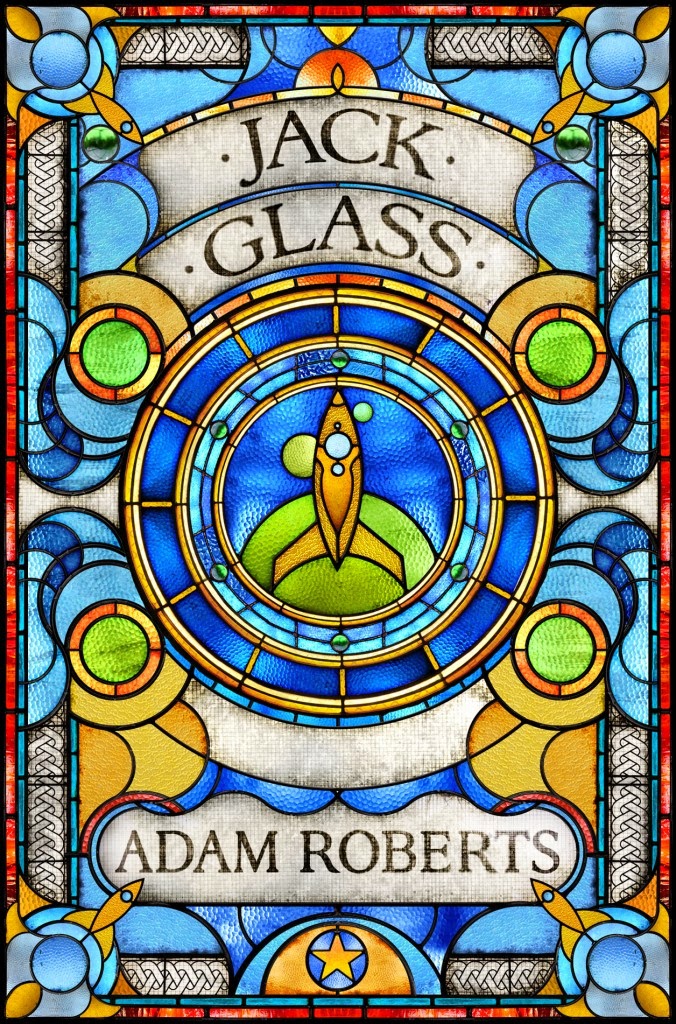
I went on holiday in August, so I've picked two of the best books from my holiday reading. If Tender Morsels made me excited about reading, We Have Always Lived in the Castle and Jack Glass made me excited about being a writer. They're both focused around a past murder - essentially, they're both crime novels - but they both do stunningly unique things with the genre. They're beautifully written, they're creepy and weird and smart and wonderful (and very, very different - Castle is a sort of domestic Gothic, while Jack Glass is Agatha Christie in Space), and if my books end up being even a tiny bit as interesting as these two, I will be very very pleased.

SEPTEMBER


This might just be my book of the year. It reminded me so strongly of my own teenage self, it's so engagingly written and it deals so lightly with such deep issues. And it's a bloody amazing love story. I can't sing Rainbow Rowell's praises highly enough.

OCTOBER


I was just gleeful about discovering this book, an Austen tribute that's not just a rehash. It's incredibly well written, it's extremely clever and it's a big, bold romance that's full of plot. I'd been reading a lot of children's and YA fiction when I picked Longbourn up, and this got me back into adult books again.

NOVEMBER


 This book just about broke my heart. I've read so very many books about World War Two, but this managed to jolt me right out of my general World War Two overexposure apathy. It's wonderful - and coincidentally, I got to meet Elizabeth Wein herself in November, which was pretty amazing.

DECEMBER


Another book that's as beautifully published as it is written and illustrated. We got a copy into the office, and we all crowded around it greedily, murmuring "silver foil! Purple edges! A TINY WEE BOOK IN THE BACK!" It's just touchable. It's also very very funny - and you all know how great Chris Riddell's illustrations are. What this book reminds me is that a) children's books are brilliant and b) children's publishing is brilliant. And I'm so very lucky to be a part of that.

So, those are my 13 picks. What are yours? What have you been raving about this year? What were your unmissable reads of 2013?

Monday, 23 September 2013

A historical murder: The Chocolate Box Poisoner

(Credit: objectlessons.org)
I do love research. It's almost indecently fun. My theory is that history is just the world's longest and most fascinating story, filled with endless tiny offshoots, each amazing enough to blow your mind.

Last week's post was all about arsenic, which (as I've said) is my chosen method of death for the victim of Daisy and Hazel's second murder investigation. I told you about why the Victorians knew not to eat green cake, and also (in the comments) about green ball gowns that gave off waves of poisonous dust as their wearers spun in the middle of a dance. And I didn't even have to make either of those things up!

This week, though, I'm not going to talk about arsenic at all. I'm going to tell you about a case that I came across while writing my MA dissertation (which was all about the influence Victorian murders had on 1930s crime novels - I'm only a little bit obsessed), a crime spree that's so unbelievable that it has to be real. The murder weapon was strychnine, not arsenic, but the ideas behind it - that something delicious might be completely deadly, and that a seemingly respectable person might actually be completely nuts - are absolutely what I want to draw on for my own tea-time murder.

So, here's a story that happens to be true.
An oddly 30s image of Christiana

In 1869, in Brighton, a woman called Christiana Edmunds fell in love with a Doctor Beard. Now, Doctor Beard was married, but that didn't stop Christiana (or Doctor Beard). But then, in the summer of 1870, Doctor Beard decided to break things off, and Christiana did not take this news so well. She decided that the person to blame was the doctor's wife, Mrs Beard, and furthermore that a lot of her problems would be solved if Mrs Beard were no more. So she went out and bought a box of chocolates.

She also went to see a dentist she knew called Isaac Garrett. She told him that she needed some strychnine to poison cats (to us this seems a bit much, but to the Victorians, who believed firmly that all domestic issues could be solved by liberal applications of deadly poison, this would have seemed completely ordinary), and Garrett sold it to her. Then she went to visit Mrs Beard, and she gave her the box of chocolates.

The next day, Mrs Beard felt extremely ill. Later, she would say that she suspected she'd been poisoned, but she didn't speak out at the time. Weird, right? Not in the 19th century. This is something that comes up again and again in Victorian poisoning cases, and it's fascinating: often, the victims couldn't be sure that they were victims. Poison was everywhere, but it wasn't usually very concentrated - poisoners really had to stuff their victim to the gills to be sure they'd die, and conversely the victim tended not to know whether they'd ingested poison by mistake or had been given it on purpose.

These ones are safe! (Credit: Klaus Hopfner)
So far, so normal (or at least normal for a Victorian attempted murder). But what Christiana did next was plain crazy. She began going into Maynard's, a local chocolate shop, and buying boxes of chocolate creams. Some of them she sent out in anonymous parcels -  to Mrs Beard, to many other society families in Brighton, and even to herself. And some of them she returned to the chocolate shop.

Now, here's another point in this story that doesn't make automatic sense to us today. If a customer returned a box of chocolates in 2013 they would go straight into the bin. This is because of health and safety. People are very rude about health and safety, presumably because they have never stopped to really think about the alternatives. Let me tell you this: if you want to make yourself feel very, very thankful about the time and place you live in, all you need to do is read a book like The Arsenic Century. In the 19th century, there were no real regulations on the contents of food and drink, or on what was safe to sell. Vendors would store cake next to rat poison. They'd put boxes of tea next to boxes of sheep dip. They'd lace wine with arsenic to make it look glossy. They'd mix plaster of Paris into sweets - except sometimes they got it wrong and added arsenic instead of plaster. And they'd take anything back from customers and just bung it onto the shelves, ready to be re-sold. Are you thankful for health and safety now? Because you should be.

So Christiana's strychnine-doctored chocolates were sold on to other customers, and people started to get sick. Something was clearly going on - but, as I explained above, it was very difficult to be sure that the poisonings were intentional, or even if they were taking place at all. Germs weren't well understood, and hygiene was just absent, so there were a lot of reasons why a person might get sick to their stomach. Actually, arsenic poisoning was often mistaken for cholera, a massively common 19th century disease.

And then a child died.

I haven't told you the worst thing about Christiana's campaign yet, but here it is: to divert suspicion away from herself, she paid little boys to go into Maynard's for her, buy boxes of chocolate creams and then return them after she'd doctored them. Some accounts I've read have her actually handing out poisoned sweeties in the street, like one of The Witches, but I'm guessing that that's an exaggeration. Regardless, though, she put kids in a situation where they had access to strychnine-laced chocolates, and it's difficult to argue that that's not just willfully evil.

Christiana at her trial
The kid who died, Sidney Barker, wasn't actually one of her helpers - he was a four-year-old from a neighbouring town, and his parents had brought him to Brighton for a day trip. They went to Maynard's, they bought a box of chocolates, and Sidney died a few hours later. It was at his inquest that Mrs Beard finally spoke out - and at that point the game was essentially up. Christiana argued that she'd been sent poisoned chocolates too, and blamed the owner of Maynard's for the poisonings (she'd even been sending anonymous letters blaming him to the local police station - the woman was nothing if not thorough), but it was pretty clear that she was the person to blame. Her trial at the Old Bailey, for Sidney's murder and Mrs Beard's attempted murder, took place in 1872, and she was quite quickly found guilty.

Christiana was sentenced to the death penalty, but this was commuted to life in Broadmoor mental asylum because she was so clearly insane. She died there, in 1907 - and that was the end of that.

Now, as a storyteller, I think this is amazing. The idea of being killed by the nation's favourite comfort food is just so perfect (and by 'perfect' I mean 'utterly twisted'). Then there's the image (true or not) of Christiana stalking around Brighton, handing out poisoned sweets to urchins like a fairy tale witch.

As a crime geek, though, I find it just as interesting - but for slightly different reasons. It's apparently quite unknown - today Christiana has no name recognition at all, and the murder barely features in most texts about Victorian crime. It seems to have hardly made a mark on the national consciousness at the time, and it didn't become part of popular culture like the Rugeley Poisoner or the murder at Road Hill House. (If you're interested in these cases, by the way, or if you think sensational murder reportage began with the Sun, I'd recommend reading The Invention of Murder by the excellent Judith Flanders).

BUT (and here's my dissertation thesis), it WAS famous with one particular group of writers - the Detection Club of the 1930s. Agatha Christie and her friends were all OBSESSED with Christiana Edmunds, and loads of Christie's books (Partners in Crime, A Murder is Announced, Sad Cypress, I could keep going) make really obvious use of the crime. People are always being sent poisoned boxes of sweets in Christie novels, and one of her favourite methods of victim dispatch is ... poison in comfort food. And then there's The Poisoned Chocolates Case by Agatha's BFF Anthony Berkeley, which features a character who's clearly Christie talking about Christiana Edmunds and her poisoning campaign.

So this is a murder that, by proxy, is extremely famous - except that no one's ever heard of it. Isn't that interesting?

Anyway - what you should gather from this is that I'm happily working away, creating enormous character and timing spreadsheets and generally getting ready to officially put fingers to keyboard on Book 2. Although you could argue that this post is a bit of educational procrastination on my part.

Oh well. At least I enjoyed it.

Tuesday, 26 March 2013

The Long and Beautiful Story of How I Got my Agent

This week is the Bologna book fair, the biggest event in the children’s publishing calendar. It’s where agents and publishers meet to exchange ideas, pitch and acquire books and discover the next big thing in children’s writing.

And this year something I wrote is part of it. My agent, Gemma Cooper, is at this very moment pitching my novel to UK and US publishers (if you’re interested in how she does it, here’s her blog post explaining the whole exhausting process), and by next week Hazel, Daisy and their tale of daring detection will be sent out on submission to every publisher who has expressed interest in them.

I still find this whole experience beyond astonishing. Three months ago, if someone asked me about my writing I would say, ‘I, er, wrote a book. I’m not sure it’s much good. It’s about these girls who solve a murder,’ and now when someone asks me the same question I can say, ‘Yes, I wrote a book. My agent has taken it to Bologna book fair. I think. Unless this is all actually a dream. It feels like a dream, except that no one has stabbed each other or turned into a dolphin yet.’

A long time ago, back when the book was 28,000 words longer and nothing in it made any sense, I told you all that I was going to write a post about how the whole Gemma-becoming-my-agent thing happened. After that, life sort of intervened, but here I am, two rewrites later, about to explain exactly that.

Are you ready? Are you remembering that this is my entirely subjective account of my entirely subjective experience, and I don't really have any idea what I'm talking about?

Yes?

Then I’ll begin.

1) I wrote a book. This could actually be a blog post in and of itself. This turned out to be very difficult but also unexpectedly simple, in that you start to write the book, you continue to write the book and then you carry on writing the book until the book is finished. If you like things to happen quickly, don’t write books.

2) I polished my manuscript. I used youwriteon.com for this and found it incredibly helpful. Basically, you need to find yourself some disinterested people who are willing to be incredibly mean about what you have written, in a constructive way, until you have made it a lot better. When this has happened (hint: this also takes a lot of time), you are ready to pitch your manuscript to agents.

3) I pitched my manuscript to agents. For this, you need a polished manuscript (see points 1 and 2) and a good query letter. For how to write a good query letter, see Query Shark’s website, and for the query letter I ended up writing to Gemma, see my post about it here.

Once you have your query letter, you need to do some serious, major, Pinkerton-level research. By all means, use The Writers and Artists’ Yearbook as a jumping-off point. But, as I learnt to my cost, there is absolutely no point pitching to an agent just because they like crime and so do you. If you have written (just for example) a historical mystery with an Agatha Christie vibe for young teenagers, you don’t just want an agent who likes crime. You don’t just want an agent who likes YA. You want an agent who is looking for a historical mystery with an Agatha Christie vibe for young teenagers. THIS IS EXTREMELY IMPORTANT.

Every writer who I have spoken to has a different and totally random story about how they got their agent. Hanna Jameson met hers at a gig afterparty, for example. But the one thing that all these stories have in common is this: the writer found an agent who wanted to buy the exact thing that they were selling.

4) Some magic happened. Like I said, every writer’s story is different. So many people find their agents as a result of a real-world meeting or a good old fashioned email exchange, but I’d advise all aspiring authors to get themselves on Twitter and follow every creative person they come across. First, because they are mostly great people who it’s a pleasure to be in contact with, and second, because you never know what might happen if you’re in the right e-place at the right time.

 This is what happened to me.

 At the end of October last year I got into a Twitter conversation with the estimable Louie Stowell. I mentioned that I was in the process of querying my manuscript. “Well,” said Louie (I’m paraphrasing), “If you’re looking for representation you should follow Liz de Jager. She knows a lot of agents.” So I followed Liz. And (I am not kidding) that evening Liz tweeted about an agent called Gemma Cooper who had just moved to the Bent Agency and who was actively looking for new clients. I clicked on the link to Gemma’s site, read her wishlist and pretty much fainted dead away in my wheelie chair because she was looking for my book.

 I sent my query letter, along with the exact number of manuscript pages requested on the Bent Agency’s website (This is crucial. When you query, DO WHAT THE AGENCY TELLS YOU TO DO. They are the puppet master. You are the puppet. Dance for them) to Gemma’s email address .

Less than forty eight hours later I had an email back from Gemma requesting the full manuscript.

5) I wish I could say that the rest was history. Alas! If you were expecting this post to end here, you are still young in the ways of the publishing business.

What happened next was that I sent off my manuscript, weeping just a little out of sheer panic, and then… I waited.

And I waited.

I waited and I waited and I waited.

And then I waited some more.

Now, this is not because Gemma was being mean to me. It is because all good agents are extremely busy. Most of their working week is (of course) taken up with their existing clients – working on their manuscripts, going to endless meetings with publishers to drum up interest, organising events and so on for ever. Most of the rest of their waking lives is spent reading queries. No, not full manuscripts. Queries. Agents’ inboxes are flooded with hundreds of first-chapter queries each week, and they will read – or at least skim over – each one. Out of every hundred manuscripts, they maybe request to see fulls of three, but what with client demands and that never-ending query deluge, it will sometimes take them a while to get round to reading those fulls.

How long is a while? I submitted my full in November. By the beginning of January I still hadn’t heard back, apart from a kind and apologetic holding email telling me that my manuscript was still under consideration. And then one morning I woke up to this tweet.
It was the first time in my life I have asked 'am I awake?' and been genuinely unsure of the answer. She was reading my manuscript and she liked it. A few hours later I got an email from Gemma telling me that she was half-way through the book, and that she’d be able to give me an answer in three days. For those three days I was not a delight to live with.

And then, on day three, I was sitting at my computer when I saw this tweet.
You know the scene in Julie and Julia, when Meryl Streep gets the acceptance letter from Knopf that she has waited years for, and she just takes hold of it and presses it reverently to her bosom while she stares up at the sky with a rapt look on her face? I wish that's what I looked like when Gemma's email pinged into my inbox. Sadly, I am not Meryl Streep, so I received my good news hunched up in front of my computer screen, sobbing brokenly into an entire box of tissues.

6) You think that this story is over now? THINK AGAIN. Contrary to popular belief, Gemma did not offer me representation in that first email. She was friendly and complimentary about the book, but she did not commit herself beyond a request that we meet over coffee to talk about what I had written.

This meeting (it could be a phone or Skype conversation if the agent is not in the same place you are) is standard, and absolutely crucial to your chances of getting represented. It is also something that not many people discuss when they explain the process of becoming agented. It happens because agents need to find out whether they can work with the author, and more importantly if they want to, and because writers need to find out the same things. Don't worry, though. It’s basically like the nicest interview you’ll ever go to.

I turned up, vibrating with excitement but trying to pretend I was totally cool with it all, and it all went astonishingly well. Again, Gemma was absolutely lovely about the book – I’ve written before about how impressed I was with how much she just got it – but she also had a list of large changes that she thought should be made in its next draft. It was only after I’d gotten really enthusiastic about her ideas, and I’d suggested some new things that she was excited about, that she made her formal offer of representation.

She gave me as long as I wanted to think about it, and actually told me that she didn’t want an answer until the next week (I think this was to prevent me just screaming YES I WILL BE REPRESENTED BY YOU! at her in the middle of St Pancras Station). Then I went home and cried a little bit. There is a lot of crying in this story.

7) I said yes! Of course I did. I wouldn’t be writing this if I hadn’t. But before I did (this is another extremely important thing) I made sure I’d read through the contract thoroughly, googled Gemma and the Bent Agency and chatted to two of Gemma’s existing clients to hear about their experiences with her.

Agent contracts (believe me) are pretty binding, so you want to make sure that you’re happy with the professionalism and business sense not only of the agent themselves but their agency too. It’s so exciting to suddenly be in a position where an agent is asking you for something that it’s easy to get carried away. I know I did. Gemma was honest enough to remind me to calm down and think sensibly, but I suspect that some other agents won’t be. Be savvy, writers! Take your time. Future-you will thank you for it.

8) I signed with my new agent! Believe me, I have never seen a more beautiful contract. And then Gemma and I got to work.

So that's my story! Yours probably is, or will be, nothing like this at all. Publishing is a mad and tricksy business that does not operate logically. This is why it's so awesome. Good luck to those of you who are trying to catch an agent of your very own - but please remember that, as I said before, I really know nothing. Do not be tempted to take my word as law. I'm just some random person who is quite good at making words look like they mean things.

And now I shall go back to refreshing Twitter for news about Bologna.

Thursday, 31 January 2013

Something's Gotta Give: Slimline Reviews

My edits have now arrived, proving once and for all that this agent thing is really real and not something I made up in an overexcited moment.

I am preparing myself for the great task ahead of me: wantonly destroying all the characters and scenes in the book that are lovely but completely pointless to my plot. This will obviously take some time, and time is something that seems to be in short supply in my life already.

Therefore, I am proposing a change to this blog's reviewing rules. I just can't do a full blog post on every novel I read any more (and was anyone reading them anyway, my grandmother excepted?), so from now on I'm going to be doing lists of snap reviews.

Like this!

Before the Fact by Francis Iles

Alas, this was a good idea, lamely executed. Iles (pen name of Anthony Berkeley, a slightly less ingenious contemporary of Agatha Christie) was interested in making up new ways to write crime novels. This one is set before the crime actually happens. You'd think that this would be a promising concept. A woman wakes up one day convinced that her husband wants to murder her. But is she right?

Well... yes. As is painfully evident from the first page, her husband is going to murder her. We have to trail painfully through years of their life together, until we get to the day when he actually kills her. Believe me, by that point you will be begging him to go ahead and do it.

There's a very interesting question buried in Iles's premise, about whether we can ever really know what kind of person we're spending our life with, but he does absolutely nothing interesting with it. Frankly, this is one of the most boring thrillers I've ever read.

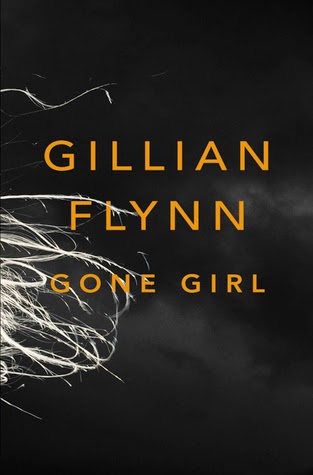
 If you want a book that does run with that idea in an awesomely clever way, try Gone Girl by Gillian Flynn (which I just happened to read for The Bookbag the week after I read this). It's amazing. This isn't.

2 stars.


The American Boy by Andrew Taylor

Now this one was good. A creepy historical murder mystery (it's Taylor, what else would you expect?) that's based on events during the childhood of Edgar Allen Poe, it's well imagined and satisfyingly well executed. It's got a nice, big, engrossing plot, full of mistaken identities, big chilly houses and lots of gloomy weather.

Taylor's novels aren't just mysteries, they're stories, and often quite involved ones - novels that happen to have murders in them, rather than novels about murder. The star of the show is always the setting, the (very accurately rendered) historical moment, and I thought that the world of The American Boy (Regency England) was particularly well imagined.

This is a book that you can get your teeth into, a blockbuster production that's good down to its smallest details. It's delightfully dark and twisty with just the right level of nastiness - basically, this is vintage Taylor. The sequel (prequel?) is out next month. Let me tell you, internet, I am excited.

4 stars.


The Night Circus by Erin Morgenstern

Let me sell you this book in a single sentence: it's about a magical Victorian circus. A MAGICAL. VICTORIAN. CIRCUS. And not just any magical Victorian circus, either. It's pretty much the slickest, the most sideways and in all ways the best vision of the best possible circus you could ever imagine. Only it's better.

Morgenstern's cirque des reves assaults all your senses at once. Her writing makes you slaver over the burnt-caramel smell of popcorn, taste cinnamon pastries and light up your mind's eye with fire and fluttering ribbons. There's a circus tent that's a garden made entirely of ice, a tent where you climb up into a labyrinth in the clouds and one where you can smell stories.

The circus itself is the setting for an absolutely beautiful love story. The two main characters of The Night Circus are a boy and girl who have been brought up knowing that they have to fight a mysterious and fatal magical duel - except that when they actually meet, they realise that all they want to do is spend the rest of their lives together. Can they manage it? Or will the power of the circus, the setting for their great game, send events spinning out of their control? Morgenstern plays with time and place masterfully, messing with the lives of her wonderful characters in a way that's like watching an illusionist carry out a virtuoso magic trick.

When I finished this book, I physically missed it. I wandered tragically around my house hugging it to me and whispering, what do I do with my life? I loved The Night Circus heartbreakingly much. I can do nothing else but give it

5 stars.


Ketchup Clouds by Annabel Pitcher

I have been itching to get my hands on this one for a long time. A teenage girl writes a series letters to a convicted murderer on Death Row, confessing to a terrible crime that she's kept secret from everyone she knows.

I loved this idea from the moment I first heard about it (you know how I love terrible secret crimes), but, more importantly, on closer acquaintance the story stands up to its premise.

I think what Pitcher has done with her hook is exceptional. She doles out the suspense - what did Zoe do, and who did she do it to? - in perfectly pitched little sips. I was going completely mental trying to work out which of the two possible victims Zoe has actually killed, so much so that I read half of the book on the train to work, and the other half on the train on the way home. Was the actual moment of the crime a let-down? Slightly, but that's just because I was keyed up to such a pitch that I would have been disappointed with anything that wasn't as insane as what I had been picturing in my head.

Zoe is a wonderful narrator, though, so realistic and funny that the book's success doesn't rest on the reveal of her crime alone. She's a real presence, and her words bring her world to life. Cleverly on Pitcher's part, one of the book's most engaging and present characters never actually appears in the text or says a single word. Zoe's murderer, Stuart Harris, never replies to her letters (he can't, since Zoe writes from 'Fiction Drive' to keep her story secret), but nevertheless he becomes an incredibly important person in her life. Zoe has made up a totally romanticised concept of him, the magical persona she needs to listen to her and understand the awful things that she's done. Like the rest of Ketchup Clouds, it's a perfectly pitched little detail that will break your heart and make you feel absolutely complicit in even the worst of Zoe's actions.

4.5 stars.

Wednesday, 9 January 2013

Delicious Death: Sophie Hannah

Another book that I read at the end of 2012! This holiday season I read A LOT OF BOOKS.

I first really came across Sophie Hannah when I saw her speak about literary crime novels a few months ago. She talked about writing puzzles and loving Agatha Christie and she pretty much had me from there. I asked for her first novel for Christmas, it arrived in my stocking and then I read it in a day.

Little Face is about new mother Alice Fancourt who comes home from her very first trip out of the house alone to find a strange baby in her two-week-old daugher's cot. Is she insane? Or is this a plot cooked up by her controlling husband - a man whose first wife died a few years ago in mysterious circumstances...?

Good plot idea, right? And rest assured, this book was GOOD. It was a thriller that actually thrilled, a book with a plot so involving that I literally couldn't put it down. And it was very, very well written. If I didn't believe in the concept before, after reading Little Face I couldn't possibly argue that there is no such thing as a crime novel that is also good literature. (Please note: I am not arguing against this for a second. Of COURSE crime novels are literature. I will defend the crime novel to the bitter death).

Hannah's very good at teasing you with details that seem mundane, until she flips them around to reveal the whole frighteningly crazy picture they build up to reveal. Alice's dull, shiny upper middle class life, in her big house with her proud husband and wealthy mother in law, steadily turns into Gulag Suburbia, everyone playing everyone else with layer upon layer of insane mind games that aren't so far from the mind games Hannah herself is playing with her readers. This is a crime novel where you aren't actually sure for quite some time whether a crime has actually been committed at all, let alone who committed it.

Even the police are scarily fallible, both of the main detectives personable but deeply flawed characters who get involved in a weird love triangle with Alice that gets steadily more strange and awkward as the novel goes on. Hannah's very interested in how people interact with each other, the emotional motives behind every action that a person makes. It's a psychological story with an intensely inward-looking plot, and it absolutely works. I tore through it like a storm.

The only flaw I could find was in the ending. Little Face has a twist in its tale, but whereas there are books (see Before I Go To Sleep) where the twist has you running through the house yelling I KNEW IT! I KNEW IT! I AM FABULOUS!, there are also books where you stop, stare blankly ahead of yourself and go, wait, what? Little Face, for me, was one of the second kind. The conclusion was objectively very clever, but it smacked me in the face with a spin on events that I didn't totally like. Some characters didn't get the resolution I'd hoped for for them (or, in other cases, the retribution), and the ending left me feeling a bit thwarted. I suspect, though, that my reaction to the reveal comes from the fact that I was enjoying the book and its characters so very much that I got carried away and started writing my own ending in my head, and when Hannah's perfectly good one (inevitably) didn't match mine it confused me. I mean, I love Dorothy Sayers but I am still mad at her for making the wrong person the murderer in The Documents in the Case, ten years after I first read it. Not that I think the wrong person did it here, but... you get what I mean. I have difficulty turning off the 'writer' part of my brain sometimes.

Nonetheless, god does Sophie Hannah write well, and god is she a sneaky plotter. This was great, and I need all of her other books immediately.

4 stars

Saturday, 29 December 2012

Quick-fire reviews: my Christmas book list

I personally move to rename Christmas, Bookmas. I can hear the Christians wailing and gnashing their teeth from here, but it would be a more accurate description of my activities during the festive period. There is a bit of Christ, but there are a lot of books, and as you all know, I am all about the books.

Please note that the following reviews are not of the books I received for Christmas. Oh no. I have not even begin to make a dent in that towering pile. These are merely the books I read during my 'holiday' at home (ho ho), while the rest of my family revolved around me screaming and shouting and playing endless games of Battleship.


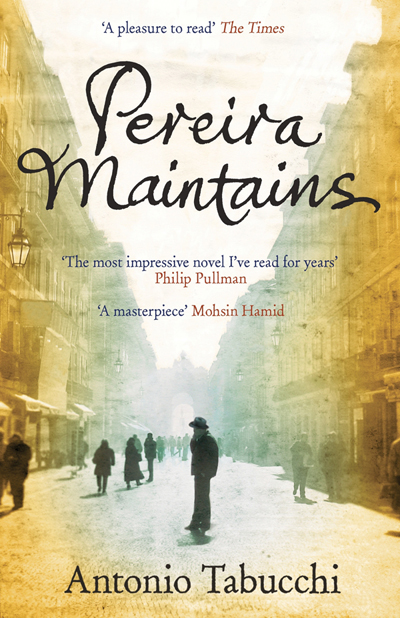
Pereira Maintains by Antonio Tabucci

I started things off with this jolly little tale of police suppression in 1930s Portugal. The Pereira of the title is a fat and aging crime reporter who's come down in the world to become the culture section of fledgeling 'non-political' paper the Lisboa. For slightly cosmic reasons, he gets into contact with a philosophy graduate named Monteiro Rossi. Rossi becomes Pereira's assistant at the paper, but he turns out to be pretty much the worst assistant ever - not only did he fake most of his dissertation, but all the articles he writes for Pereira are politically incendiary and therefore unpublishable. You see, this is Portugal under Salazar, a place where people pretend that everything is normal even though the secret police are beating stall-holders to death in the middle of the market. Culture has become dangerous, and the translations Pereira innocently makes of European stories suddenly have new and worrying political meanings.

Pereira begins the novel as pretty much the most clueless, passive person in existence - he's a journalist who has to ask his friends for the news - but he finds his friendship with Rossi changing how he sees the world. Rossi becomes the son he never had, and as Rossi gets deeper into the resistance movement, Pereira is dragged into it along with him. The whole novel is written as Pereira's testimony - of exactly what, we're not sure until the very end.

This is an apparently peaceful and dreamy little book, under which hides some serious subversive meaning. I think it's one of those novels that can be read and re-read, new themes emerging each time. It's clever without being showy, beautifully written (and with visually beautiful images, crystal seas and palm trees waving and so on) but with a really nasty undertaste to it. I think Pereira Maintains is a book that needs to be thought about. I didn't fall in love with it immediately, but it's been growing on me since I put it down, and I think it's going to stay in my brain for quite a while to come.

4.5 stars


Maggot Moon by Sally Gardner

I bought this for my niece for Christmas because I wanted to read it myself. It was that kind of present. Luckily, she read it in three hours flat, and then I wrenched it out of her hands and read it in two.

The number of people I recommend a book to after I've finished it is usually a good test of how much I liked it, and after I finished Maggot Moon I tweeted about it four times in quick succession and then sent three ecstatic emails to friends ordering them to JUST STOP EVERYTHING AND READ THIS BOOK.

It was that good. As I said at the time,


Set in an alternate-reality 1950s Soviet state, Maggot Moon is the story of Standish Treadwell. On the eve of a planned great moon landing by the Motherland, Standish dreams of flying away to his own perfect planet, Juniper, with his best friend Hector. On Planet Juniper the Cadillacs are the colour of ice cream, the Croca-Colas never run out and there are no secret police waiting to turn you and your family into maggot food if you disobey the Motherland.

Maggot Moon is a totally black dystopian fantasy told with incredibly effective simplicity. Standish is a wonderful, idiosyncratic narrator (he's dyslexic, so words come out of his head sounding brilliantly wrong), likeable and heartbreakingly honest. It'd have been easy to have made him one of those wide-eyed teen narrators living in a world he doesn't understand, but Gardner's smarter and more realistic than that. Standish absolutely does understand all the horrendous adult things that happen around him, even though he processes them in an utterly teenage way. He knows what happened to his parents and he knows what's likely to happen to him and his Gramps, but all the same he clings on to the wonderful world of Juniper that he's built in his head.

As the Moon Landing gets closer, it becomes clear that Standish is in possession of some pretty important information - the kind of stuff that could either destroy the Government or (more likely) himself and the people he loves. Then Hector goes missing, and Standish realises that he's got to be brave enough to use what he knows before the Government are able to make him disappear too.

This is a book about a kid making the kind of impossible decisions that most adults wouldn't be able to face. But like all the best fantasy, it feels real, totally believable and totally tragic. The ending, I warn you now, is awful, but it's one of those endings that destroys you in a hopeful sort of way, leaving you feeling slightly fire-damaged but lighter because of it.

Honestly, this snuck in from absolutely nowhere to become one of my books of 2012. I think it's one of the most perfect pieces of teen fiction I've read, maybe ever. I wish I had written it. Why didn't I write it?

5 stars.


Hand in Glove and Dead Water by Ngaio Marsh

The good thing about Agatha Christie is that, even when she's phoning it in, the result is still readable. The bad thing about Ngaio Marsh is that, when she's phoning it in, the result is... really not. Her entire back catalogue was recently re-published in fat omnibus editions, and as I work my way through them I am more and more reaching the conclusion that, although when Marsh is good she is very very good (see: A Surfeit of Lampreys, still one of my top favourite crime novels ever), when she is bad, she is horrid.

Hand in Glove and Dead Water are both thick with hackneyed stereotypes, gurning yokels and clangingly awful love-affairs, and the murders in them are both done for overwhelmingly stupid reasons, by methods that are needlessly complex and/or totally unbelievable. I mean, the whole of Hand in Glove revolves around the premise that a cigarette case is an object important enough to bother about. And then there are all the couples who conduct entire love affairs via sentences like Come here, silly darling, and let me clasp you to my bosom! And then there are the aforementioned yokels, who hawk and mumble away as though they have been endowed with the brains of rats instead of human beings. Seriously, Ngaio Marsh, going to Cambridge is not a test you have to pass to become a person.

God, these books. I just can't. I give up. It's a good thing that Marsh is dead, so she can't see me denounce her.

1.5 stars.


Broken Voices by Andrew Taylor

Broken Voices is a brand-new Kindle-only novella by Andrew Taylor - and since I have a brand-new Kindle it seemed a necessary purchase. Set one hundred years ago in a Fenland cathedral city, this a gloriously straight-up ghost story, one of those English classics of the genre in which nothing happens except a lot of chilling suspense.

The main character, a pupil at the city's King's School, has been stuck at the cathedral over the Christmas period while his parents stay in India. He's boarding at the house of a poor ex-teacher along with another pupil, an ex-choirboy who's suffering a terrible disgrace. Both boys are lonely and embittered, and when they hear a mysterious story about the Cathedral's history they decide that this is their opportunity to prove themselves.

Taylor's real strength - I've mentioned this before - is his extraordinary ability to evoke atmosphere, and that's something that's great for this tale. His historical settings feel both right and at the same time deliciously wrong. Something is always rotten in an Andrew Taylor novel, the skies are grey and the buildings lour. In Broken Voices there's a very nasty cat, an even nastier bit with some rats, chilly winter nights, cold Cathedral stones and a beautifully joyless Christmas day. Uncertainty is the name of the game - as the very first line asks,
'Was there a ghost? Was there, in a manner of speaking, a murder?'
(Taylor, like me, doesn't seem to be able to get away from murder. I can understand that.) His main character is a typically sulky and selfish teenage boy - and, in fact, all of his characters are small and basically unsympathetic. This is a cold-hearted world where there's really no one to root for, and that's perfect for the maybe-ghost story Taylor's telling.

I believe firmly that Christmas wouldn't be Christmas without a few really good scary stories (see also my own effort), and so this made my holiday season feel complete. Simple but effective, Broken Voices is an excellent marriage of author and subject which does exactly what it promises to do.

4 stars.

Sunday, 9 December 2012

Delicious Death - Devoured

Twitter is a weird thing, isn't it? You get involved in it, and suddenly you are friends with THE ENTIRE INTERNET, and then you have conversations with your real, actual friends that go like:

YOU: Oh, I know her!
THEY: How do you know her?
YOU: I know her on, um, twitter...
THEY: You don't know her. You're delusional.
YOU: No, but twitter is actually very... sort of...
THEY: Like I said. You're delusional.

Which is a very roundabout way of saying that I follow the writer D. E. Meredith on twitter, because she likes Victorian crime (like me) and she seems nice (like... no, wait), and because of this I decided I needed to give her Victorian crime novel Devoured a whirl.

So, invisible internet not-friends, I did.

Devoured, as I said, is historical crime fiction, set in London in the 1850s. A wealthy female patron of scientific discovery, specifically the shocking new research of men like Lyell and Alfred Russel Wallace, has been found dead, her head bashed in by one of her prized fossils. Dr Hatton and his Head Diener Monsieur Roumande, practitioners of the (other) new science, forensics, are called in to help, but it soon becomes clear that the murder of Lady Bessingham is just the beginning. Someone has been murdering 'Botanicals' (people who are interested in the theory of evolution), and it seems as though the crimes may have something to do with letters sent to Lady Bessingham by an explorer on a collecting expedition to Borneo. But when Hatton and Roumande make an unpleasant connection between a series of dead children and the Botanicals murders, the police don't like what they're being told. With so much against them, can Hatton and Roumande manage to expose the truth?

This is an interesting premise, especially for me. I love the story of how Darwinism came to be, and I appreciate a writer who acknowledges that Darwin wasn't the only scientist working on the evolution project. In fact, I am just totally on board with the current trend for properly researched historical fiction. Meredith both adores her subject and knows a lot about it, and as a result her settings really work. The Borneo letters (my favourite part) glow with beautifully described flowers, birds and beasts, and they're contrasted nicely with the cold, misty London winter setting of the rest of the novel.

Devoured, as you might expect, is all about people being taken over by their obsessions. Corruption is everywhere, in the heart of London as well as the heart of the jungle, and it affects every character in the novel. Sometimes this gets a bit simplistic - the Big Bad Duke of Evil, Lord Ashby, is pretty much cartoonish in his pursuit of filth for filth's sake - but there are some more interesting portrayals. The beta baddie, Madame Martineau, is not just written as the bloodsucking femme fatale she could have so easily become. She's a rounded character who does her evil because she believes it's in pursuit of a higher, truly worthy, cause, and I like that.

Mid-Victorian London is brought to life vividly, the story rollicks along and the murders are many and interestingly varied. Overall, I definitely came down on the side of liking Devoured, both its style and its substance. Meredith's imagination and plotting ability are firmly in place and in no doubt. But there's something about the way the book is written that, at times, left me a bit ambivalent about it. Meredith's style is sharp and interestingly elliptical, but while some of her sentences hit home beautifully, some just didn't work for me. Since this is Meredith's first piece of published fiction (and, as she's said in interviews, she's a writer who hasn't done much of it before) I suspect that she still hasn't quite settled into her form. But while there are kinks and bothers, there's also talent on show: like I said, there are some sentences that are really great. I think that future Hatton and Roumande novels will just keep on getting better, and the little points that I'm raising here are definitely not going to prevent you from enjoying a very fun book.

Devoured is not perfect by any means, but it's a very engaging presentation of a scientific and historical moment that I love. Victorianists will be delighted by it, and historical crime fans will be very pleased to be introduced to the comforting medical presences of Messrs. Hatton and Roumande. And I will certainly be reading the next in the series.

3 stars.

Tuesday, 23 October 2012

Delicious Death: Some Quickfire Crime Reviews

First, some links to my latest reviews for The Bookbag:

Desolation Island by Adolfo Garcia Ortega (short answer: very very good)

The Story of English by Joseph Piercy (short answer: very very mixed)

Now I don't know if you've heard, but I like crime. Theoretically, of course. This blog does not endorse wrongdoing in any way, shape or form, and in fact would encourage you all to be nice to other people and not kill them.

Nonetheless, in the abstract, crime soothes me. Here is a round-up of my latest toothsome murder selections.


Sovereign by C. J. Sansom.

I've said before that I like Sansom's books a lot. Not only does he have a very good, very full-blooded line in historical recreation, he's becoming a technically better writer as he goes along. Sovereign is the third in his series of novels about a crime-solving hunchbacked lawyer struggling to stay alive among the political intrigue of Henry VIII's court. It's set in 1541 and concerns two of the aging Henry's more disastrous decisions: his marriage to hot young thing Catherine Howard (the second beheaded, according to the rhyme) and his royal Progress around a very tetchy and still rebellious North of England.

Matthew Shardlake and his sexy assistant Jack Barak are sent to York on a mission to look after the safety of a political prisoner. Of course, Shardlake gets royally mixed up in Henry's progress and ends up uncovering a plot to destabilise the entire Tudor succession. As you do. It's all a bit ridiculous (although based on real events and real intrigue, like all the best fiction) but thoroughly fun, and the story carrys you along at a breathless pace all the way to the end. It's a 650 page book that reads like a 250 page novella.

Poor old Shardlake is a good man in a bad world. He doesn't know when to leave well enough alone and who has a lot of trouble remembering that most people are a lot nastier than he is. Each book sees him sinking further into his pit of emotional despair, and each culminates with the inevitable announcement that this will be ABSOLUTELY HIS VERY LAST CASE. Since I know that Sansom has written at least two more Shardlake novels I can smell the lie and be very grateful for it. This series ticks both my crime nerd and  history nerd boxes, and long may it last.

I see I originally gave the Shardlake books 3 stars. I must have been feeling mean that day. For this outing, I'm revising upwards to

4 stars.


The Affair of the Mutilated Mink by James Anderson

Before I actually read it, I had suspicions that The Affair of the Mutilated Mink might be a silly book. Imagine my joy when I realised that it is precisely that. Its pages give off gusts of the purest, most exquisite Golden Age foolery (in case you are wondering, this rare substance smells like leather-bound books, pearls, rolling acres and gunshot wounds, and Agatha Christie used to spray herself all over with it every morning).

The second in Anderson's series of pastiche Golden Age detective novels (my library didn't have the first), its English upper class characters bray and blether delightfully, its American characters say HOWDY and chew cigars and everyone has utterly creative secret backgrounds involving JEWELS and MISTAKEN IDENTITIES and TRAGIC DEATHS. The dippy set-up (American producer wants to shoot movie on location at the film-mad Earl of Burford's scenic pile) is an excuse to drag a motley cast of movie star types, aristocracy, long-lost relatives and the obligatory troubled artist together for a country-house weekend party that ends (surprise surprise) with MURDER MOST FOUL.

The Affair of the Mutilated Mink never makes the mistake of taking itself seriously. Even the characters know they're being ridiculous, and there's an extremely meta joke-that-knows-it's-a-joke atmosphere to the whole thing that reminded me a lot of P. G. Wodehouse. Fans of Golden Age detective fiction will have their hearts melted by throwaway references to Ariadne Oliver and Inspector Alleyn (who, in this world, are real people), as well as spot-on recreations of stock characters like the officious Scotland Yard man (complete with trusty valet), the prima donna actress and the American movie producer extraordinaire. At the same time, though, Anderson's doing something quite intelligent with the familiar tropes. The man sent from Scotland Yard turns out to be too smart for his own good and the mystery is actually solved by Wilkins, one of those adorably modest country detective who are always totally snubbed in Christie and Sayers novels. The leading girl is not only suitably plucky and resourceful but also quite a rounded human being, the Earl's bluffness is all for show... and so on, and so on. It's a really witty variation on a well-known theme that feels new and old at the same time - which, coincidentally, was what all those Golden Age crime novels were trying to do in the first place.

This book is wonderful. It affectionately embraces all the flaws of its parent genre, pokes gentle fun at its worst excesses and on top of that manages to put together a fairly tidy and inventive murder mystery. The reveal may not blow your mind, although there are some great twists in the tale, but the joy of any good Golden Age murder mystery is the silly, over-the-top journey to that final denouement, and this journey is ridiculously fun.

Another 4 stars.


Image from banisbooks.blogspot.com
Scales of Justice by Ngaio Marsh

By the way, in case you're wondering, I did not mistakenly smash my fingers against my keyboard to come up with that first name. Marsh was from New Zealand, so her parents gave her a name that's the Maori word for a kind of tree. The G is silent so it's pronounced like Naio. There you go, that's your fascinating trivia for the day. You're welcome.

Before I actually discuss the content of this book, I would like to direct your attention to the FANTASTIC cover of my edition. It is purest essence of the 1970s, when publishers had just discovered photography but were not yet conversant with realism. This image has it all: fake plastic trout, puzzled dog, daub of red paint where the blood should be. It is so ugly that I can't stop staring at it.

Unfortunately, though, it turns out that the best thing about Scales of Justice is that cover. A lot of Golden Age writers (apart from Dorothy Sayers, who got bored and turned to translating Dante instead) carried on relentlessly beating the dead horse of the 1930s setting well into the 1960s, and this book, published in 1955, contains themes so stale that they're practically suppurating.

The female characters wear twinsets with their tweeds and the male characters talk about Nazis, but apart from that you'd never guess that the year was no longer 1935. Retired colonels and dusty earls still perambulate around their small English country town, huntin' and shootin' and fishin' and sleepin' with each other. The murder itself is an example of the worst excesses of the clue puzzle format, which states that if the killer does not do the deed while balanced on one leg, wearing a swimming costume and a lion mask and wielding a melon borer the writer is NOT TRYING HARD ENOUGH.

Marsh is trying hard, all right, but the effect is of insanity and extreme hideboundness rather than any kind of real invention. Add to that the tiresome upper-class honour displayed by all the characters, which pointlessly derails the investigation for 100 pages, and you have a murder mystery so idiotic that I could barely finish it. And when I did, the reveal was stupid. Nul points, Marsh. Nul points.

2 stars.