I'm delighted to announce that from the beginning of this month, I have a brand new home: my author website robin-stevens.co.uk
From now on, all of my updates will appear there, on my shiny new blog page. If you want to keep following my progress, head on over there - but never fear. Although my old entries have been migrated over there, this site will stay up, and you'll still be able to read past reviews and blogs here too.
I hope you like the new site! And if you ever want to get in contact, my email address hasn't changed. It's still redbreastedbird@gmail.com. Happy reading!
Saturday, 5 April 2014

Monday, 3 March 2014
March madness - a cover update and a competition
 |
| I am rich in proof copies! |
It's been a fairly quiet month on this blog, but that's because I've been busy writing the sequel to Murder Most Unladylike. Due for UK release in spring 2015, its title (at the moment) is Arsenic for Tea - and as of Sunday night, Draft One has been officially FINISHED. Now comes my favourite part: the edits!
I have written a bit on other blogs, though: a piece for the Author Allsorts about diversity in children's and YA fiction - and why I think that a diverse supporting cast will never make up for a lack of diverse narrators.
And an interview that I gave my lovely agent, Gemma Cooper, about the UK cover for Murder Most Unladylike. And talking of the cover . . .
I began last month with a cover reveal. It was a great cover - your enthusiastic reaction proved that. But since then, a decision has been taken by the wise people at Random House that a few small tweaks would make my book, and the series as a whole, look even better. And by golly, have they delivered.
The new-look Murder Most Unladylike still has the same beautiful illustrations and the same gorgeous title font as the original. In essence, it's absolutely the cover that I loved and approved last month - but it now has a different background colour, and a slightly simplified design. I hope you'll agree with me that these small changes have made it look even more wonderful than it did before. I'm so proud to now be able to share the final look with you, and I hope that you'll fall for it all over again, just like I did!

And now, to celebrate the new cover direction, I'm delighted to be able to finally make good on my promise of a proof giveaway. That's right, it's competition time! I've got ONE very special proof copy of Murder Most Unladylike to give away to one of you lovely people.
All you have to do to win it is:
Tell me what your all-time favourite murder mystery is, and why.
This competition is now closed. Thank you to everyone who entered - and congratulations to the winner!
Monday, 3 February 2014
Murder Most Unladylike Cover Reveal: Meet My UK Cover!
As some of you may have heard, I have a book coming out in May. Murder Most Unladylike is the first book in The Wells &Wong Mystery series, about Daisy Wells and Hazel Wong, my 1930s crime-solving schoolgirl duo.
From the official synopsis on the Random House website:
It has been designed by the wonderful Nina Tara, who has worked on covers for Diana Wynne Jones and Agatha Christie (!), and what she's done to my cover is fabulous.
Are you ready? Here goes . . .

It's fun, stylish and brilliantly quirky, and it really captures the spirit of my book. I love the slightly Alice in Wonderland feel Nina's managed to achieve, I love the tagline, and I LOVE the lettering. Every time I look at it, I find a new detail to be excited about.
I can already imagine this on shelves - and I don't know about you, but if I saw it in a bookshop I'd pick it up. It's simply gorgeous.
If you're interested, Murder Most Unladylike is already available for pre-order: from Blackwell's, Waterstones, Foyles and Amazon.co.uk, among others.
And I'm also delighted to say that advance review copies will be released into the wild extremely soon - and when they are, I'm going to be running a competition on this blog to give away a copy. So if you want the chance to read about Daisy and Hazel three months early, watch this space!
From the official synopsis on the Random House website:
When Daisy Wells and Hazel Wong set up their very own deadly secret detective agency at Deepdean School for Girls, they struggle to find any truly exciting mysteries to investigate. (Unless you count the case of Lavinia’s missing tie. Which they don’t, really.)The book will be published on May 8th in the UK as part of Random House Children's Publishers' Corgi imprint, who are really going out of their way to make it look fabulous. There's a map, there are character lists - and I can now reveal that there is the most fantastic cover.
But then Hazel discovers the Science Mistress, Miss Bell, lying dead in the Gym. She thinks it must all have been a terrible accident – but when she and Daisy return five minutes later, the body has disappeared. Now the girls know a murder must have taken place . . . and there’s more than one person at Deepdean with a motive.
Now Hazel and Daisy not only have a murder to solve: they have to prove a murder happened in the first place. Determined to get to the bottom of the crime before the killer strikes again (and before the police can get there first, naturally), Hazel and Daisy must hunt for evidence, spy on their suspects and use all the cunning, scheming and intuition they can muster. But will they succeed? And can their friendship stand the test?
It has been designed by the wonderful Nina Tara, who has worked on covers for Diana Wynne Jones and Agatha Christie (!), and what she's done to my cover is fabulous.
Are you ready? Here goes . . .
It's fun, stylish and brilliantly quirky, and it really captures the spirit of my book. I love the slightly Alice in Wonderland feel Nina's managed to achieve, I love the tagline, and I LOVE the lettering. Every time I look at it, I find a new detail to be excited about.
I can already imagine this on shelves - and I don't know about you, but if I saw it in a bookshop I'd pick it up. It's simply gorgeous.
If you're interested, Murder Most Unladylike is already available for pre-order: from Blackwell's, Waterstones, Foyles and Amazon.co.uk, among others.
And I'm also delighted to say that advance review copies will be released into the wild extremely soon - and when they are, I'm going to be running a competition on this blog to give away a copy. So if you want the chance to read about Daisy and Hazel three months early, watch this space!
Sunday, 26 January 2014
Writing: What's In My Head
 |
| Aged 3. Already quite weird. |
I couldn’t even process this. I knew perfectly well that everyone in the world wanted to be a writer, because writing was the point of existence. My father was a writer. My grandfather was a writer. My aunt was a writer. My grandma was a writer. My mother had not written a book yet, but I figured that was just because she was a late bloomer. With all those stories that I knew must be in everyone else's head, the way they were in mine, why would anyone not want to be a writer?
Of course, since then, I’ve realised that not everyone's brain is like mine - not even all other writers'. I know writers who began writing as fairly mature adults, who’d never even thought of doing it before that moment. I know writers who disliked reading as children, writers who dislike reading even now, and even writers who don’t really enjoy the act of writing - to them it's a 9-5, Monday-Friday thing. There are writers who can drop themselves into their story, write it (brilliantly and beautifully) and then disengage from it entirely.
Basically, there are as many ways of being a writers as there are writers themselves, and what I've learnt is that these are all equally valid. There is no correct way to write, and there is no Platonic ideal of a writer - all of the methods I've described are equally likely to lead to the creation of wonderful books.
For me, though, writing isn't a job, or a chore, or even a conscious decision. It’s just something that my brain does automatically. I wake up, I eat breakfast, I make up stories. They're always there, swimming around in my head - and trying to ignore them just makes me stressed. When I don't write for a while, I begin to feel incomplete, like I'm moving through the world with one hand tied behind my back. I have to write. It's the way I process life.
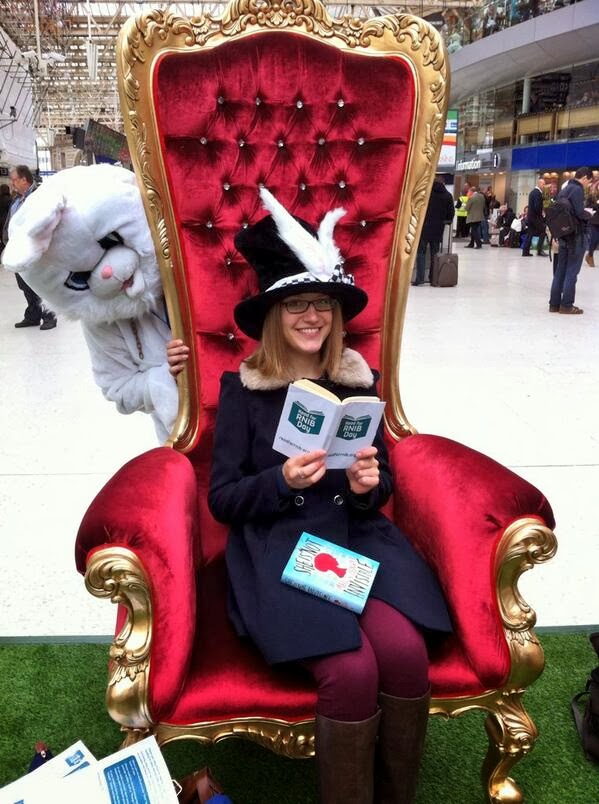 |
| What I look like when I'm writing (note: not really) |
It's how I switch off, how I relax, the place I go when the rest of the world is just too much to handle. When I start typing, I can feel myself breathing out. I write myself calm, every morning on the way to work, and then I've got something to go back to throughout the day. I keep picking away at the puzzle of what happens next - and by the time I open my laptop the next morning my head's stuffed full of my next scene.
I do wonder whether there's a connection between why I write and the stuff that comes out onto the page when I do. You see, although murder in the real world is a nasty business, murder in fiction is absolutely the opposite. It's actually one of the safest and most measured plots to deal with. As the author, you have a set number of suspects, in a set environment, with only a certain amount of clues that must lead to only one single correct solution.
Detective fiction (as opposed to thrillers, which can be extremely wide-ranging - probably why I don't write thrillers) is all about leaving the rest of the world behind. It's not important. What matters are the little details that exist within the perimeters you have set yourself in your story. The texture of this scrap of cloth left hanging on this particular nail. The way this particular window has shattered. The exact depth that this parsley has sunk into this pat of butter on one very special hot day in summer. It's really quite beautiful.
Detective fiction is all about simplicity and calm - the trick that the author is really playing on their readers is in making them believe that the story they've put together is even slightly complex. My genre is basically authorial therapy.
But all the same, if I didn't write crime fiction, I know I'd just start writing something else. There are writers who can stop - but I'm not one of them. The idea of taking time off from writing is never really going to work for me. For better or worse, I am who I am because I write.
Sunday, 5 January 2014
New Year's Excitements and Writing Resolutions: 2014
Hello and welcome to 2014! A lot has changed since I wrote out my year's goals in January 2013.
Did I achieve any of them? Well . . .
- I got an agent for my crime novel. In fact, Murder Most Unladylike, the first in my middle-grade murder mystery series featuring Daisy Wells and Hazel Wong, will be coming out in the UK in May this year (it'll be out in the US in spring 2015). So, you know, I'd say I pretty much ticked that one off.
- I also finished that other book I was writing. It's not Hazel and Daisy at all, but I like it, and one day (in the far, far future) I'm hoping that you might get to like it too.
- I certainly did not get 25% of the 1001 Books project read last year. I feel a bit bad about that. But I did have a few other things going on.
- I don't think I wrote something every day. I certainly didn't write fiction every day. Raymond Chandler would be ashamed of me (sorry, Raymond Chandler). But I wrote quite a lot, and I'm proud of a fair to middling amount of it, and I think that's probably all most writers can ever truthfully say.
- I did begin to plan my books before I wrote them! Sort of, anyway. In 2013 I discovered spreadsheets, and now I love them. I also got much better at cutting the boring bits and getting to the action. When I was revising Murder Most Unladylike, I took to muttering INCREASE THE PERIL! as I typed, and that was very helpful. Everyone loves a bit of peril.
- I did not manage to cut out the dogs from my writing. Nor did I get rid of the murder element in my plots. I'm realising that both might just be inevitable. I did not write any short stories, or enter any competitions. And I did not get a pet lion. But I do still have a pet bearded dragon . . .
And now, some new writing resolutions for 2014.
- I am going to finish Murder Most Unladylike 2, which at the moment is called Arsenic For Tea. I admit, this is less a resolution than a contractual obligation, but hey, whatever works. I am also going to make it a lot better than it is right now.
- When Arsenic for Tea has been finished, I am going to rework the Secret Project mentioned above, and see what happens to it.
- I am going to do school visits. And I am going to make them be awesome.
- I'm going to try again with that short story thing - I definitely want to write some, probably set in Hazel and Daisy's world.
- I'm going to try to keep reading as many different genres and types of book as possible. Now that I work with children's books as my day job, as well as being a children's writer, it can get difficult to step back and try new things, but I know that it's important. Plus, I love it.
- I also want to do more rereading. I need to remember that trying to read every book ever published is unachievable, and sometimes it is better to just pick up I Capture the Castle for the eleventh time.
- I want to help other writers achieve their goals. I'm part of the awesome Author Allsorts group, as well as SCBWI, and they're both fantastic support networks for UK children's and YA authors. But of course, they only work if writers do support each other, and work together - and that's what I want to do more of this year.
- And I want to champion children's and YA writing however I can. I want to celebrate the brilliant writers working today, and help spread the word about what fantastic children's books are out there.
And finally, on to (some of the very, very many) upcoming 2014 titles I'm currently getting extremely excited about.
 - On January 14th, Hollow City, the sequel to Miss Peregrine's School for Peculiar Children, will finally be published. I have been raving about Miss Peregrine - a crazy, creepy fantasy illustrated with terrifying found photos - since I read it last year, and I am beyond excited for this.
- In February there's a new Helen Oyeyemi book called Boy, Snow, Bird. I absolutely love Helen Oyeyemi (she wrote Mr Fox, a gorgeous take on the gruesome Mr Fox fairytale), and I would quite like to be her friend. But since I can't, I'll make do with reading her books.
- In March, Non Pratt's debut YA novel Trouble will be out. I am lucky enough to know a huge number of incredibly talented people who are all releasing books this year, and I am excited about every single one of them (Liz de Jager's Banished! Emma Pass's The Fearless! Katy Cannon's Love, Lies and Lemon Pies! So many others that if I listed them all this list would stretch to forever and potentially break the Internet!), but I got to read Trouble at proof stage and was absolutely delighted by it. It's so funny and sweet, and it manages to make the beaten-to-death teenage pregnancy plot point seem fresh and interesting. It's going to be a hit.
 - March is also the publication month for my most anticipated non-fiction title: Did She Kill Him? by Kate Colquhoun. I love Victorian murders, the Maybrick mystery is fascinating, and Kate's Mr Briggs' Hat (about the first railway murder) was great. I can't wait for this.
- Lauren Beukes's The Shining Girls amazed me and freaked me out in equal measure last year, so I'm very excited about her new book, Broken Monsters, which publishes in May. It sounds a bit like sci-fi crime-novel Frankenstein meets The Island of Doctor Moreau, so obviously I will be reading it as soon as it comes out.
- In June, Leigh Bardugo's Grisha trilogy concludes with Ruin and Rising. Once again, I am restraining myself from simply listing every single one of the fantastic books that Orion will be publishing this year (Tess Sharpe's heartbreaking thriller Far From You, the cosmically brilliant new 5-8 series Pets from Space, and many equally worthy others), but this is just SO EXCITING that I have to talk about it. Concluding a series is obscenely difficult to get right, but Leigh's absolutely done it. I can't wait for you all to go absolutely nuts about this.
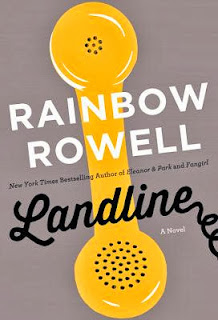 - In July, Rainbow Rowell's next novel Landline is out. I love Rainbow Rowell. Have I said that enough? Every one of her books is nuanced, thoughtful and absolutely beautiful - and also an amazing love story. I'm bouncing off the walls about this one.
- In August, Ali Smith's got a new one out: How To Both. Ali Smith never bothers with things like nouns or verbs, and a lot of her books don't entirely make sense, but I like her writing a lot, and so I'm very excited for this.
- September can only be the month of a NEW SARAH WATERS NOVEL. Oh my GOD. It's called The Paying Guests, but for all I care it could be called The Very Boring Book of Nothing Happening. It's written by Sarah Waters, and that means that I'll be buying it anyway.
And one final date for your calendars - in May 2014, my very own book, Murder Most Unladylike, will be available to buy from all good UK bookstores. Isn't that exciting? And weird? And amazing? I'm hoping to be able to share the UK cover with you very soon (I've seen roughs, and it's going to be wonderful), and I'm also hoping to run a giveaway on this blog when the proof copies are in - which, again, should be very soon! So stick around.
All in all, I've got a really good feeling about this year.
Did I achieve any of them? Well . . .
 |
| 2013: the year that I ended up here |
- I also finished that other book I was writing. It's not Hazel and Daisy at all, but I like it, and one day (in the far, far future) I'm hoping that you might get to like it too.
- I certainly did not get 25% of the 1001 Books project read last year. I feel a bit bad about that. But I did have a few other things going on.
- I don't think I wrote something every day. I certainly didn't write fiction every day. Raymond Chandler would be ashamed of me (sorry, Raymond Chandler). But I wrote quite a lot, and I'm proud of a fair to middling amount of it, and I think that's probably all most writers can ever truthfully say.
- I did begin to plan my books before I wrote them! Sort of, anyway. In 2013 I discovered spreadsheets, and now I love them. I also got much better at cutting the boring bits and getting to the action. When I was revising Murder Most Unladylike, I took to muttering INCREASE THE PERIL! as I typed, and that was very helpful. Everyone loves a bit of peril.
- I did not manage to cut out the dogs from my writing. Nor did I get rid of the murder element in my plots. I'm realising that both might just be inevitable. I did not write any short stories, or enter any competitions. And I did not get a pet lion. But I do still have a pet bearded dragon . . .
-
And now, some new writing resolutions for 2014.
- I am going to finish Murder Most Unladylike 2, which at the moment is called Arsenic For Tea. I admit, this is less a resolution than a contractual obligation, but hey, whatever works. I am also going to make it a lot better than it is right now.
 |
| I shall mainly be channeling the work (though not the life) of this person |
- I am going to do school visits. And I am going to make them be awesome.
- I'm going to try again with that short story thing - I definitely want to write some, probably set in Hazel and Daisy's world.
- I'm going to try to keep reading as many different genres and types of book as possible. Now that I work with children's books as my day job, as well as being a children's writer, it can get difficult to step back and try new things, but I know that it's important. Plus, I love it.
- I also want to do more rereading. I need to remember that trying to read every book ever published is unachievable, and sometimes it is better to just pick up I Capture the Castle for the eleventh time.
- I want to help other writers achieve their goals. I'm part of the awesome Author Allsorts group, as well as SCBWI, and they're both fantastic support networks for UK children's and YA authors. But of course, they only work if writers do support each other, and work together - and that's what I want to do more of this year.
- And I want to champion children's and YA writing however I can. I want to celebrate the brilliant writers working today, and help spread the word about what fantastic children's books are out there.
-
And finally, on to (some of the very, very many) upcoming 2014 titles I'm currently getting extremely excited about.
 - On January 14th, Hollow City, the sequel to Miss Peregrine's School for Peculiar Children, will finally be published. I have been raving about Miss Peregrine - a crazy, creepy fantasy illustrated with terrifying found photos - since I read it last year, and I am beyond excited for this.
- In February there's a new Helen Oyeyemi book called Boy, Snow, Bird. I absolutely love Helen Oyeyemi (she wrote Mr Fox, a gorgeous take on the gruesome Mr Fox fairytale), and I would quite like to be her friend. But since I can't, I'll make do with reading her books.
- In March, Non Pratt's debut YA novel Trouble will be out. I am lucky enough to know a huge number of incredibly talented people who are all releasing books this year, and I am excited about every single one of them (Liz de Jager's Banished! Emma Pass's The Fearless! Katy Cannon's Love, Lies and Lemon Pies! So many others that if I listed them all this list would stretch to forever and potentially break the Internet!), but I got to read Trouble at proof stage and was absolutely delighted by it. It's so funny and sweet, and it manages to make the beaten-to-death teenage pregnancy plot point seem fresh and interesting. It's going to be a hit.
 - March is also the publication month for my most anticipated non-fiction title: Did She Kill Him? by Kate Colquhoun. I love Victorian murders, the Maybrick mystery is fascinating, and Kate's Mr Briggs' Hat (about the first railway murder) was great. I can't wait for this.
- Lauren Beukes's The Shining Girls amazed me and freaked me out in equal measure last year, so I'm very excited about her new book, Broken Monsters, which publishes in May. It sounds a bit like sci-fi crime-novel Frankenstein meets The Island of Doctor Moreau, so obviously I will be reading it as soon as it comes out.
- In June, Leigh Bardugo's Grisha trilogy concludes with Ruin and Rising. Once again, I am restraining myself from simply listing every single one of the fantastic books that Orion will be publishing this year (Tess Sharpe's heartbreaking thriller Far From You, the cosmically brilliant new 5-8 series Pets from Space, and many equally worthy others), but this is just SO EXCITING that I have to talk about it. Concluding a series is obscenely difficult to get right, but Leigh's absolutely done it. I can't wait for you all to go absolutely nuts about this.

- In August, Ali Smith's got a new one out: How To Both. Ali Smith never bothers with things like nouns or verbs, and a lot of her books don't entirely make sense, but I like her writing a lot, and so I'm very excited for this.
- September can only be the month of a NEW SARAH WATERS NOVEL. Oh my GOD. It's called The Paying Guests, but for all I care it could be called The Very Boring Book of Nothing Happening. It's written by Sarah Waters, and that means that I'll be buying it anyway.
And one final date for your calendars - in May 2014, my very own book, Murder Most Unladylike, will be available to buy from all good UK bookstores. Isn't that exciting? And weird? And amazing? I'm hoping to be able to share the UK cover with you very soon (I've seen roughs, and it's going to be wonderful), and I'm also hoping to run a giveaway on this blog when the proof copies are in - which, again, should be very soon! So stick around.
All in all, I've got a really good feeling about this year.
Saturday, 21 December 2013
2013: My year in 13 books
Greetings, festive friends! I've had a busy month. In fact, I have had the sort of month that made me want to crawl under a rock and put up a sign saying I NEED TO JUST LIE HERE FOR A WHILE AND BREATHE.
But now I am on holiday (yes! A holiday! For two whole weeks!) and I am rediscovering the concept of leisure, which is apparently a thing that some people get. I just got into the spirit of it by reading the whole of Holly Black's Curse Workers trilogy in 72 hours, and it turns out that leisure is great.
In case you want to keep up to date with my internet activities, I have:
- written a Dear Santa letter for Space on the Bookshelf about why I think there should be a Diana Wynne Jones book in every child's stocking this Christmas.
- been hanging out at Author Allsorts again, most recently talking about my top tip for a big edit.
And now, to the main blog. It's the end of the year, which is traditionally the Time of Listmaking. And of course, because my entire life is about books (really, it is, if someone stopped me and asked me to sum up my life in one single word I would just shout "BOOKS!"), here is my year as expressed in 13 of them. I've linked to my reviews of them, where that applies - and I've also given myself a bit of leeway on exactly when I read them. If it was sort of kind of around that month, it counts.


Again, I was lucky enough to get an advance review copy of The Shining Girls from The Bookbag. I admit, I was upset by it - it's so brutal - but it's also utterly brilliant. Seriously not for the faint of heart, but if you can cope with its horrors you'll find it incredibly thought-provoking and well written.



This might just be my book of the year. It reminded me so strongly of my own teenage self, it's so engagingly written and it deals so lightly with such deep issues. And it's a bloody amazing love story. I can't sing Rainbow Rowell's praises highly enough.

I was just gleeful about discovering this book, an Austen tribute that's not just a rehash. It's incredibly well written, it's extremely clever and it's a big, bold romance that's full of plot. I'd been reading a lot of children's and YA fiction when I picked Longbourn up, and this got me back into adult books again.
NOVEMBER


Another book that's as beautifully published as it is written and illustrated. We got a copy into the office, and we all crowded around it greedily, murmuring "silver foil! Purple edges! A TINY WEE BOOK IN THE BACK!" It's just touchable. It's also very very funny - and you all know how great Chris Riddell's illustrations are. What this book reminds me is that a) children's books are brilliant and b) children's publishing is brilliant. And I'm so very lucky to be a part of that.
So, those are my 13 picks. What are yours? What have you been raving about this year? What were your unmissable reads of 2013?
But now I am on holiday (yes! A holiday! For two whole weeks!) and I am rediscovering the concept of leisure, which is apparently a thing that some people get. I just got into the spirit of it by reading the whole of Holly Black's Curse Workers trilogy in 72 hours, and it turns out that leisure is great.
In case you want to keep up to date with my internet activities, I have:
- written a Dear Santa letter for Space on the Bookshelf about why I think there should be a Diana Wynne Jones book in every child's stocking this Christmas.
- been hanging out at Author Allsorts again, most recently talking about my top tip for a big edit.
And now, to the main blog. It's the end of the year, which is traditionally the Time of Listmaking. And of course, because my entire life is about books (really, it is, if someone stopped me and asked me to sum up my life in one single word I would just shout "BOOKS!"), here is my year as expressed in 13 of them. I've linked to my reviews of them, where that applies - and I've also given myself a bit of leeway on exactly when I read them. If it was sort of kind of around that month, it counts.
JANUARY

This was a Christmas present that I
read at the very beginning of January, and it got my year's reading off to a start
just
as magical as my year itself. Dark, gorgeous and headily wonderful, this
book was the perfect beginning to an amazing year.
FEBRUARY
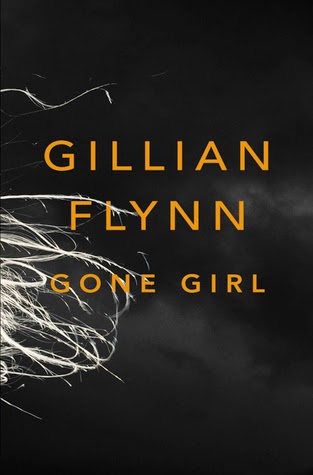
I was lucky enough to review this for
The Bookbag when it first came out in paperback, and I've been yelling about it
ever since. I like that this is February's book - February is the month of
love, after all, and this book makes you fundamentally question everything
about the reality of adult relationships. (Don't worry, this has
nothing to do with my own life.)
MARCH

Again, I was lucky enough to get an advance review copy of The Shining Girls from The Bookbag. I admit, I was upset by it - it's so brutal - but it's also utterly brilliant. Seriously not for the faint of heart, but if you can cope with its horrors you'll find it incredibly thought-provoking and well written.
APRIL

I read this in my first months at Orion, and it just blew my mind. It isn't just a wonderful story, it's a wonderful concept - a narrative linked to found photos, which inform the text and are printed alongside it. It makes you constantly wonder if what you're reading is real, and the pictures themselves give you chills. It's such a well-published book, and though I love this book as a reader, I love it even more with my editorial hat on.
MAY

Another book that takes expectations and jumps up and down all over them. It's a middle-grade novel. It's about someone dying of cancer. It's heavily illustrated. Its pictures are the scariest thing about it. And it's fantastic. A Monster Calls completely transcends genres and reading levels. It isn't for children, it's for humans. It's a sad fact that a lot of people stil insist on being very foolish about the quality and importance of children's fiction, and this year my three-word response has become A Monster Calls. I win.
JUNE
The Leviathan trilogy - Scott Westerfeld

When I read Leviathan in June, it had been a long time since I'd been really excited about a trilogy. Then I finished Leviathan, and ran to the nearest bookshop after work to buy Behemoth. Literally. I ran. It's a steampunk adventure set during an alternate universe World War One, and it made my summer.
JULY

I've read a lot of fairy tale adaptations, but this one has to be head and shoulders the best I've ever come across. It felt totally fresh and completely real, and it proved to me that there really are endless places to go with any one concept, no matter how overdone it might seem to be. The kind of book that just makes me excited about fiction.
AUGUST

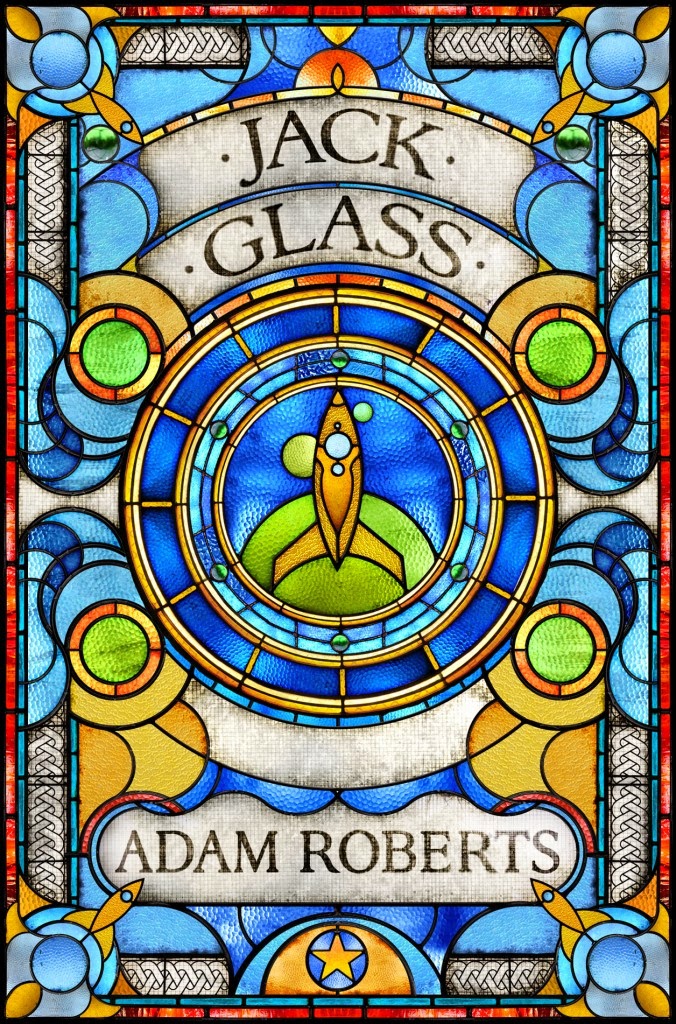
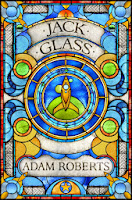
I went on holiday in August, so I've picked two of the best books from my holiday reading. If Tender Morsels made me excited about reading, We Have Always Lived in the Castle and Jack Glass made me excited about being a writer. They're both focused around a past murder - essentially, they're both crime novels - but they both do stunningly unique things with the genre. They're beautifully written, they're creepy and weird and smart and wonderful (and very, very different - Castle is a sort of domestic Gothic, while Jack Glass is Agatha Christie in Space), and if my books end up being even a tiny bit as interesting as these two, I will be very very pleased.
SEPTEMBER

This might just be my book of the year. It reminded me so strongly of my own teenage self, it's so engagingly written and it deals so lightly with such deep issues. And it's a bloody amazing love story. I can't sing Rainbow Rowell's praises highly enough.
OCTOBER

I was just gleeful about discovering this book, an Austen tribute that's not just a rehash. It's incredibly well written, it's extremely clever and it's a big, bold romance that's full of plot. I'd been reading a lot of children's and YA fiction when I picked Longbourn up, and this got me back into adult books again.
NOVEMBER

This book just about broke my heart. I've read so very many books about World War Two, but this managed to jolt me right out of my general World War Two overexposure apathy. It's wonderful - and coincidentally, I got to meet Elizabeth Wein herself in November, which was pretty amazing.
DECEMBER
DECEMBER

Another book that's as beautifully published as it is written and illustrated. We got a copy into the office, and we all crowded around it greedily, murmuring "silver foil! Purple edges! A TINY WEE BOOK IN THE BACK!" It's just touchable. It's also very very funny - and you all know how great Chris Riddell's illustrations are. What this book reminds me is that a) children's books are brilliant and b) children's publishing is brilliant. And I'm so very lucky to be a part of that.
So, those are my 13 picks. What are yours? What have you been raving about this year? What were your unmissable reads of 2013?
Thursday, 28 November 2013
Thanksgiving post: thank you, 2013
 |
| The beautiful SCBWI launch party cake |
The first is how much can change in a very short space of
time. Last year I wasn’t at the SCBWI conference. I wasn’t even a member. I was
sitting on my couch, jealously reading the tweets from Winchester and feeling
light-years away from that world. I couldn’t possibly have imagined that this
year I’d not only go, but go as a
soon-to-be-published author.
I am so lucky – I am so
so lucky that I spend quite a lot of
time these days walking around in a state of intense, surreal wonder at what
has happened to me – but what being at the conference really brought home to me
is that the dream I’m living isn’t just mine. It belongs to every single one of
the conference attendees, and for some of them that dream feels just as far
away as it did for me a year ago.
I’ve had a lot of good news to post on the blog this year,
and I have an astronomical amount to be thankful for today. But part of why this feels so wonderful is
that it’s such a contrast to where I was a year ago.
Last autumn – and this is hard to write about, but I feel
that it’s important that I do – I was lost. I was applying for a lot of jobs,
and being rejected from every one. To distract myself from the relentless
soul-sucking process, I began to query the manuscript of Murder Most Unladylike with agents – and again, I was rejected, a
lot. In retrospect, this was not the smartest plan, because it made me really
start to question my writing ability. I saw those rejections as proof that I
just wasn’t good enough. I distinctly remember one particular phone call I made
to my mother, in which I stood in the middle of that wobbly bridge outside the
Tate Modern and shouted, “MY ENTIRE LIFE IS A LIE! MY WRITING IS AWFUL! I WILL
NEVER AMOUNT TO ANYTHING! I MIGHT AS WELL JUST GIVE UP AND BECOME A VAGRANT!”
I was not in a good place. By the time December rolled
around, I felt profoundly that I had failed. My boyfriend drove us to my parents’
house for Christmas (he had a really hard time getting me in the car, actually,
because I kept trying to persuade him to let me get on a train and spend
Christmas in a Travelodge in York. No, I don’t understand it either), and when
he parked I sat in the car for an hour,
refusing to get out, because I was so deeply ashamed of myself.
In fact, I had not failed in the slightest. I just hadn’t
succeeded yet. Because what I didn’t know (obviously), was this: at that
moment, at literally the lowest point of my adult life, my future was right there in front of me. Nineteen days after my weird sit-in
protest in the car, Gemma Cooper (the woman who is now my wonderful agent) sent
me an email to say that she loved my book and she wanted to meet me. And that
book, the one that I was pretty close to giving up on is, er, about to be
published in May.
What I want to say to other writers is this: publishing is a game with
crazily bad odds. Writing is a tough dream to have. But that’s true for
everyone. Everyone goes through the same rejections, and low times, and self-doubt.
I’m realising now that published authors have everything in common with that
person scribbling alone in their room and dreaming of getting their books read
by someone who isn’t their mother or their dog. They’re just a few steps
further along the same road.
 |
| Here, have some cranberry sauce! |
I have had the most wonderful year. I can’t say it enough. But part of why it's so special is because of what came before it. What I've learnt is that you never know when you're about to be happy.
Have a fantastic Thanksgiving.
Wednesday, 13 November 2013
Authors for Philippines appeal

But we can raise money so that the aid workers out there have the resources they need to save and improve lives - and if you want to help out with a donation and you happen to love books, there's an absolutely brilliant charity auction that started today.
Authors for Philippines is offering an incredible range of one-off bookish goodies from a huge list of totally amazing authors and editors. Every bid you make (and please make lots!) will mean more money for the Red Cross's Typhoon Haiyan appeal - you get to do a great thing, and you'll get some fantastic rewards in exchange.
As you've probably heard, Murder Most Unladylike won't be out until May 2014. But I am offering one very special advance proof copy of the book, signed to whoever you want and personalised in any way you'd like (I will draw and write any message that is not actually obscene or libellous, although I do warn you that I am very bad at art).
If you enjoy this blog, and if you're looking forward to Murder Most Unladylike, please bid. And if you aren't, just bid on someone else's bookish offer. There are critiques from editors, school visits, signed Neil Gaiman books and one-off Alex Smith illustrations, editorial advice from authors, tickets to launch parties ...
This is an incredibly worthy cause, and I think it's important for us to do anything we can, no matter how small, to help out. So, what are you waiting for? Start your bidding now!
Friday, 8 November 2013
Learning from NaNoWriMo: a Survivor's Guide
 It's November again, which means that it is three years to the month since Daisy and Hazel began their adventures on the very first page of my very first draft of the book that would one day become Murder Most Unladylike.
Yes, Murder Most Unladylike started life as a NaNoWriMo novel. NaNoWriMo, for those who haven't heard of it before, is a project that aims to get aspiring authors/nutcases to write 50,000 words of a novel in the 30 days of November. To achieve your target, you must write 1,667 words each day, every day, without fail, even if your dog just threw up right in front of you and you have pneumonia and you've worked a 12-hour shift . . .
Basically, NaNoWriMo is self-inflicted literary torture, but people are supposed to do it FOR FUN.
I've written before about my very mixed emotions regarding the use and worth of NaNo. The idea of it is wonderful, and it truly works for many people. A lot of very good and very beloved novels began as NaNo projects, and I'd be a big liar if I didn't acknowledge its role in my own book's creation.
 |
| NaNoWriMo class of 2005 |
So, did NaNoWriMo help me write a book? Yes. Did it help me write a good book? Er, no. And that's (at least partly) because NaNo's most basic flaw is that it values sheer quantity of words produced over quality. Writing at speed can produce amazing results, but what it usually produces is a pile of utter pants that needs to be mercilessly reworked before it is ready to show to other human beings.
My NaNo draft of Murder Most Unladylike (and I can't stress this enough) was HORRIBLE. It was AWFUL. I knew about Daisy, and Hazel, and I knew who the murderer was (I wrote their name down on the first page of my notebook and then felt proud because I had Created A Plot), but I had no idea how my detectives were going to end up solving the mystery, or even what the mystery actually was. Basically, I had no understanding of the world I was creating or the story I was telling - which, when I look back on this now, makes me feel a bit wobbly.
Last week I went to a Holly Black event where someone asked a question about writers' block. Writers' block, Holly replied, shouldn't be seen as a problem in itself. What it is is a symptom, and so instead of behaving like you have been struck down by the black spot and there is nothing to be done but despair (she didn't say this, I'm paraphrasing), you should use your feeling of writers' block to diagnose the deeper plot issues you're having.
 |
| NaNoWriMo class of 2011 |
But, see, I don't know if I'd have discovered that if I hadn't had full and shocking experience of what happens when I don't know my story. I learned that I do need structure, and I do need to plan (and then I discovered colour-coded plotting on huge spreadsheets,but that's another story). So in a way, NaNo's big problem gave me a very big revelation that I've been using ever since.
NaNo also gave me a big wake-up call about output. Those 1,667 words a day taught me that writing a sentence doesn't need to take twenty minutes. It can take that long, and sometimes it needs to, and that's OK, but the way I pre-plan scenes (I watch them in my head, like puppet-shows, several times over) means that when I come to actually write I am capable of turning out 1,000 words in an hour without breaking a sweat. Actually, if I try, I can do a lot better than that. I recently finished work on the first draft of something totally non-Daisy and Hazel related, and I think I must have written the last 10,000 words in about five inspired hours one afternoon. Afterwards my brain felt like someone had cleaned it out with a stick, and I am absolutely sure that those 10,000 words will need an enormous edit, but again that's OK, because re-writing is the part of the writing process that I really love. And that's another thing that I've learned about myself since my first NaNo effort.

So what I think I'm saying is this: all writing exercises are incredibly valuable, even if what you get out of them initially feels more negative than positive. Projects like NaNoWriMo can help you kickstart yourself as a writer, and I'd advise all aspiring novelists to have a go. I'd even advise you to stick at it all the way to the end of the month, even if you're hating it and not making wordcount. But what I wouldn't advise is for you to do it again, if you gave it a real go and still discovered that it doesn't work for you. Writing isn't school (thank goodness) - there's no 'correct' way to make a book. Try everything, and then ignore what doesn't work (no matter how popular it is) and just do what feels fun and right for you. Because, seriously, the only writing advice that will actually help you is this:
KEEP WRITING THE BOOK UNTIL IT IS FINISHED. And then go back to the beginning and write it again.
Happy November.
Tuesday, 22 October 2013
MURDER MOST UNLADYLIKE announcement - Hazel and Daisy are going to America!
As you might have heard, it's been a pretty good year for me so far. And things just got even BETTER.
From the Publishers Marketplace announcement:
Yes, Daisy and Hazel are coming to America! The lovely people at Simon & Schuster Books for Young Readers will be publishing MURDER MOST UNLADYLIKE in Spring 2015, and its two sequels in 2016 and 2017 respectively.
Words just can't express how delighted I am to not only have an American publisher, but one as incredible as S&S. I'm so excited to be working with the S&S team and Kristin, and I can already tell that they're going to do a amazing job of bringing Daisy and Hazel to a bookstore near you (if you happen to live in the USA).
I'll bring you more news when I have it, but for now, while everything's still sinking in - hooray.
From the Publishers Marketplace announcement:
Kristin Ostby at Simon & Schuster Books for Young Readers has pre-empted North American rights for Robin Stevens’s debut, MURDER MOST UNLADYLIKE: A Wells and Wong Mystery, set in 1930s England and pitched as a middle-grade Agatha Christie, featuring Hazel Wong and her best friend Daisy Wells, who find a body in their boarding school and set about investigating the murder. Publication is scheduled for spring 2015. Gemma Cooper at The Bent Agency brokered the deal.
Yes, Daisy and Hazel are coming to America! The lovely people at Simon & Schuster Books for Young Readers will be publishing MURDER MOST UNLADYLIKE in Spring 2015, and its two sequels in 2016 and 2017 respectively.
Words just can't express how delighted I am to not only have an American publisher, but one as incredible as S&S. I'm so excited to be working with the S&S team and Kristin, and I can already tell that they're going to do a amazing job of bringing Daisy and Hazel to a bookstore near you (if you happen to live in the USA).
I'll bring you more news when I have it, but for now, while everything's still sinking in - hooray.
Monday, 7 October 2013
Putting My Editorial Hat On: So, What Do I DO All Day?
I talk a lot on this blog about my author-life. Unsurprisingly! This is my writing blog. But, as some of you know, I lead a double existence. I have infiltrated the world of publishing, and I spend my days working as an editorial graduate trainee (which is sort of like an editorial assistant, but less so) for Orion Children's Books.
Apparently, this sort of thing is quite common. In fact, next month, as part of the SCBWI's Professionals series, I am joining the exceptionally talented Non Pratt and Phil Earle, two other authors who have secret publisher identities (or publishers who have secret writer identities, depending on how you want to look at it), on a panel about what it's like to see both sides of the industry. You should come! It'll be great.
This has made me think about my day job. Specifically: what do I DO all day? Whenever people ask me, I go a bit blank. I know I'm busy. When I think about my working day, I have a strong impression of busy-ness. But how, exactly, do I spend my time? What do I do before I come home, put on my mask and cape and write crime?
Well, it goes a bit like this ...
1. I Help Make Books
 (Before we start, I've got to explain that what follows is just a very simplified norm. All of our books are different, and most don't happen exactly like this. Also, I've slightly fudged the order these steps go in, so that it's slightly less confusing. That said, onwards!)
Imagine that the editorial department have just bought a new book. Also imagine, for the sake of this post, that this book is the first in a new illustrated series for 7-9 year olds. (I also do a lot of work on YA books for our Indigo list, as well as our Early Readers for younger kids, and Asterix, which we have the licence to publish in the UK, but just go with me here.)
Now, there's a whole process to go through before an editor can buy a book. But this isn't something that I get involved with. As an editorial graduate trainee, I'll read new submissions as they come in from agents (more on this later), but I don't have the power to commission a book and I'm not involved in the buying process. I also don't help to negotiate terms when an offer is made - again, this is between the commissioning editor and the author's agent. The first time I'll come into contact with a new acquisition is once we've already bought it. I might help enter the terms of the agreed contract onto our system, or check the contract once it comes back from our legal department. I also help the editor fill out initial information forms for our sales, marketing and publicity teams, so they know what kind of thing they're going to be selling.
So we've got a new book! And now the real work begins. The editor will work with the author to reshape the book's story and characters, sometimes quite drastically. Again, though, this isn't something that I'm really involved in. I am not an editor, and so I absolutely do not structurally edit our books. The editor may ask me to read a draft, and give my comments on parts I think might not be working, but the final decision on what to go back to the author with will always be theirs. What I'm doing, while this is going on, is ... admin. I'll send out copies of the finalised contract to the author's agent for signing. As soon as the editor is happy with the state of the manuscript, I'll work to get the author's advance payment signed off. And so on! A lot of my job, you may not be surprised to discover, involves photocopying and/or scanning.
 Once the book's text has been finalised, I may be asked to copyedit or proofread the manuscript. This still doesn't mean that I have the power to change anything major. A copyeditor looks for continuity errors (if Portia has green eyes on page 4 and red eyes on page 20, for example), factual errors (if the capital of England is Paris), missing words (like a sentence that reads 'I've got a lovely bunch of.') or missing punctuation (like a sentence that reads 'please dont say that she said sadly'). Proofreading is similar, but generally without the continuity or fact checking element - essentially, as a proofreader you're hoping that the copyeditor who went before you has already spotted these things, leaving you to catch tiny errors like dropped quotation marks and full stops.
OK, so we've got a great manuscript. Now we need some illustrations. The editor will usually have a very clear idea of the way they want these illustrations to look. Sometimes they'll already have an illustrator in mind, but sometimes I'll be asked to go and do some research. Then I take my suggestions to the editor, and they make the final decision about who to offer the gig to. Once an illustrator's been chosen, the editor may also ask me to help draft the artwork brief - to work out how many illustrations we want, of what size, and exactly what we want the illustrator to draw. Once the illustrator has submitted a first round of rough illustrations, I'll be asked to check that they've met the brief, and that what they've drawn matches what's described in the text (for example, if Mrs Tiggywinkle is a hedgehog in the text but a pig in the illustrations, we have a problem). The editor and the author will then have a look too, give their suggestions, and we'll go back to the artist with corrections. When we get final drawings, I'll check them one more time, as will the editor and author, and then the editor will sign off on them. And I'll have another invoice to process!
 What we need now is a cover. Sometimes the illustrator will do the cover as well, although it's usually done by our art department. However it happens, though, it's the editor's job to come up with a cover design brief for the artist to use, and this is something else that I get to help with. Sometimes they'll come up with an idea and ask me to draft the brief, sometimes they'll ask me to research covers or cover directions. As always, the final decision isn't up to me - but often I get to make suggestions, and that's pretty cool.
Now we need to create the cover copy - the blurb on the back that tells readers what the book's about. I'm often asked to draft copy for editors, and it's one of my favourite parts of my job. I also help to draft copy for the in-house information forms we use for meetings and the out-of-house information that can be seen on Amazon and is sent to booksellers ... basically, I spend a lot of time helping the editors to fill in forms. Thank goodness I like to write.
Meanwhile, the manuscript and illustrations have been sent up to our production team to be turned into a book-shaped thing. We're sent the PDF back for checking (sometimes I'll help send this out to the author for final edits, although it's the editor who'll be in charge of noting down and adding in any corrections the author requests), and then once we've been through three rounds of checks, the files are sent away to the printers' to be turned into an actual book. When the finished book comes in, I'll send out copies to the author and their agent, and the illustrator and their agent.
And then the whole process starts again!
2. I Help Make Ebooks
 So, that's the physical side of publishing. But I also work on the digital side of things. Interestingly, the children's ebook market is still very small - mainly because most kids don't have Kindles or iPads, and also because until recently colour ebooks tended to look ... not great. But now the technology's really beginning to be able to do what we need it to, and more and more kids are getting e-readers, and so I suspect that in the next few years things are going to really start to take off.
Anyway, ebooks. We are lucky in that we have an excellent digital team who (along with out-of-house designers) do the difficult work of actually creating the files. The first time I come across them is when I'm sent an ebook to check. I go through the book, making sure that the images and words are all there, that it looks good and handles well (this is actually really important - we're constantly using new programmes, in new ways, to create our ebooks, and so it's quite usual to come across an odd little glitch that hasn't happened before).
I love being involved with the ebook process, because everyone's working right at the edge of what's possible, constantly pushing to make things better, and that's amazing to be a part of. It proves to me that publishing really is keeping up with change in a very positive way, and I'm proud to be helping that happen. We've just been working on the ebook for Marcus Sedgwick's She Is Not Invisible, to make sure that its text-to-speech function makes it fully accessible to blind and partially sighted users. In fact, all of our ebooks are now being created with the text-to-speech function - which means that we're suddenly able to make our books available to a group of people that we could never have reached before, unless we decided to publish a separate braille edition. I think that's just brilliant.
3. I Help Find Books
 I mentioned the submissions process before. Actually, I could (and probably will, one day) write an entire blog post about submissions - after all, I now have intimate personal knowledge of from both sides. I have been on submission, and I also come in to work every day to an inbox stuffed with other people's. Which is slightly bizarre!
When people imagine what editorial work is, they assume that we all just sit around all day reading books. When I hear this, I laugh a silent and bitter laugh, because I am the most junior person in our department, and I therefore have the least responsibility and the least work, and I still can only dream of a world where I would have time to read all the submissions we get in during the normal 9:30-5:30 working day. Editorial staff don't read submissions all day. We read submissions all evening, and all weekend, and all commute. When authors wonder why it's taking so long for an editor to get to their submitted book, it's because of this. We read as fast as we can, and the editors look at everything that is submitted, but editors are not super-beings, and so sometimes it has to take a long time.
Just to clarify, I don't get to make the final call on anything that comes in to the department. It's part of my job to take a look at submissions and feed back to the editors about them. They will then look at the manuscript themselves, and they make the final decision on whether or not they want to make an offer. Often, for various reasons, the submissions that come in just aren't right for our list. But sometimes there's something that totally clicks, and that's the greatest buzz feeling in the world. It's this heart-beating, panicky, acquisitive excitement that's a bit like an inanimate version of falling in love.
Of course, because I'm so junior, once I've found something it's all totally out of my hands. The most I can do is tell the editors how I feel, and then wait to see what they do. Will they agree with me? Will they decide they want it? If they want it, will we get it? I've heard an editor I know describing the process as a bit like gambling, and I think that's an amazing analogy. Publishing might seem kind of calm and staid, but there are moments where it's definitely a high-stakes business.
So, that's my job! Of course, I also do a lot of other things - essentially, I am there to help the editors in any way they need, from getting cakes and coffee for author meetings, to scanning in a book, to filling in submissions information, to researching a potential author ... and so on! I never know exactly what each day is going to look like, and I love that element of uncertainty. Publishing is a wonderful industry to be part of, and (from what I've seen of it so far) it just gets more interesting the more senior you get. I get to work with a lot of awesome people, and I know that I'm very lucky!
One final word: I love being part of an editorial team, but I hope I've made it as clear as can be that I'm extremely junior, and there are still a lot of things I don't know. So if I've made an error in this post, that's my personal mistake and I take full responsibility for it.
Oh, and if you want to find out more ... come along to the SCBWI panel on the 5th of November!
Apparently, this sort of thing is quite common. In fact, next month, as part of the SCBWI's Professionals series, I am joining the exceptionally talented Non Pratt and Phil Earle, two other authors who have secret publisher identities (or publishers who have secret writer identities, depending on how you want to look at it), on a panel about what it's like to see both sides of the industry. You should come! It'll be great.
This has made me think about my day job. Specifically: what do I DO all day? Whenever people ask me, I go a bit blank. I know I'm busy. When I think about my working day, I have a strong impression of busy-ness. But how, exactly, do I spend my time? What do I do before I come home, put on my mask and cape and write crime?
Well, it goes a bit like this ...
1. I Help Make Books
 (Before we start, I've got to explain that what follows is just a very simplified norm. All of our books are different, and most don't happen exactly like this. Also, I've slightly fudged the order these steps go in, so that it's slightly less confusing. That said, onwards!)
Imagine that the editorial department have just bought a new book. Also imagine, for the sake of this post, that this book is the first in a new illustrated series for 7-9 year olds. (I also do a lot of work on YA books for our Indigo list, as well as our Early Readers for younger kids, and Asterix, which we have the licence to publish in the UK, but just go with me here.)
Now, there's a whole process to go through before an editor can buy a book. But this isn't something that I get involved with. As an editorial graduate trainee, I'll read new submissions as they come in from agents (more on this later), but I don't have the power to commission a book and I'm not involved in the buying process. I also don't help to negotiate terms when an offer is made - again, this is between the commissioning editor and the author's agent. The first time I'll come into contact with a new acquisition is once we've already bought it. I might help enter the terms of the agreed contract onto our system, or check the contract once it comes back from our legal department. I also help the editor fill out initial information forms for our sales, marketing and publicity teams, so they know what kind of thing they're going to be selling.
So we've got a new book! And now the real work begins. The editor will work with the author to reshape the book's story and characters, sometimes quite drastically. Again, though, this isn't something that I'm really involved in. I am not an editor, and so I absolutely do not structurally edit our books. The editor may ask me to read a draft, and give my comments on parts I think might not be working, but the final decision on what to go back to the author with will always be theirs. What I'm doing, while this is going on, is ... admin. I'll send out copies of the finalised contract to the author's agent for signing. As soon as the editor is happy with the state of the manuscript, I'll work to get the author's advance payment signed off. And so on! A lot of my job, you may not be surprised to discover, involves photocopying and/or scanning.

OK, so we've got a great manuscript. Now we need some illustrations. The editor will usually have a very clear idea of the way they want these illustrations to look. Sometimes they'll already have an illustrator in mind, but sometimes I'll be asked to go and do some research. Then I take my suggestions to the editor, and they make the final decision about who to offer the gig to. Once an illustrator's been chosen, the editor may also ask me to help draft the artwork brief - to work out how many illustrations we want, of what size, and exactly what we want the illustrator to draw. Once the illustrator has submitted a first round of rough illustrations, I'll be asked to check that they've met the brief, and that what they've drawn matches what's described in the text (for example, if Mrs Tiggywinkle is a hedgehog in the text but a pig in the illustrations, we have a problem). The editor and the author will then have a look too, give their suggestions, and we'll go back to the artist with corrections. When we get final drawings, I'll check them one more time, as will the editor and author, and then the editor will sign off on them. And I'll have another invoice to process!
 What we need now is a cover. Sometimes the illustrator will do the cover as well, although it's usually done by our art department. However it happens, though, it's the editor's job to come up with a cover design brief for the artist to use, and this is something else that I get to help with. Sometimes they'll come up with an idea and ask me to draft the brief, sometimes they'll ask me to research covers or cover directions. As always, the final decision isn't up to me - but often I get to make suggestions, and that's pretty cool.
Now we need to create the cover copy - the blurb on the back that tells readers what the book's about. I'm often asked to draft copy for editors, and it's one of my favourite parts of my job. I also help to draft copy for the in-house information forms we use for meetings and the out-of-house information that can be seen on Amazon and is sent to booksellers ... basically, I spend a lot of time helping the editors to fill in forms. Thank goodness I like to write.
Meanwhile, the manuscript and illustrations have been sent up to our production team to be turned into a book-shaped thing. We're sent the PDF back for checking (sometimes I'll help send this out to the author for final edits, although it's the editor who'll be in charge of noting down and adding in any corrections the author requests), and then once we've been through three rounds of checks, the files are sent away to the printers' to be turned into an actual book. When the finished book comes in, I'll send out copies to the author and their agent, and the illustrator and their agent.
And then the whole process starts again!
2. I Help Make Ebooks
 So, that's the physical side of publishing. But I also work on the digital side of things. Interestingly, the children's ebook market is still very small - mainly because most kids don't have Kindles or iPads, and also because until recently colour ebooks tended to look ... not great. But now the technology's really beginning to be able to do what we need it to, and more and more kids are getting e-readers, and so I suspect that in the next few years things are going to really start to take off.
Anyway, ebooks. We are lucky in that we have an excellent digital team who (along with out-of-house designers) do the difficult work of actually creating the files. The first time I come across them is when I'm sent an ebook to check. I go through the book, making sure that the images and words are all there, that it looks good and handles well (this is actually really important - we're constantly using new programmes, in new ways, to create our ebooks, and so it's quite usual to come across an odd little glitch that hasn't happened before).
I love being involved with the ebook process, because everyone's working right at the edge of what's possible, constantly pushing to make things better, and that's amazing to be a part of. It proves to me that publishing really is keeping up with change in a very positive way, and I'm proud to be helping that happen. We've just been working on the ebook for Marcus Sedgwick's She Is Not Invisible, to make sure that its text-to-speech function makes it fully accessible to blind and partially sighted users. In fact, all of our ebooks are now being created with the text-to-speech function - which means that we're suddenly able to make our books available to a group of people that we could never have reached before, unless we decided to publish a separate braille edition. I think that's just brilliant.
3. I Help Find Books
 I mentioned the submissions process before. Actually, I could (and probably will, one day) write an entire blog post about submissions - after all, I now have intimate personal knowledge of from both sides. I have been on submission, and I also come in to work every day to an inbox stuffed with other people's. Which is slightly bizarre!
When people imagine what editorial work is, they assume that we all just sit around all day reading books. When I hear this, I laugh a silent and bitter laugh, because I am the most junior person in our department, and I therefore have the least responsibility and the least work, and I still can only dream of a world where I would have time to read all the submissions we get in during the normal 9:30-5:30 working day. Editorial staff don't read submissions all day. We read submissions all evening, and all weekend, and all commute. When authors wonder why it's taking so long for an editor to get to their submitted book, it's because of this. We read as fast as we can, and the editors look at everything that is submitted, but editors are not super-beings, and so sometimes it has to take a long time.
Just to clarify, I don't get to make the final call on anything that comes in to the department. It's part of my job to take a look at submissions and feed back to the editors about them. They will then look at the manuscript themselves, and they make the final decision on whether or not they want to make an offer. Often, for various reasons, the submissions that come in just aren't right for our list. But sometimes there's something that totally clicks, and that's the greatest buzz feeling in the world. It's this heart-beating, panicky, acquisitive excitement that's a bit like an inanimate version of falling in love.
Of course, because I'm so junior, once I've found something it's all totally out of my hands. The most I can do is tell the editors how I feel, and then wait to see what they do. Will they agree with me? Will they decide they want it? If they want it, will we get it? I've heard an editor I know describing the process as a bit like gambling, and I think that's an amazing analogy. Publishing might seem kind of calm and staid, but there are moments where it's definitely a high-stakes business.
***
So, that's my job! Of course, I also do a lot of other things - essentially, I am there to help the editors in any way they need, from getting cakes and coffee for author meetings, to scanning in a book, to filling in submissions information, to researching a potential author ... and so on! I never know exactly what each day is going to look like, and I love that element of uncertainty. Publishing is a wonderful industry to be part of, and (from what I've seen of it so far) it just gets more interesting the more senior you get. I get to work with a lot of awesome people, and I know that I'm very lucky!
One final word: I love being part of an editorial team, but I hope I've made it as clear as can be that I'm extremely junior, and there are still a lot of things I don't know. So if I've made an error in this post, that's my personal mistake and I take full responsibility for it.
Oh, and if you want to find out more ... come along to the SCBWI panel on the 5th of November!
Monday, 23 September 2013
A historical murder: The Chocolate Box Poisoner
 |
| (Credit: objectlessons.org) |
Last week's post was all about arsenic, which (as I've said) is my chosen method of death for the victim of Daisy and Hazel's second murder investigation. I told you about why the Victorians knew not to eat green cake, and also (in the comments) about green ball gowns that gave off waves of poisonous dust as their wearers spun in the middle of a dance. And I didn't even have to make either of those things up!
This week, though, I'm not going to talk about arsenic at all. I'm going to tell you about a case that I came across while writing my MA dissertation (which was all about the influence Victorian murders had on 1930s crime novels - I'm only a little bit obsessed), a crime spree that's so unbelievable that it has to be real. The murder weapon was strychnine, not arsenic, but the ideas behind it - that something delicious might be completely deadly, and that a seemingly respectable person might actually be completely nuts - are absolutely what I want to draw on for my own tea-time murder.
So, here's a story that happens to be true.
 |
| An oddly 30s image of Christiana |
In 1869, in Brighton, a woman called Christiana Edmunds fell in love with a Doctor Beard. Now, Doctor Beard was married, but that didn't stop Christiana (or Doctor Beard). But then, in the summer of 1870, Doctor Beard decided to break things off, and Christiana did not take this news so well. She decided that the person to blame was the doctor's wife, Mrs Beard, and furthermore that a lot of her problems would be solved if Mrs Beard were no more. So she went out and bought a box of chocolates.
She also went to see a dentist she knew called Isaac Garrett. She told him that she needed some strychnine to poison cats (to us this seems a bit much, but to the Victorians, who believed firmly that all domestic issues could be solved by liberal applications of deadly poison, this would have seemed completely ordinary), and Garrett sold it to her. Then she went to visit Mrs Beard, and she gave her the box of chocolates.
The next day, Mrs Beard felt extremely ill. Later, she would say that she suspected she'd been poisoned, but she didn't speak out at the time. Weird, right? Not in the 19th century. This is something that comes up again and again in Victorian poisoning cases, and it's fascinating: often, the victims couldn't be sure that they were victims. Poison was everywhere, but it wasn't usually very concentrated - poisoners really had to stuff their victim to the gills to be sure they'd die, and conversely the victim tended not to know whether they'd ingested poison by mistake or had been given it on purpose.
 |
| These ones are safe! (Credit: Klaus Hopfner) |
Now, here's another point in this story that doesn't make automatic sense to us today. If a customer returned a box of chocolates in 2013 they would go straight into the bin. This is because of health and safety. People are very rude about health and safety, presumably because they have never stopped to really think about the alternatives. Let me tell you this: if you want to make yourself feel very, very thankful about the time and place you live in, all you need to do is read a book like The Arsenic Century. In the 19th century, there were no real regulations on the contents of food and drink, or on what was safe to sell. Vendors would store cake next to rat poison. They'd put boxes of tea next to boxes of sheep dip. They'd lace wine with arsenic to make it look glossy. They'd mix plaster of Paris into sweets - except sometimes they got it wrong and added arsenic instead of plaster. And they'd take anything back from customers and just bung it onto the shelves, ready to be re-sold. Are you thankful for health and safety now? Because you should be.
So Christiana's strychnine-doctored chocolates were sold on to other customers, and people started to get sick. Something was clearly going on - but, as I explained above, it was very difficult to be sure that the poisonings were intentional, or even if they were taking place at all. Germs weren't well understood, and hygiene was just absent, so there were a lot of reasons why a person might get sick to their stomach. Actually, arsenic poisoning was often mistaken for cholera, a massively common 19th century disease.
And then a child died.
I haven't told you the worst thing about Christiana's campaign yet, but here it is: to divert suspicion away from herself, she paid little boys to go into Maynard's for her, buy boxes of chocolate creams and then return them after she'd doctored them. Some accounts I've read have her actually handing out poisoned sweeties in the street, like one of The Witches, but I'm guessing that that's an exaggeration. Regardless, though, she put kids in a situation where they had access to strychnine-laced chocolates, and it's difficult to argue that that's not just willfully evil.
 |
| Christiana at her trial |
Christiana was sentenced to the death penalty, but this was commuted to life in Broadmoor mental asylum because she was so clearly insane. She died there, in 1907 - and that was the end of that.
Now, as a storyteller, I think this is amazing. The idea of being killed by the nation's favourite comfort food is just so perfect (and by 'perfect' I mean 'utterly twisted'). Then there's the image (true or not) of Christiana stalking around Brighton, handing out poisoned sweets to urchins like a fairy tale witch.
As a crime geek, though, I find it just as interesting - but for slightly different reasons. It's apparently quite unknown - today Christiana has no name recognition at all, and the murder barely features in most texts about Victorian crime. It seems to have hardly made a mark on the national consciousness at the time, and it didn't become part of popular culture like the Rugeley Poisoner or the murder at Road Hill House. (If you're interested in these cases, by the way, or if you think sensational murder reportage began with the Sun, I'd recommend reading The Invention of Murder by the excellent Judith Flanders).

So this is a murder that, by proxy, is extremely famous - except that no one's ever heard of it. Isn't that interesting?
Anyway - what you should gather from this is that I'm happily working away, creating enormous character and timing spreadsheets and generally getting ready to officially put fingers to keyboard on Book 2. Although you could argue that this post is a bit of educational procrastination on my part.
Oh well. At least I enjoyed it.
Subscribe to:
Posts (Atom)